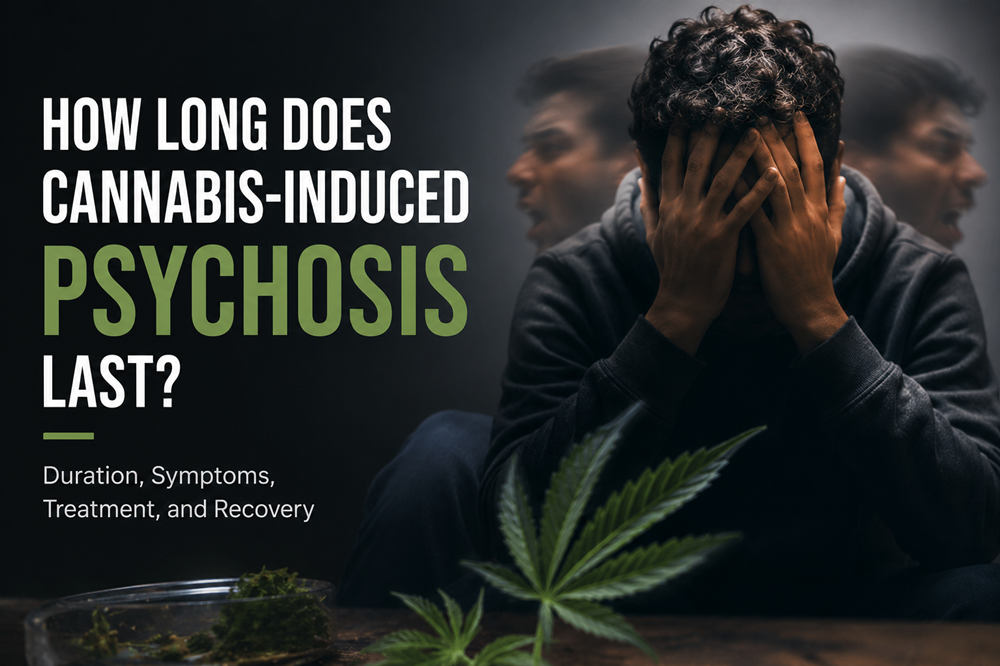
How Long Does Cannabis-Induced Psychosis Last?
Cannabis-induced psychosis can last from several hours to several weeks. The duration depends on whether the symptoms are limited to acute intoxication, represent a cannabis-induced psychotic disorder, or are related to another mental health or medical condition.
Psychotic-like symptoms that occur only while someone is intoxicated often improve as the effects of cannabis wear off, commonly within several hours and generally within about 24 hours. A more serious psychotic episode may continue for days or weeks, even after the person no longer feels high.
Do not use 24 hours as a waiting period. Severe hallucinations, paranoia, confusion, dangerous behavior, or loss of contact with reality require prompt medical attention regardless of when cannabis was consumed.
When Cannabis-Related Psychosis Is an Emergency
Call emergency services or go to the nearest emergency department when the person:
- May harm themselves or someone else
- Cannot distinguish reality from hallucinations or delusions
- Hears voices telling them to do something dangerous
- Is extremely agitated, aggressive, or unpredictable
- Is trying to escape from an imagined threat
- Cannot be awakened or has trouble breathing
- Has a seizure, collapses, or develops chest pain
- May have taken an unknown substance or multiple drugs
In the United States, call 911 when there is immediate danger. For a mental health or substance-use crisis without an immediate physical emergency, call or text 988. A suspected cannabis overconsumption can also be discussed with Poison Control online or by calling 1-800-222-1222.
Readers outside the United States should use their local emergency, crisis, or poison-information service.
What Is Cannabis-Induced Psychosis?
Psychosis affects a person’s ability to recognize what is real. It can change thoughts, perceptions, speech, emotions, and behavior.
Possible symptoms include:
- Hearing or seeing things that are not present
- Believing that others are watching, following, or plotting against them
- Holding fixed beliefs that are clearly inconsistent with reality
- Speaking in a confused or disorganized way
- Behaving unpredictably or inappropriately
- Becoming extremely suspicious, fearful, or agitated
A person in psychosis may be fully convinced that a hallucination or delusion is real. Reassurance from friends or family may not change what they believe.
Psychosis vs. an Uncomfortable High
A large dose of cannabis can cause anxiety, panic, racing thoughts, dizziness, confusion, or temporary paranoia. These reactions can be frightening without necessarily amounting to psychosis.
The main difference is the person’s connection with reality. Someone having a panic reaction may still recognize that cannabis is affecting their thoughts and body. Someone experiencing psychosis may no longer understand that their perceptions or beliefs have been altered.
The distinction is not always clear from the outside. New, intense, or persistent symptoms should therefore be assessed by a healthcare professional.
How Long Does Cannabis-Induced Psychosis Usually Last?
There is no exact timeline that applies to every episode. Clinicians consider the severity of the symptoms, how long they continue, the amount and type of cannabis used, and whether another condition could explain the behavior.
Symptoms Limited to Cannabis Intoxication
Psychotic-like effects occurring only during acute intoxication may fade as THC leaves its most active phase. This may happen within several hours, with symptoms generally expected to resolve within about 24 hours when they are part of uncomplicated intoxication.
The route of consumption affects the timeline. Inhaled cannabis tends to act quickly, while edibles can take much longer to produce noticeable effects. Someone who does not feel an edible immediately may consume more, resulting in a stronger and more prolonged reaction.
Concentrates and other high-THC products can also produce effects that are more intense than the user expected.
Cannabis-Induced Psychotic Disorder
Hallucinations or delusions that are severe, cause major impairment, or continue beyond the expected period of intoxication may be diagnosed as cannabis-induced psychotic disorder.
This type of episode can continue for days or weeks. The person may no longer show familiar signs of being high but may remain paranoid, confused, disorganized, or convinced of unusual beliefs.
Some people improve after cannabis is stopped and they receive a period of observation. Others need medication, hospital care, or continued psychiatric treatment.
Symptoms That Persist or Return
Long-lasting or recurring psychosis should not automatically be attributed to cannabis. Cannabis may have triggered an underlying vulnerability, or the symptoms may be related to another psychiatric, neurological, or medical condition.
Clinicians may need to consider:
- Schizophrenia-spectrum disorders
- Bipolar disorder or severe depression
- Stimulants, hallucinogens, synthetic cannabinoids, or other drugs
- Medication reactions
- Severe sleep deprivation
- Neurological illness, infection, or metabolic problems
A first psychotic episode is treated as a medical concern because the cause cannot be identified reliably from symptoms or timing alone.
What Can Affect the Duration?
THC Dose and Potency
Larger doses and high-THC products may produce stronger adverse effects. Concentrates, vape oils, and products used for dabbing can deliver substantial amounts of THC in a short period.
Repeated edible dosing is another common problem. Because the effects are delayed, a person may take several servings before realizing how much they have consumed.
Frequency of Cannabis Use
Frequent or heavy use can increase a person’s exposure to THC and may complicate recovery. The association between cannabis and psychosis is stronger among people who begin using at a younger age or consume cannabis more frequently.
Continuing to use cannabis after an episode can also increase the chance that symptoms will return.
Previous Episodes and Mental Health History
Someone who has previously developed hallucinations, extreme paranoia, or psychosis after cannabis may be more vulnerable to another episode.
Clinicians will also ask about personal and family histories of schizophrenia, bipolar disorder, psychosis, and other mental health conditions. These factors cannot predict an individual outcome, but they may influence risk and follow-up decisions.
Sleep Loss and Severe Stress
Sleep deprivation can intensify suspiciousness, emotional instability, confusion, and unusual perceptions. A person who has remained awake for several nights may take longer to stabilize.
Severe stress and an overstimulating environment may further increase distress during an acute episode.
Other or Unknown Substances
Alcohol, stimulants, hallucinogens, prescription medications, and other drugs can change the presentation and duration of psychosis.
When cannabis came from an unregulated source or its contents are unknown, clinicians may also consider synthetic cannabinoids, contaminants, or another substance. Medical staff should be told everything the person may have consumed, including medications and supplements.
How Is Cannabis-Induced Psychosis Treated?
Treatment begins with determining whether the person is medically stable and can remain safe. New-onset psychosis may require evaluation for other drugs, physical illness, injury, or an underlying psychiatric disorder.
Medical Evaluation
A clinician may ask about the cannabis product, dose, timing, frequency of use, previous reactions, sleep, medications, and other substances. Physical examination, blood tests, or toxicology testing may be used when necessary.
Observation can also help clinicians determine whether symptoms improve as intoxication resolves or continue beyond it.
Stopping Further Cannabis Use
The person should not take more cannabis to calm down, sleep, or counteract the reaction. Additional THC may worsen paranoia, confusion, or hallucinations.
They should also avoid driving, operating equipment, or leaving a safe location alone while impaired.
Creating a Safer Environment
While professional help is being arranged, reduce noise, crowds, bright lights, and unnecessary conversation. One calm person can speak clearly and avoid arguing aggressively about what the individual believes.
Remove access to weapons, car keys, and other immediate hazards. If the person becomes threatening or uncontrollable, move to a safe distance and contact emergency services.
Medication or Hospital Care
According to the Merck Manual, treatment for substance-induced psychosis may involve stopping the responsible substance, providing a calm environment, and using an anti-anxiety or antipsychotic medication when clinically appropriate.
Hospital care may be necessary when the person cannot recognize danger, meet basic needs, cooperate with evaluation, or remain safe outside a supervised setting.
Can Psychosis Start After Someone Stops Cannabis?
Most cannabis-related psychotic symptoms occur during or shortly after use. Psychosis following withdrawal is less common and should not be treated as a typical part of quitting cannabis.
A 2025 systematic review and case series identified episodes in people who were generally daily users and had stopped cannabis abruptly. In the health-record cases, symptoms began between two days and four weeks after cessation, with most appearing during the first week.
That range came from selected clinical cases. It is not the expected withdrawal timeline for most cannabis users and cannot predict when an individual will develop symptoms.
Heavy users who experience profound insomnia, unusual beliefs, hallucinations, or rapidly worsening behavior after stopping should seek professional care. This does not mean they should resume cannabis; it means the withdrawal and mental health symptoms require assessment.
Why Follow-Up Matters
Follow-up is important even when the person appears to recover completely. A clinician can review the episode, monitor for returning symptoms, and determine whether additional psychiatric or substance-use treatment is needed.
A 2026 systematic review and meta-analysis pooled 13 studies involving 7,515 people diagnosed with cannabis-induced psychosis. Approximately one in five later received a schizophrenia-spectrum diagnosis.
The results varied considerably among the included studies and cannot predict what will happen to a particular person. The finding does show why a cannabis-related psychotic episode should not be dismissed once the immediate symptoms disappear.
Follow-up may include:
- A psychiatric or primary care appointment
- Monitoring sleep, behavior, and thought patterns
- Treatment for cannabis use disorder when present
- Support for maintaining cannabis abstinence
- Education for family members or caregivers
- Referral to an early-psychosis program
Possible warning signs of recurrence include reduced sleep, increasing suspicion, social withdrawal, confused speech, declining self-care, or renewed difficulty recognizing reality.
Can Cannabis Be Used Again After Recovery?
Using cannabis again after a psychotic episode can cause symptoms to return. There is no established strain, dose, THC-to-CBD ratio, or consumption method that guarantees safety for someone who has already experienced cannabis-related psychosis.
Switching from concentrates to flower or using a smaller amount does not remove the risk. Avoiding cannabis is the safest approach unless a qualified clinician familiar with the person’s history advises otherwise.
Final Takeaway
Psychotic-like symptoms limited to cannabis intoxication may improve within several hours and generally within about 24 hours. Cannabis-induced psychotic disorder can continue for days or weeks, including after the person no longer feels high.
The severity of the symptoms matters more than the clock. Anyone who is hallucinating, severely paranoid, behaving dangerously, or losing contact with reality should receive prompt medical help. After the immediate episode, avoiding cannabis and completing appropriate follow-up can reduce the chance that an important ongoing condition is missed.