How Often to Water Cannabis: A Practical Guide for Every Growth Stage
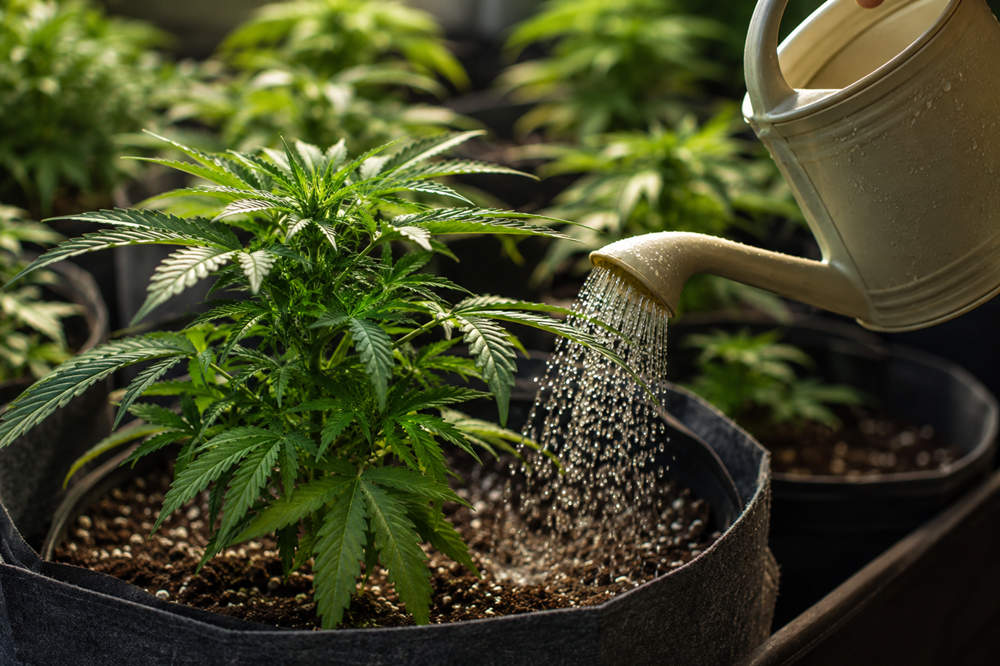
Cannabis should be watered when its growing medium has partially dried, not simply because a certain number of days have passed. An established plant in soil or a conventional potting mix may need water every two to four days under moderate indoor conditions, but that is only a starting estimate. Some plants need daily watering, while others can remain moist considerably longer.
The best schedule is the one that matches the plant’s actual water use. Check the moisture below the surface, learn how the container feels when wet and dry, and adjust as the plant and its environment change.
How Often Should You Water Cannabis?
There is no universal watering interval for cannabis. A mature plant growing rapidly in a small fabric pot may use its available moisture in a day. A young plant in a large plastic container may take nearly a week to reach the same point.
The aim is to water after the active root zone has used a substantial portion of its available moisture but before the plant becomes severely dehydrated. This maintains a balance between water and oxygen around the roots.
Professional irrigation scheduling follows a similar principle: the timing and volume of irrigation should reflect crop demand and the amount of water still available in the root zone.
Giving a plant more water than it can use does not necessarily improve growth. Field research on CBD-type hemp in semi-arid Oregon found that flower and cannabinoid yields stopped increasing once irrigation met calculated crop demand. The exact results were specific to the varieties, planting density, climate, and irrigation system studied, but they demonstrate why additional water is not automatically beneficial.
How to Tell When a Cannabis Plant Needs Water
The condition of the growing medium is more dependable than a calendar. Use several checks together rather than relying on one symptom.
Check Below the Surface
The surface of a container can dry quickly while the lower root zone remains wet. Push a finger one or two inches into soil or potting mix. If it still feels distinctly damp and cool, wait before watering. If the upper layer is dry and moisture deeper in the container is beginning to fade, the plant may be ready.
A moisture probe can help with large containers, but test more than one location. One side of a pot may dry faster because of uneven roots, airflow, or light exposure.
Lift the Container
A thoroughly watered pot is noticeably heavier than a dry one. Lift the container shortly after watering, then compare its weight over the following days. With practice, this becomes one of the quickest ways to judge how much water remains.
For containers that are too large to lift, gently tilt one edge or compare moisture at several depths.
Observe the Leaves Carefully
A thirsty plant may develop thin, limp leaves as it loses internal water pressure. However, drooping does not always mean that the plant needs more water. Roots surrounded by saturated growing medium can also struggle to absorb water because they lack oxygen.
Use leaf posture only as supporting evidence. Before watering a drooping plant, check whether the container is light and drying or heavy and persistently wet.
What Determines Watering Frequency?
Water use changes continuously. Understanding the main variables makes it easier to anticipate when a plant’s normal pattern may shift.
Plant and Root Size
A small seedling has limited roots and leaf area, so it uses little water. As the roots spread and the canopy expands, the plant can absorb and release water more rapidly.
A pot that remained moist for six days early in the grow may dry in two or three days once the plant fills the container. Frequency should increase only when the plant is demonstrably using water faster.
Growing Medium and Container
Dense mixes generally retain moisture longer than airy blends containing large amounts of perlite, bark, or similar materials. Peat, coco coir, mineral wool, and other substrates also differ in how they hold water and air.
A review of soilless growing media for cannabis highlights how porosity, drainage, water retention, and nutrient behavior vary among substrates. These physical differences are why a schedule developed for soil should not automatically be used for coco or mineral wool.
Container design matters as well. Small pots hold less water, and breathable fabric pots lose moisture through their sides. Plastic pots usually dry more slowly because evaporation occurs mainly from the surface and drainage openings.
Temperature, Humidity, Light, and Airflow
Warm temperatures, dry air, intense lighting, and strong airflow generally increase water use. Cooler temperatures, humid air, reduced lighting, and limited air movement slow it down.
Light changes can be especially noticeable indoors. Research involving vegetative cannabis found that supplemental greenhouse lighting affected plant growth and crop water use. A plant may therefore begin drying faster after a lighting increase even when its container and growing medium remain unchanged.
Outdoor Conditions
Outdoor cannabis is affected by direct sun, wind, rainfall, soil texture, root depth, and seasonal temperature changes. Hot, windy weather can dry containers and surface soil quickly, while cloudy or cool conditions may extend the interval between waterings.
Do not assume that rainfall has reached the entire root zone. A brief shower may wet the foliage and soil surface without providing meaningful moisture at root depth. Check the soil after rain before deciding whether additional irrigation is needed.
How Often to Water Cannabis at Each Growth Stage
Watering should expand with the root system. Young plants need small, accurately placed applications, while established plants need moisture distributed through a much larger area.
Seedlings and Newly Rooted Clones
Seedlings and young clones use relatively little water. Keep the immediate root area lightly moist without saturating the entire container for long periods.
Apply a small amount around the plant, then wait until the upper portion of the medium begins to dry. Depending on the pot, temperature, and humidity, this may be necessary every one to several days.
Gradually widen the watered area as new growth appears. This gives developing roots access to moisture without surrounding a small root system with a large volume of constantly wet material.
Vegetative Plants
Water demand rises during vegetative growth as stems, leaves, and roots expand. Begin moistening a wider portion of the container so that water reaches the developing root system.
An established plant in a suitable soil or potting mix may need water every two to four days under moderate indoor conditions. Use that range only to guide daily checks. Container weight and root-zone moisture should determine the actual timing.
This is also a useful stage for tracking how quickly each plant dries. Recording the date and approximate amount of each watering will reveal whether demand is increasing normally.
Flowering Plants
Large plants often use water quickly during the transition to flowering and the early part of bloom because the canopy and root system are well developed. Continue checking them daily, particularly after changes in temperature, lighting, or airflow.
Some plants begin drying more slowly later in flowering as vigorous growth decreases. Respond to the actual moisture level rather than continuing the earlier schedule automatically.
Do not deliberately create severe drought before harvest. Current research indicates that water limitation can alter photosynthesis, growth, yield, and phytochemical composition, and the response is not consistent across all cannabis varieties.
Watering Cannabis in Different Growing Media
The correct technique depends on what surrounds the roots. Soil, coco coir, and hydroponic systems manage moisture in distinctly different ways.
Soil and Conventional Potting Mixes
For this guide, soil includes natural soil blends and conventional peat- or compost-based potting mixes. These media are generally managed with a noticeable moisture cycle.
Water thoroughly enough to moisten the active root zone, then allow part of that moisture to be used before watering again. The medium should not remain saturated, but it also should not repeatedly become hard, shrunken, or completely dry throughout the container.
How long this takes depends on the mix. An airy potting blend may dry rapidly, while a dense or poorly drained soil can stay wet for many days.
Coco Coir
Coco coir is usually treated as a soilless substrate rather than ordinary soil. Established plants are commonly supplied with water and dissolved nutrients through smaller, more frequent fertigation events.
A mature plant in well-drained coco may be fertigated daily or several times per day in an automated system. That does not mean a newly transplanted plant should receive the same frequency. Irrigation must still match root development, container volume, drainage, and environmental demand.
Allowing coco to become severely dry can cause uneven nutrient concentrations and make the root zone harder to manage. At the same time, repeatedly saturating an under-rooted container can create unnecessary moisture around areas the plant is not yet using.
Hydroponic Systems
Hydroponic roots receive water and nutrients through a circulating, standing, dripping, or periodically flooded solution. The grower therefore manages the solution and irrigation system rather than waiting for soil to dry.
Some systems keep roots in continuous contact with water, while others operate on timed cycles. In either case, the root zone still needs oxygen. University of New Hampshire guidance on home hydroponics notes that systems must supply root-zone oxygen, often through movement or added aeration.
Reservoir temperature, circulation, nutrient concentration, irrigation timing, and equipment reliability are more important than a conventional watering interval.
How Much Water Should You Give Each Time?
Use enough water to moisten the active root zone evenly. The correct amount depends on plant size, root development, container volume, substrate, and how dry the medium has become.
Seedlings need small applications around their developing roots. Established plants need water spread slowly across the surface so that it penetrates the container rather than following one channel down the side.
Some drainage may appear after thorough watering, but runoff alone does not prove that the entire container is evenly moist. Peat- and bark-based potting mixes can become water-repellent when excessively dry, allowing water to escape through cracks while the center remains dry.
If the mix has become unusually dry, apply a small amount first and allow it to soak in. Continue gradually until the root zone feels evenly moist and the container has regained substantial weight.
Runoff practices also vary by growing method and nutrient program. Whatever approach is used, containers need unobstructed drainage and should not remain in collected water for extended periods.
Overwatered vs. Underwatered Cannabis
Both conditions can cause wilting, slow growth, and leaf damage. Check the growing medium before deciding which problem is present.
Signs of Overwatering
An overwatered plant usually has a heavy container and growing medium that remains wet for an unusually long time. Leaves may appear swollen, heavy, curled downward, yellow, or generally limp, while new growth can slow.
Overwatering usually means irrigating again before the root zone has drained and regained sufficient air. It does not necessarily mean that one thorough watering was excessive.
When growing medium remains saturated, water occupies spaces that would otherwise contain air. This can deprive roots of oxygen and interfere with water uptake, which is why a plant in wet soil may still appear wilted.
Signs of Underwatering
An underwatered container feels light, and the medium may be dry well below the surface or pulling away from the pot’s sides. Leaves often become thin and limp. Prolonged dehydration can lead to curled edges, brittle tissue, and permanent leaf damage.
Virginia Cooperative Extension guidance on water stress in container-grown plants recommends evaluating both the shoots and the root environment because drought and excessive moisture can produce similar visible symptoms.
Helping the Plant Recover
For an overwatered plant, pause irrigation until the medium reaches an appropriate moisture level. Check that drainage openings are clear and that the pot is not standing in water. Avoid immediately transplanting or disturbing the roots unless the medium remains saturated for an extended period or there are signs of serious root deterioration.
For an underwatered plant, add water slowly. Severely dry potting mix may need several gradual applications before it absorbs moisture evenly. Allow the first application to soak in before adding more.
After either problem, return to moisture-based watering rather than trying to compensate with extreme wet or dry cycles.
How to Build a Reliable Watering Routine
- Check moisture below the surface. Test the root zone rather than judging only by the dry top layer.
- Assess the container’s weight. Compare it with the weight you observed after the previous thorough watering.
- Water slowly and evenly. Match the amount to the current size of the root system.
- Confirm proper drainage. Remove standing water and make sure drainage holes remain open.
- Record the drying time. Adjust the next check when plant growth or environmental conditions change.
A pattern will become clear after several cycles, but it should never become an inflexible calendar. Repotting, canopy growth, hotter weather, stronger lighting, and changes in humidity can all alter water use.
Final Takeaway
Water cannabis when the active root zone is beginning to dry, not simply because it is a particular day of the week. Check moisture beneath the surface, compare container weight, and account for the plant’s size, growing medium, and environment. A consistent observation-based routine provides the roots with the moisture they need without keeping them persistently saturated.