Can You Overdose on CBD Hemp Oil? Risks, Symptoms, and Next Steps
Yes, you can take more CBD hemp oil than intended and experience harmful effects. A CBD overdose does not automatically mean a fatal poisoning, but excessive amounts may cause pronounced sleepiness, dizziness, digestive problems, impaired coordination, medication interactions, or liver-related complications. The risk also depends on whether the product contains only CBD or includes THC, other cannabinoids, medications, or contaminants.
What Does “Overdose” Mean With CBD?
An overdose occurs when someone takes more than the recommended amount of a substance. It does not necessarily mean that the person will develop life-threatening poisoning. Some overdoses cause no symptoms, while others produce mild, moderate, or serious effects depending on the substance, dose, person, and circumstances.
This distinction is useful when discussing CBD. Someone who accidentally takes two droppers instead of one has technically exceeded the intended serving, but that does not establish that serious poisoning will occur. Another person may develop strong symptoms after a smaller amount because of medication interactions, liver problems, sensitivity to THC, or inaccurate product labeling.
There is no single amount of retail CBD hemp oil that can be described as an overdose for every person. The FDA states that important questions remain unanswered, including what level of CBD intake triggers known risks and what happens when CBD is used daily for extended periods.
Can a CBD Hemp Oil Overdose Be Fatal?
Official medical guidance does not identify a universal fatal dose for CBD. However, that should not be interpreted to mean that unlimited amounts are safe. CBD is biologically active, can produce adverse effects, and may change how prescription and nonprescription drugs behave in the body.
The immediate concern after taking too much CBD is usually excessive sedation, gastrointestinal distress, impaired movement, an unexpected reaction to another ingredient, or an interaction with alcohol or medication. A person may also believe they consumed pure CBD when the product actually contained a meaningful amount of THC or another cannabinoid.
A severe reaction should always be treated according to the person’s symptoms rather than assumptions about CBD’s reputation. If someone collapses, has a seizure, has trouble breathing, or cannot be awakened, emergency services should be contacted immediately. MedlinePlus gives this advice specifically for suspected cannabidiol overdose.
Symptoms of Taking Too Much CBD Hemp Oil
CBD affects people differently, and symptoms may depend on the dose, concentration, formulation, and other substances used at the same time. Commonly reported adverse effects of cannabidiol include:
- Sleepiness or unusual drowsiness
- Fatigue or low energy
- Dizziness
- Diarrhea
- Nausea or stomach discomfort
- Reduced appetite
- Vomiting
- Irritability or agitation
- Difficulty walking steadily or coordinating movement
The FDA-approved cannabidiol medicine Epidiolex can cause somnolence, sedation, diarrhea, decreased appetite, vomiting, fatigue, and liver-enzyme elevations. These findings come from a prescription product with controlled dosing, so they cannot predict exactly how every retail CBD oil will affect someone. They do demonstrate that cannabidiol is capable of causing medically relevant side effects.
Strong drowsiness may become more concerning when CBD is combined with alcohol, sleep medicines, anti-anxiety drugs, sedating antihistamines, opioids, antiseizure drugs, or other substances that reduce alertness. The FDA warns that combining CBD with alcohol or medicines that slow brain activity can increase sedation and the risk of injury.
Why There Is No Standard CBD Overdose Amount
A bottle may display its total CBD content prominently while making the amount per serving less obvious. For example, “1,500 mg CBD” may describe the entire bottle rather than one dropper. Someone who mistakes the total concentration for a serving instruction could consume much more than planned.
Several factors determine how strongly CBD may affect a person:
- The number of milligrams consumed
- The concentration of the oil
- The person’s age and body size
- Previous exposure to CBD or cannabinoids
- Liver function
- Prescription and over-the-counter medications
- Alcohol or other substance use
- Whether the dose was taken with food
- Whether the product contains THC
- The accuracy of the product label
Food can also change cannabidiol exposure. Taking an oil with a substantial meal may affect how much CBD enters the bloodstream, meaning the same labeled serving may not always produce an identical experience. Prescription cannabidiol instructions emphasize consistent administration in relation to food because changes can affect exposure.
The Product May Contain More Than CBD
An unexpected reaction may not be caused by CBD alone. Retail hemp products are not all manufactured or tested to the same standard, and the words “hemp oil” do not establish what is actually inside the bottle.
A full-spectrum product may contain small amounts of THC and other cannabinoids. A broad-spectrum product is generally intended to remove THC, while a CBD isolate product is intended to contain purified cannabidiol. These descriptions are useful, but they are not substitutes for batch-specific laboratory testing.
The FDA has found that some marketed CBD products did not contain the cannabinoid levels claimed on their labels. The agency has also raised concerns about possible contamination with THC, pesticides, heavy metals, and other unwanted substances.
THC contamination can change the reaction considerably. Instead of ordinary CBD-related drowsiness, a person may experience intoxication, confusion, anxiety, altered perception, rapid heartbeat, or impaired coordination. Children and people with little cannabis experience may be especially affected by an inaccurately labeled product.
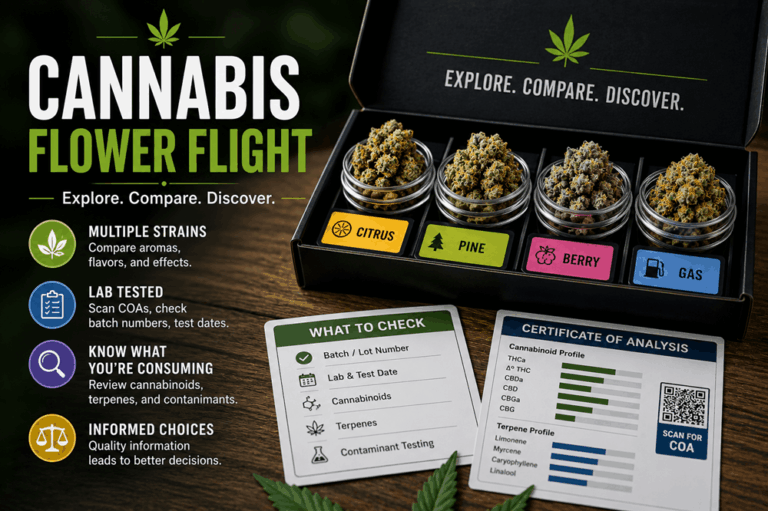
When evaluating a CBD hemp oil, the laboratory report should match the batch or lot number on the bottle. The report should show the measured amounts of CBD, delta-9 THC, THCA, and other cannabinoids. It should also include contaminant testing rather than displaying cannabinoid potency alone.
CBD Can Interact With Medication
One of the most important risks of taking a large amount of CBD is not necessarily the CBD in isolation. It is the possibility that CBD may increase or decrease the effects of another medicine.
CBD is processed through liver enzyme systems that also handle many prescription drugs. Changing the activity of these systems may cause another medicine to remain in the body longer, reach a higher concentration, or become less effective. The result may be stronger side effects or inadequate treatment of the condition for which the medicine was prescribed.
The FDA warns that CBD can affect how other medicines work and that other medicines may influence how CBD can be used safely. The agency also notes that information about interactions between CBD, herbs, and dietary supplements remains limited.
Medication interactions are particularly important for people taking antiseizure drugs, sedatives, blood thinners, transplant medications, heart medicines, or drugs with narrow therapeutic ranges. A pharmacist or doctor can check a medication list more reliably than a product label or general online interaction chart.
Too Much CBD May Affect the Liver
CBD can cause liver-enzyme elevations, sometimes without obvious symptoms. That means a person may not immediately feel that anything is wrong even when blood tests show a potentially important change.
In a randomized FDA study, healthy adults received 250 to 550 milligrams of CBD daily for 28 days. Among participants receiving CBD, 5.6 percent developed liver-enzyme elevations above the study’s specified threshold, while none in the placebo group reached that threshold. The study does not prove that occasional low-dose CBD use will cause liver injury, but it challenges the assumption that consumer-level use is automatically harmless.
The prescribing information for Epidiolex describes dose-related liver-enzyme elevations and notes that risk can increase with certain medicines, including valproate. Warning signs of possible liver dysfunction may include unexplained nausea, vomiting, unusual fatigue, loss of appetite, pain in the upper-right abdomen, yellowing of the skin or eyes, and dark urine.
These symptoms do not prove that CBD has damaged the liver, but they should not be dismissed after substantial or repeated CBD exposure. Medical evaluation may require blood testing rather than observation alone.
What Should You Do After Taking Too Much CBD?
Do not rely only on the number of droppers consumed. The appropriate response depends on the person’s age, weight, symptoms, medications, product concentration, ingredients, amount taken, and time since exposure.
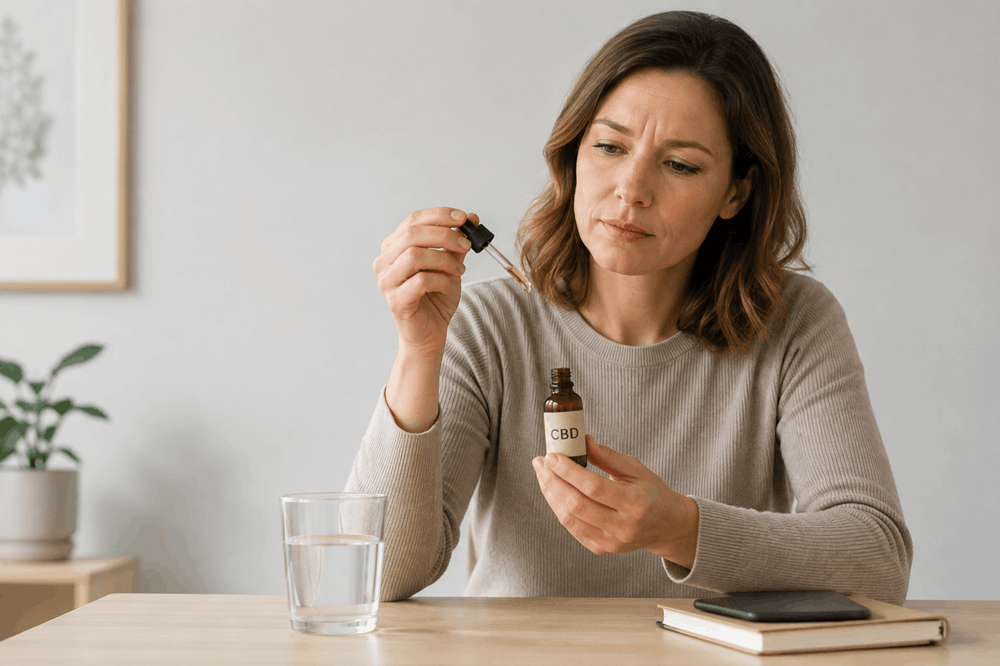
First, stop taking additional CBD and avoid alcohol, sedatives, or other cannabis products. Do not drive, operate machinery, cook over an open flame, or perform any activity requiring balance and concentration when drowsiness or dizziness is present.
Keep the bottle, packaging, ingredient list, and certificate of analysis nearby. Record approximately how much was taken and when it was consumed. This information can help a poison specialist or medical professional assess the exposure.
In the United States, Poison Control can provide individualized advice online or at 1-800-222-1222. Its recommendations are based on the product, amount, age, weight, symptoms, and time since the exposure. The service advises calling emergency services immediately when a person collapses, has a seizure, has trouble breathing, or cannot be awakened.
Someone should not be left alone when they are extremely sleepy, confused, unsteady, repeatedly vomiting, or behaving unusually. Symptoms can also reflect THC, another drug, contamination, or an unrelated medical emergency rather than CBD alone.
Accidental CBD Exposure in Children
CBD oils, gummies, chocolates, and flavored products should be stored as carefully as prescription medicine. A child may consume a large amount because the product resembles ordinary candy, food, or a sweetened drink.
A child’s smaller body size means that the same product can represent a much larger dose per kilogram than it would for an adult. Product contamination or undeclared THC creates additional uncertainty. Children who become unusually sleepy, confused, unsteady, difficult to wake, or ill after a possible cannabinoid exposure need prompt professional guidance.
Do not wait for severe symptoms before contacting Poison Control following an uncertain exposure in a young child. Have the package available, including the CBD concentration, serving size, ingredient list, and estimated missing amount.
CBD Hemp Oil Is Different From Hemp Seed Oil
Plain hemp seed oil and CBD hemp oil are not interchangeable. Hemp seed oil is pressed from hemp seeds and is mainly used as a food or cosmetic ingredient. It does not normally contain a meaningful dose of CBD unless cannabidiol has been added separately.
CBD oil is generally produced using an extract from the flowers and other aerial parts of hemp, after which the extract is mixed with a carrier oil. A product labeled only “hemp oil” may therefore be ambiguous.
Check whether the label states a specific number of CBD milligrams per serving. If no CBD quantity appears, the product may be ordinary hemp seed oil rather than a concentrated cannabinoid preparation. Knowing which product was consumed is essential when assessing a suspected overdose.
How to Reduce the Risk of Taking Too Much
Read the serving information before using a new product, and distinguish the CBD amount per serving from the total amount in the bottle. Measure liquid with the provided marked dropper rather than estimating by eye.
Avoid combining multiple CBD products without calculating the total amount. Someone may use a tincture, gummy, beverage, capsule, and topical product on the same day without realizing how much overall exposure has accumulated.
Use products with current, batch-specific testing from an independent laboratory. Store them in their original child-resistant containers, away from food, medication, and products used by other household members.
Anyone taking regular medication, living with liver disease, preparing for surgery, pregnant, breastfeeding, or considering CBD for a child should speak with a qualified healthcare professional before use. A product being sold without a prescription does not establish that it is safe for every person or combination of medicines.
The Bottom Line
You can take too much CBD hemp oil. The result may be excessive sleepiness, dizziness, digestive distress, impaired coordination, medication interactions, or liver-related complications. There is no universal overdose threshold because products, concentrations, ingredients, and individual health factors vary considerably.
A suspected CBD overdose should be judged by the complete situation rather than the product’s reputation as natural or non-intoxicating. Unexpectedly severe symptoms may indicate THC exposure, contamination, another ingredient, or an interaction with alcohol or medication.
When someone has taken an uncertain amount, contact a poison center for individualized guidance. When the person has collapsed, is having a seizure, cannot breathe normally, or cannot be awakened, seek emergency assistance immediately.