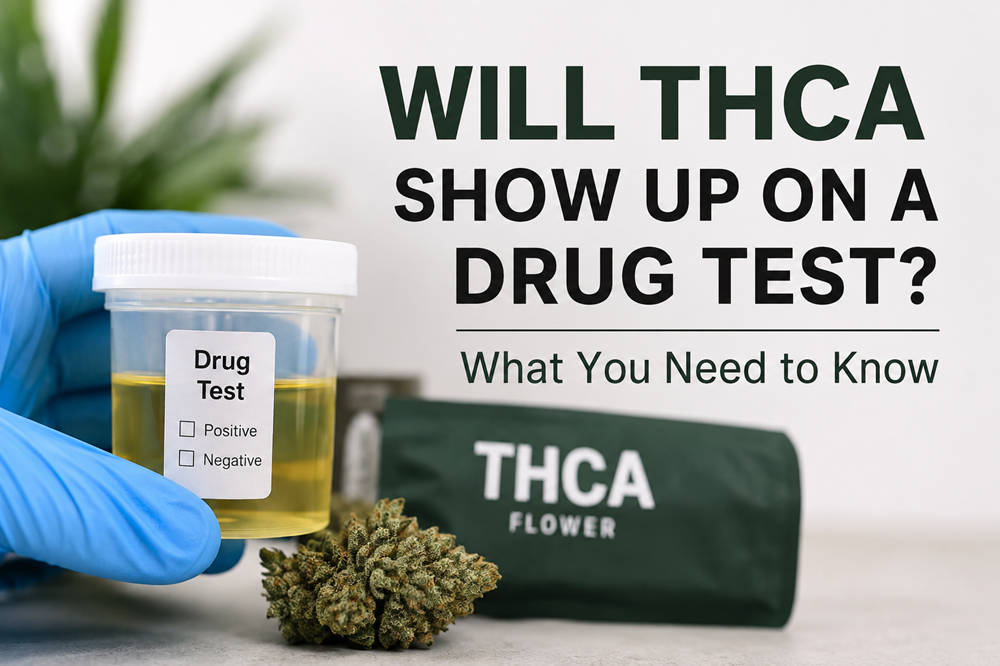
Will THCA Show Up on a Drug Test? What You Need to Know
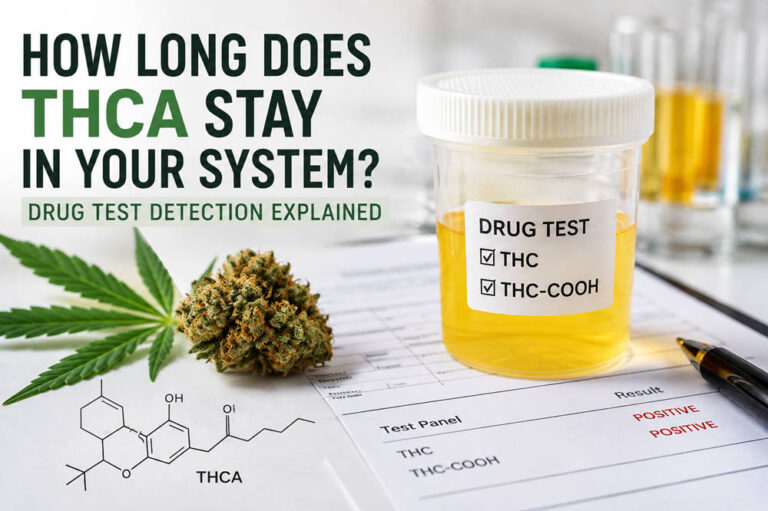
Yes, THCA products can lead to a positive cannabis drug test. The risk is particularly important when THCA is smoked, vaped, dabbed, baked, or otherwise heated. Heat converts some THCA into delta-9 THC, which the body processes into metabolites targeted by common cannabis tests.
That does not mean every THCA exposure will automatically produce a positive result. The outcome depends on the product, dose, method of use, frequency of cannabis exposure, time since use, testing method, and laboratory cutoff. If you need to reliably pass a cannabis drug test, however, THCA should not be considered a drug-test-safe alternative to THC.
Why THCA Can Lead to a Positive Drug Test
THCA, or tetrahydrocannabinolic acid, is a cannabinoid naturally present in raw cannabis. The form generally discussed in cannabis and hemp products is THCA-A, a chemical precursor to delta-9 THC.
THCA-A and delta-9 THC are not the same compound. The important change occurs when THCA is exposed to sufficient heat. Through a process called decarboxylation, part of the THCA converts into delta-9 THC.
This conversion is well established enough that USDA hemp laboratory guidelines require testing methods to consider THCA’s potential conversion into THC when determining total THC.
Once delta-9 THC enters the body, it is metabolized into other compounds. One of the most important for urine drug testing is 11-nor-9-carboxy-delta-9-THC, also called 11-COOH-THC, THC-COOH, or THCCOOH. This metabolite can remain detectable after the noticeable effects of THC have ended.
What Do Cannabis Drug Tests Actually Detect?
Most standard urine tests are not trying to determine whether you bought a product labeled “THCA.” Instead, they look for evidence that THC has been processed by the body.
Federal Department of Transportation urine testing, for example, uses an initial marijuana-metabolite cutoff of 50 nanograms per milliliter and a confirmatory cutoff of 15 ng/mL. A result below the applicable cutoff is reported as negative under those rules, while a specimen reaching the initial threshold proceeds to confirmation.
There is an important terminology issue that can make THCA drug-test information confusing. The DOT urine-testing table uses the abbreviation “THCA” for the THC carboxy metabolite measured during marijuana testing.
That is not the same compound as THCA-A, the cannabinoid precursor commonly called THCA on cannabis and hemp products. In other words, seeing “THCA” in older or federal drug-testing terminology does not mean the test is necessarily measuring the raw THCA-A present in a flower or tincture.
Will Raw or Unheated THCA Show Up on a Drug Test?
This question is less straightforward than testing after smoking or vaping THCA.
A study involving orally administered pure THCA-A in rats did not observe conversion of THCA-A into delta-9 THC inside the animals. Researchers identified THCA-A and several of its own metabolites instead. That finding helps establish that THCA-A should not simply be treated as though the body automatically converts all of it into THC.
However, the study was conducted in animals, not as a human workplace drug-testing trial. It therefore cannot prove that consuming an unheated commercial THCA product will always produce a negative human drug test.
Real-world products also add variables that studies using purified compounds do not. A THCA product may contain some delta-9 THC already, and cannabinoid composition can be affected by manufacturing, processing, storage, or heating. The actual product matters more than the marketing name on its package.
For these reasons, unheated THCA is scientifically different from smoking THCA, but it still should not be described as reliably drug-test safe.
Does the Type of THCA Product Affect Drug-Test Risk?
How a product is consumed can substantially affect the likelihood of THC exposure.
Smoked, Vaped, or Dabbed THCA
THCA flower, vape products, and concentrates are often consumed with heat. That makes these products particularly relevant to drug testing because heating encourages the conversion of THCA into delta-9 THC.
If you smoke THCA flower or inhale a heated THCA concentrate, it is reasonable to treat the exposure as capable of producing THC metabolites detectable by a cannabis test.
THCA Edibles and Other Oral Products
Products sold as THCA edibles can vary widely. Some may be formulated to retain THCA, while others may experience heating during extraction, manufacturing, or preparation. Some finished products can also contain measurable delta-9 THC.
The product’s actual cannabinoid profile therefore matters more than whether the front label emphasizes THCA.
Raw THCA Products
Raw or deliberately unheated preparations avoid much of the immediate heat-driven conversion associated with smoking and vaping. Even then, there is not enough evidence to promise a negative drug-test result from every commercial product or dose.
If passing a test is essential, uncertainty itself is a reason to be cautious.
How Long Can THC Metabolites Remain Detectable?
There is no scientifically defensible rule that THCA or THC will disappear from everyone’s urine after a specific number of days.
For people who smoked, vaped, or otherwise consumed a heated THCA product, the more useful question is how long THC metabolites may remain above the cutoff used by a particular test.
Detection can be influenced by:
- the amount of THC ultimately absorbed;
- how often cannabis or cannabinoid products are used;
- the dose used on each occasion;
- time since the most recent use;
- individual differences in metabolism and physiology;
- the type of biological specimen; and
- the laboratory cutoff used to define a positive result.
A 2026 systematic review of 92 studies found substantial variation in urinary THC and THC-metabolite concentrations. Even relatively low THC doses sometimes exceeded workplace-aligned thresholds, while people using cannabis weekly or daily could remain above a 15 ng/mL threshold for weeks after stopping.
Controlled research involving oral THC has similarly found that larger doses generally extend detection, but there is considerable variation between individuals.
These studies primarily concern THC and its metabolites, not isolated THCA-A. They are most relevant to THCA products that result in meaningful THC exposure, such as smoked or vaped products.
Urine Tests vs. Oral-Fluid Tests
Urine Testing
Urine testing is commonly used in workplace drug-testing programs. It generally identifies THC metabolites rather than measuring whether a person is currently experiencing cannabis effects.
That distinction matters because a urine result can remain positive after intoxication has ended. A positive urine test therefore indicates that the relevant metabolite reached the laboratory’s threshold, not that the person was necessarily impaired when the specimen was collected.
Oral-Fluid Testing
Oral-fluid testing can target delta-9 THC itself rather than the same carboxy metabolite measured in urine.
Federal DOT regulations establish oral-fluid marijuana cutoffs of 4 ng/mL for an initial THC test and 2 ng/mL for confirmation. However, those numbers should not be interpreted to mean DOT oral-fluid testing is currently in routine use.
As of August 2026, DOT states that there are no HHS-certified oral-fluid drug-testing laboratories. DOT rules require at least two certified laboratories before regulated employers may begin using oral-fluid testing.
Non-DOT drug-testing programs can follow different rules, so the test used by a private employer or other organization may not match federal transportation procedures.
Can a Legal Hemp Product Still Cause a Positive Drug Test?
Yes. Whether a product can legally be sold and whether it can produce a positive drug test are separate questions.
A drug-testing laboratory generally measures specified drugs or metabolites in a biological specimen. It is not determining whether the product that caused the exposure was sold under federal or state hemp rules.
This distinction is particularly clear for DOT-regulated employees. Under 49 CFR § 40.151, a Medical Review Officer may not accept a person’s claim that a confirmed marijuana-positive result came from a hemp or other non-prescription marijuana-related product as a basis for changing the result to negative.
Private employers may have different testing policies, and employment protections vary by jurisdiction. DOT rules should therefore not be assumed to apply to every workplace.
Can a Drug Test Tell That You Specifically Used THCA?
A routine cannabis-positive urine test generally cannot identify the exact retail product that produced the exposure.
If the laboratory confirms the presence of the target THC metabolite above its cutoff, that result does not by itself establish whether the person used traditional marijuana, smoked THCA flower, consumed a THC-containing hemp product, or obtained THC through another source.
Specialized toxicology testing can measure additional cannabinoids and metabolites, but that is different from a standard workplace cannabis screen being able to identify a particular package, brand, or product category.
A certificate of analysis or a product label therefore does not necessarily resolve a positive workplace test.
What If You Have an Upcoming Drug Test?
If maintaining a negative cannabis test is important for employment, athletics, court requirements, medical programs, or another obligation, the safest practical approach is to assume that THCA products can present a testing risk.
This is particularly true for products that are smoked, vaped, dabbed, cooked, or otherwise heated. Raw THCA presents a less straightforward scientific question, but limited human evidence and variation among commercial products make a guaranteed negative result impossible to promise.
Check the rules of the specific testing program that applies to you. Do not assume that terms such as “hemp-derived,” “federally legal,” or “THCA” mean a product cannot affect a cannabis drug test.
Frequently Asked Questions
Can One Use of THCA Cause a Positive Drug Test?
It can. A single use does not guarantee a positive result, but one exposure can be enough if sufficient THC reaches the body and the resulting metabolite concentration meets the test’s cutoff. Dose, product type, route of use, timing, and individual variation all matter.
Can Secondhand Cannabis Smoke Cause a Positive Test?
Under ordinary incidental conditions, it is unlikely. A controlled study of nonsmokers found that extreme exposure to concentrated cannabis smoke in an unventilated chamber could occasionally produce a positive urine screen at commonly used cutoffs, while ventilation substantially reduced exposure.
The researchers concluded that such positive results were likely to be rare and associated with obvious, unusually intense exposure rather than casual contact with cannabis smoke.
Does a Certificate of Analysis Guarantee You Will Pass?
No. A certificate of analysis can provide useful information about a tested sample’s cannabinoid composition, but it cannot guarantee an individual’s drug-test outcome. Dose, product variation, storage, consumption method, metabolism, timing, and the testing threshold can all affect the result.
The Bottom Line
THCA is not reliably drug-test safe. The clearest risk comes from smoking, vaping, dabbing, or otherwise heating THCA because that process converts some THCA into delta-9 THC. The body can then produce THC metabolites detected by common urine testing.
Pure unheated THCA-A is chemically different from THC, and research does not support treating the two as identical. However, evidence about isolated THCA-A and routine human workplace testing remains limited, while commercial products can contain additional cannabinoids.
If a negative cannabis test is important, the practical takeaway is simple: do not rely on a THCA label, hemp status, or lack of noticeable intoxication as proof that a product cannot produce a positive result.