How to Keep Flowers Fresh Longer With Simple Everyday Care at Home
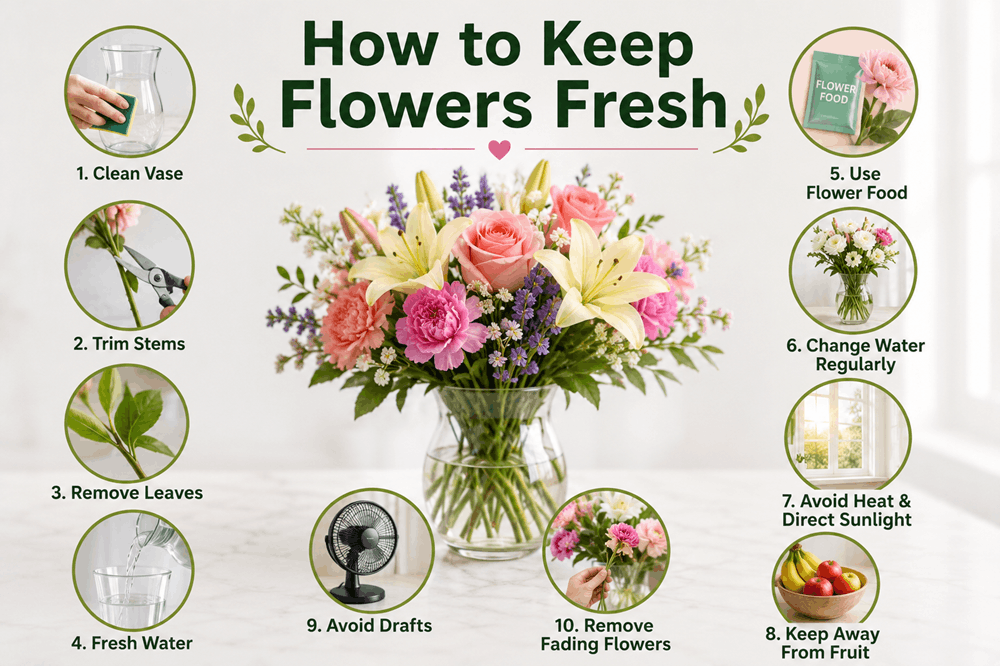
To keep flowers fresh, start with a clean vase, trim the stems before placing them in water, remove leaves below the waterline, and use fresh water with flower food. Keep the arrangement away from direct sunlight, heat, drafts, and ripening fruit. Changing the water every one or two days and removing fading flowers can also help a bouquet stay attractive for much longer.
Start With a Clean Vase
One of the simplest ways to keep flowers fresh is to use a thoroughly clean vase. A container that looks clean can still hold bacteria left behind by a previous bouquet.
Once flowers are placed in water, bacteria can multiply quickly. They may clog the tiny vessels inside the stems that carry water upward to the leaves and petals. When water movement becomes restricted, flowers begin to wilt even when the vase still contains plenty of water.
Wash the vase with warm water and dish soap, rinse it well, and remove any residue around the bottom or sides. Narrow vases may require a bottle brush to reach areas that are difficult to clean.
Do this every time you replace the water rather than simply topping up an old vase.
Trim the Stems Before Putting Flowers in Water
Freshly cutting the stems helps flowers absorb water more efficiently. Remove approximately half an inch to one inch from the bottom of each stem before arranging the bouquet.
Use clean pruning shears, floral snips, or a sharp knife. Dull scissors can crush softer stems and damage the tissues responsible for water uptake.
Cutting the stems at an angle is helpful because it increases the exposed surface and prevents the bottom of the stem from resting completely flat against the vase.
If flowers have spent several hours without water, trimming the stems becomes even more important because the cut ends may have dried out.
Remove Leaves Below the Waterline
Leaves should never remain submerged in vase water. Once underwater, they begin breaking down and provide material for bacteria to feed on.
Before arranging the bouquet, remove every leaf that would sit below the expected water level.
You do not need to strip the entire stem. Healthy foliage above the water can remain unless it is damaged or overcrowding the arrangement.
Check the vase every day because stems may settle and cause leaves that were originally above the water to become submerged.
Use Fresh Water
Most cut flowers perform well in clean room-temperature or slightly lukewarm water. Extremely hot water can damage plant tissue, while very cold water is unnecessary for most ordinary bouquets.
Fill the vase with enough water to cover a substantial portion of the stems without submerging foliage.
Large bouquets can consume a surprising amount of water during the first day, particularly when they contain roses, hydrangeas, sunflowers, or other thirsty flowers.
Check the water level daily rather than assuming that yesterday’s amount is still enough.
Use Flower Food Correctly
The small packet provided with a florist bouquet can make a meaningful difference when it is mixed correctly.
Commercial flower food generally contains a combination of:
- Sugar to provide energy
- An acidifying ingredient that supports water uptake
- An antimicrobial ingredient that slows bacterial growth
Follow the packet directions carefully. Do not pour an entire packet into a tiny vase if it was designed for a much larger amount of water.
Likewise, adding only a few drops of a prepared solution to a large vase may make it too diluted to work properly.
When you replace the vase water, use fresh flower food if another packet is available.
Change the Water Every One or Two Days
Fresh water is one of the most effective ways to extend the life of cut flowers.
Do not wait until the water looks cloudy or begins to smell. Bacteria can already be multiplying before visible changes appear.
Every one or two days:
- Remove the bouquet from the vase.
- Pour out the old water.
- Wash and rinse the vase.
- Trim a small amount from the bottom of the stems.
- Remove damaged leaves and fading flowers.
- Refill the vase with clean water and flower food.
This routine takes only a few minutes and can noticeably improve vase life.
Keep Flowers Out of Direct Sunlight
Cut flowers usually last longer in a cool location with indirect light. Direct sunlight warms the petals and vase water, causing flowers to lose moisture faster.
A sunny windowsill may look attractive for photographs, but it is rarely the best place to keep a bouquet for several days.
Move flowers away from strong afternoon sunlight and other heat sources, including:
- Radiators
- Fireplaces
- Ovens
- Heating vents
- Hot lamps
- Televisions and electronics that release heat
A comfortable, cool room is usually ideal.
Keep Flowers Away From Ripening Fruit
A fruit bowl and bouquet may look beautiful together, but they are not ideal neighbors.
Ripening fruit releases ethylene, a natural plant hormone that can accelerate aging in many flowers. Apples, bananas, pears, peaches, avocados, and tomatoes can all contribute.
Ethylene exposure may cause petals to drop sooner, flowers to age more quickly, and buds to fail before opening.
Keep fresh flowers on a separate table or counter, especially if you have a large amount of ripening fruit nearby.
Avoid Strong Drafts
Flowers benefit from cool conditions, but constant air movement can dry them out.
Avoid placing a bouquet directly under:
- Ceiling fans
- Air-conditioning vents
- Heating vents
- Open windows with strong wind
- Frequently opened exterior doors
Gentle room circulation is fine. The problem is continuous air blowing directly over the petals and foliage.
Remove Fading Flowers Early
Flowers in a mixed bouquet rarely age at exactly the same speed. Roses may begin fading while carnations remain fresh, or a delicate bloom may collapse while the rest still look healthy.
Remove flowers as soon as they begin deteriorating significantly. Also remove fallen petals, yellow leaves, and soft stems.
Decaying plant material encourages bacterial growth and can make the entire bouquet look older than it actually is.
As the arrangement becomes smaller, transfer the remaining flowers to a smaller vase. A compact arrangement of healthy stems usually looks better than a large vase containing obvious gaps and dying flowers.
Do Homemade Flower Tricks Work?
Many household remedies are recommended for keeping flowers fresh, including aspirin, sugar, vinegar, bleach, coins, vodka, lemon juice, and soda.
Some of these ideas attempt to reproduce one function of commercial flower food. Sugar, for example, provides energy, while acidic ingredients may change the water’s pH.
The problem is balance. Sugar without adequate bacterial control can actually encourage microorganisms to multiply. Too much bleach can damage stems, and excessive acid can create unsuitable conditions.
If commercial flower food is unavailable, clean water changed frequently is usually a more dependable option than adding random household ingredients in uncertain amounts.
How to Keep Roses Fresh
Roses benefit from deep, clean water and freshly trimmed stems. Remove leaves below the waterline and check the vase every day because roses can drink heavily.
If a rose begins drooping at the neck, recut the stem and place it in fresh lukewarm water. Keep it somewhere cool for several hours and allow it time to rehydrate.
Do not automatically remove every outer petal. Roses naturally have protective guard petals that may appear darker, firmer, or slightly imperfect compared with the inner petals.
Remove only petals that are genuinely damaged or decaying.
How to Keep Tulips Fresh
Tulips behave differently from many cut flowers because their stems continue growing after they have been placed in a vase.
They may bend toward a window or curve dramatically over the side of the arrangement. This movement is normal and does not necessarily mean the flowers are dying.
Use a tall vase for support and maintain clean water. Tulips generally do not need an excessively deep water level.
Keep them away from direct heat, which can cause them to open and fade more quickly.
How to Keep Hydrangeas Fresh
Hydrangeas are particularly sensitive to dehydration because their large flower heads lose a great deal of moisture.
Place them in water as quickly as possible after cutting. Recut the stems when they begin looking tired and keep the vase filled.
If a hydrangea suddenly wilts, placing the flower head in clean, cool water for a short period may sometimes help it recover. Hydrangeas can absorb some moisture through their floral tissues.
Severely dehydrated flowers may not recover completely, so prevention is easier than revival.
How to Keep Sunflowers Fresh
Sunflowers have thick stems and large leaves that can consume substantial amounts of water.
Use a sturdy vase because large flower heads can make the arrangement top-heavy. Check the water level daily and remove leaves that fall below it.
Sunflowers also benefit from cooler indoor conditions. Strong direct sunlight can accelerate moisture loss even though the living plants thrive outdoors in full sun.
How to Keep Lilies Fresh
Lilies commonly have several buds on each stem, allowing the arrangement to continue changing as new flowers open.
Remove individual blooms once they fade so the remaining buds and flowers stay attractive.
When a lily opens, the pollen-bearing anthers can be carefully removed to prevent stains on clothing, furniture, and petals.
True lilies should never be kept in a household with cats. Petals, leaves, pollen, stems, and even vase water can cause potentially fatal kidney failure in cats.
Should Flowers Be Refrigerated Overnight?
Cool temperatures slow the aging process, which is why florists store many cut flowers in refrigerated rooms.
A household refrigerator can occasionally help, but it is not always necessary or practical. Fruit and vegetables may release ethylene, and crowded shelves can damage delicate petals.
Tropical flowers may also be injured by temperatures that are too low.
For most home bouquets, simply keeping the arrangement in a naturally cool room overnight is sufficient.
How to Keep a Bouquet Fresh Before Giving It Away
If you purchase flowers several hours before giving them as a gift, do not leave them wrapped without water for the entire waiting period.
Instead, trim the stems and place the bouquet in a clean vase or bucket of water. Keep it somewhere cool and shaded.
Shortly before giving the flowers, remove them from the water, dry the bottom of the stems, and rewrap the bouquet.
This approach allows the flowers to remain hydrated for most of the day and reduces the chance that they will already look tired when presented.
How to Keep Wedding Flowers Fresh
Wedding bouquets and event flowers often spend long periods outside a vase, so preparation matters.
Keep bouquets in water for as long as possible before photographs or ceremonies. Place them back into water during breaks and keep them away from hot windows, direct sun, and parked vehicles.
Hydrangeas, sweet peas, garden roses, and other delicate flowers require more careful hydration than hardy carnations or chrysanthemums.
If possible, have several clean vases available so bouquets can be returned to water between uses.
How Long Should Fresh Flowers Last?
The lifespan of a bouquet depends heavily on the flower type and how fresh it was when purchased.
Some delicate flowers may remain attractive for only several days, while carnations, chrysanthemums, alstroemeria, and certain orchids may continue looking good for a week or two under proper conditions.
A mixed bouquet does not have one expiration date. Remove individual flowers as they fade and continue caring for the healthier stems.
Doing so can extend the useful life of the overall arrangement considerably.
Signs Your Flowers Need Fresh Water
Do not wait for severe wilting before caring for the bouquet. Early warning signs include:
- Cloudy water
- An unpleasant smell from the vase
- Slippery stems
- Yellowing leaves
- Drooping flower heads
- Petals falling earlier than expected
- Water level dropping rapidly
When you notice these changes, clean the vase, recut the stems, remove damaged material, and provide fresh water.
The Bottom Line
The best way to keep flowers fresh is surprisingly simple: keep everything clean and make sure the stems always have access to fresh water. Start with a washed vase, cut the stems at an angle, remove submerged leaves, and add properly mixed flower food when available.
Change the water every one or two days, recut the stems, and remove fading flowers before they begin decomposing. Keep the bouquet away from direct sunlight, heating vents, strong drafts, and ripening fruit.
Different flowers have different needs, but cleanliness, hydration, and cool temperatures benefit nearly every cut bouquet. With a few minutes of regular care, fresh flowers can remain colorful and attractive for days longer than they would if simply placed in a vase and forgotten.