Flowers That Attract Hummingbirds and Butterflies for a Colorful Pollinator Garden
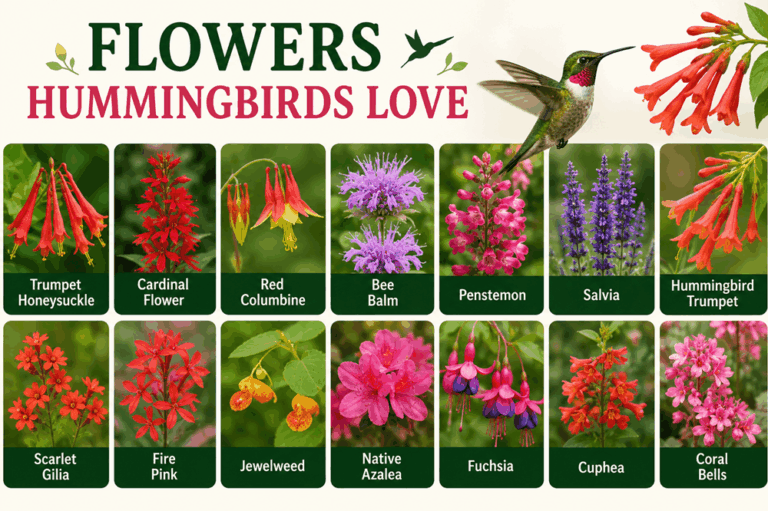
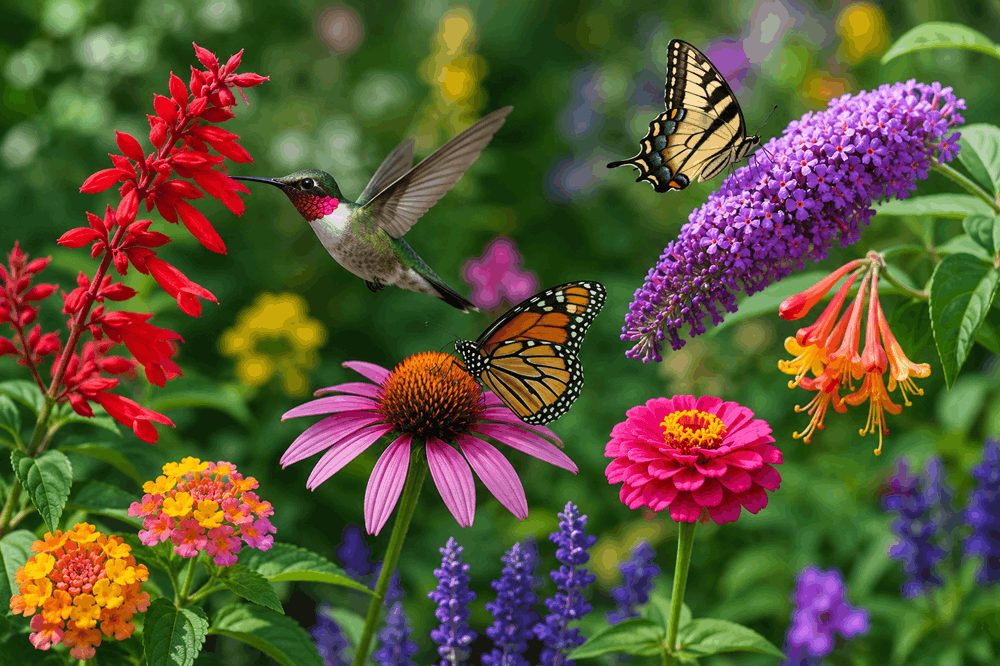
Flowers that attract hummingbirds and butterflies usually share a few traits: bright colors, nectar-rich blooms, and flower shapes that make feeding easy. Salvia, bee balm, coneflower, zinnia, lantana, butterfly bush, cardinal flower, and trumpet honeysuckle are among the most dependable choices. By combining several of these plants, you can create a garden that stays active with wings from spring through fall.
Why Do Certain Flowers Attract Hummingbirds and Butterflies?
Hummingbirds and butterflies both visit flowers for nectar, but they do not always prefer exactly the same blooms.
Hummingbirds are especially drawn to tubular flowers because their long bills and tongues can reach nectar deep inside the bloom. Red, orange, and bright pink flowers are particularly noticeable to them, although they will visit many other colors when enough nectar is available.
Butterflies tend to favor flowers that provide a broad or clustered landing surface. They often feed while resting on the flower, so flat-topped blooms and tightly grouped clusters can be especially attractive.
The best pollinator gardens include both types. Instead of relying on one “perfect” flower, grow a mixture of shapes, colors, heights, and flowering periods.
1. Bee Balm
Botanical name: Monarda spp.
Bee balm is one of the strongest all-around choices for attracting hummingbirds, butterflies, and bees.
Its shaggy flower heads appear in shades of red, pink, purple, and white. The tubular individual flowers contain nectar that hummingbirds can reach easily, while butterflies frequently perch on the larger flower clusters.
Bee balm also has aromatic foliage and works particularly well in informal perennial gardens.
Best growing conditions: Full sun to partial shade with reasonably moist soil.
Why pollinators like it: Abundant nectar and long tubular flowers.
2. Salvia
Botanical name: Salvia spp.
Salvia produces upright spikes covered with nectar-rich flowers, making it highly attractive to hummingbirds.
Red salvias are famous hummingbird magnets, but purple, blue, pink, and white varieties can also receive frequent visits from both hummingbirds and butterflies.
Different salvia species thrive in different climates, so there is usually an option suitable for warm, dry gardens as well as cooler regions.
Best growing conditions: Full sun and well-drained soil for most varieties.
Why pollinators like it: Numerous tubular blossoms provide repeated nectar sources on a single flower spike.
3. Coneflower
Botanical name: Echinacea spp.
Coneflowers are classic butterfly plants.
Their large daisy-like blooms provide a convenient landing platform, allowing butterflies to rest while feeding. Purple coneflower is the most familiar type, but modern cultivars can produce pink, white, orange, yellow, and red flowers.
Hummingbirds may also investigate coneflowers, particularly when the garden contains large groups of blooms.
If seed heads are left standing after flowering, they can provide additional garden value later in the season by attracting seed-eating birds.
Best growing conditions: Full sun and well-drained soil.
Why pollinators like it: Large nectar-rich flowers with easy landing surfaces.
4. Zinnia
Botanical name: Zinnia spp.
Zinnias are among the easiest annual flowers for creating a butterfly-friendly garden.
They bloom in vivid shades of red, orange, pink, purple, yellow, and white, and they can continue producing flowers for months when regularly deadheaded.
Butterflies commonly visit open-centered varieties where nectar and pollen are easy to reach. Hummingbirds may also stop by, especially when zinnias are planted in large colorful groups.
For maximum pollinator value, choose varieties with visible centers rather than extremely dense double flowers.
Best growing conditions: Full sun, warm weather, and good drainage.
5. Lantana
Botanical name: Lantana spp.
Lantana produces rounded clusters made up of dozens of tiny flowers. Individual clusters often contain several colors at once, such as yellow, orange, pink, red, and purple.
Butterflies are particularly fond of lantana because the clusters create convenient feeding platforms with many nectar sources packed closely together.
Hummingbirds also visit the flowers.
Lantana handles heat extremely well, making it a useful option for sunny gardens where more delicate plants struggle during midsummer.
Best growing conditions: Full sun and well-drained soil.
Important note: Some lantana varieties can spread aggressively in warm climates, so check which types are appropriate for your region before planting.
6. Cardinal Flower
Botanical name: Lobelia cardinalis
Few garden flowers look more obviously designed for hummingbirds than cardinal flower.
Its tall stems carry intensely red tubular blossoms that hummingbirds can spot easily. The flowers appear during summer and often continue into early fall.
Unlike many sun-loving pollinator plants, cardinal flower naturally appreciates moisture. It can be an excellent choice near ponds, rain gardens, or consistently damp areas.
Best growing conditions: Moist soil with sun or partial shade.
Why hummingbirds like it: Brilliant red color and deeply tubular nectar-rich flowers.
7. Trumpet Honeysuckle
Botanical name: Lonicera sempervirens
Trumpet honeysuckle is a climbing vine that produces clusters of long tubular flowers, usually in red, coral, or orange shades.
Its flower shape is exceptionally well suited to hummingbirds. Butterflies may also visit the blossoms.
The vine can be trained onto trellises, fences, arbors, and other structures, making it useful when you want to add vertical height to a pollinator garden.
Best growing conditions: Sun to partial shade with well-drained soil.
When choosing honeysuckle, it is important to select appropriate noninvasive species rather than aggressive introduced varieties.
8. Butterfly Bush
Botanical name: Buddleja spp.
As its common name suggests, butterfly bush can attract impressive numbers of butterflies.
Its long flower clusters contain many small nectar-rich blooms and may appear in purple, pink, blue, white, or reddish shades.
Hummingbirds sometimes visit as well.
However, butterfly bush deserves a little caution. Some forms can spread beyond gardens in certain regions. If butterfly bush is invasive where you live, choose a sterile cultivar or replace it with a native flowering shrub.
Best growing conditions: Full sun and well-drained soil.
9. Pentas
Botanical name: Pentas lanceolata
Pentas produce clusters of small star-shaped flowers that are particularly attractive to butterflies.
Red and pink varieties may also draw hummingbirds.
In warm climates, pentas can bloom for a very long season. In colder regions, they are commonly grown as annuals or container plants.
Best growing conditions: Full sun, warmth, and consistently watered but well-drained soil.
Why pollinators like it: Dense clusters contain many small sources of nectar.
10. Verbena
Botanical name: Verbena spp.
Verbena is another excellent butterfly flower because its blossoms form flat or rounded clusters that make comfortable feeding stations.
Many varieties continue flowering over a long period when conditions are favorable.
Purple and violet varieties are especially common, although flowers can also appear in pink, red, and white.
Best growing conditions: Full sun and soil with excellent drainage.
11. Phlox
Botanical name: Phlox spp.
Garden phlox produces dense clusters of colorful flowers during summer. The blooms may be white, pink, purple, lavender, or red.
Butterflies readily visit these flower clusters, while hummingbirds occasionally feed from them as well.
Tall garden phlox works especially well toward the middle or back of a perennial border, where its height adds another layer to a pollinator planting.
Best growing conditions: Sun to light shade with fertile, moderately moist soil.
12. Milkweed
Botanical name: Asclepias spp.
Milkweed deserves a special place in butterfly gardens because it does more than supply nectar.
Milkweed species are host plants for monarch butterfly caterpillars. Adult monarchs lay eggs on the leaves, and the developing caterpillars feed on the plant.
The flowers also attract many adult butterflies and other pollinating insects.
Different milkweed species suit different environments, so native varieties adapted to your area are generally the best choice.
Best growing conditions: Vary by species, although many prefer sunny locations.
Why butterflies need it: It provides both nectar and essential monarch caterpillar habitat.
13. Joe-Pye Weed
Botanical name: Eutrochium spp.
Joe-Pye weed produces large domed clusters of pinkish-purple flowers on tall stems.
Butterflies often gather on the blooms in significant numbers because each flower cluster offers a broad feeding platform and numerous nectar sources.
The plant can become quite tall, so it works best toward the back of garden beds or in naturalistic landscapes.
Best growing conditions: Sun to partial shade with moderately moist soil.
14. Black-Eyed Susan
Botanical name: Rudbeckia spp.
Black-eyed Susans produce cheerful yellow flowers surrounding dark central cones.
Butterflies frequently visit the blooms, and the plants are generally easy to grow once established.
They pair especially well with purple coneflower, salvia, and native grasses in informal pollinator gardens.
Best growing conditions: Full sun and reasonably well-drained soil.
15. Agastache
Botanical name: Agastache spp.
Agastache, often called hummingbird mint or hyssop, produces upright spikes of tubular flowers that can attract hummingbirds, butterflies, and bees simultaneously.
Some varieties have strongly aromatic foliage, while flower colors range from purple and blue to orange, pink, and red.
Many species tolerate heat and relatively dry conditions once established.
Best growing conditions: Full sun with excellent drainage.
What Flower Colors Attract Hummingbirds Most?
Hummingbirds are strongly associated with red flowers, and red is certainly an effective color for attracting their attention. Orange and hot pink flowers are also excellent choices.
That does not mean you need an entirely red garden.
Hummingbirds routinely visit purple, blue, yellow, and white flowers when those plants offer good nectar. Flower shape and nectar availability matter just as much as color.
A mixture of colors is usually more attractive visually and allows the garden to support a wider variety of pollinators.
What Flowers Attract the Most Butterflies?
Butterflies often favor flowers with broad clusters or open centers because these shapes allow them to land while feeding.
Some especially reliable choices include:
- Milkweed
- Joe-Pye weed
- Coneflower
- Zinnia
- Lantana
- Verbena
- Pentas
- Butterfly bush
- Black-eyed Susan
Native flowers can be particularly valuable because local butterflies have evolved alongside them.
How to Create a Garden for Both Hummingbirds and Butterflies
Planting one nectar flower helps, but designing the entire garden around pollinator needs produces much better results.
Grow Flowers in Groups
Plant several of the same flower together rather than scattering individual plants throughout the yard. Larger patches are easier for hummingbirds and butterflies to notice.
Choose Different Flower Shapes
Include tubular flowers for hummingbirds and open or clustered flowers for butterflies.
For example, combining salvia, coneflower, milkweed, and zinnia creates several different feeding options in one planting.
Keep Something Blooming All Season
Pollinators need reliable food rather than a brief explosion of flowers.
Select plants with overlapping flowering periods so that some nectar source is available from spring through fall.
Include Native Plants
Native plants often provide particularly useful food and habitat for local insects and birds.
They may also require less water and care once established because they are adapted to local growing conditions.
Avoid Unnecessary Pesticides
A garden cannot effectively support butterflies if insecticides are routinely killing the insects using it.
If pest treatment becomes necessary, use targeted methods and avoid spraying flowers while pollinators are actively visiting them.
Provide Water and Shelter
A pollinator garden should offer more than nectar.
Shrubs, small trees, dense perennials, and climbing vines provide places where hummingbirds can rest or hide.
Butterflies may use sunny stones for warming themselves and sheltered areas during strong wind.
Do Hummingbird Feeders Replace Nectar Flowers?
No. A hummingbird feeder can supplement a garden, but flowers provide a more complete habitat.
A diverse garden supports insects that hummingbirds also eat, provides natural shelter, and offers nectar at numerous locations rather than at one concentrated feeding point.
Using flowers and feeders together can work well, but the garden itself should remain the foundation.
Annual or Perennial Flowers: Which Are Better?
Both are useful.
Annual flowers such as zinnias, pentas, and some salvias can provide large amounts of color and nectar during a single growing season.
Perennials such as bee balm, coneflower, milkweed, cardinal flower, and agastache can return year after year when suited to the climate.
A combination is often ideal. Perennials establish the permanent structure of the pollinator garden, while annuals fill gaps and extend the flowering season.
Bottom Line
The best flowers that attract hummingbirds and butterflies provide plenty of nectar throughout the growing season. Bee balm, salvia, zinnia, coneflower, lantana, milkweed, cardinal flower, agastache, and trumpet honeysuckle are especially useful choices.
Instead of planting only one species, combine tubular hummingbird flowers with broad butterfly-friendly blooms and include plants that flower at different times of year. Add native species whenever possible, minimize pesticide use, and provide shelter as well as food.
With enough variety, even a relatively small garden can become a regular stopping place for hummingbirds, butterflies, bees, and other pollinators—and one of the liveliest parts of the landscape.