Flowers That Start With Z: Beautiful Blooms, Meanings, Uses, and Growing Tips
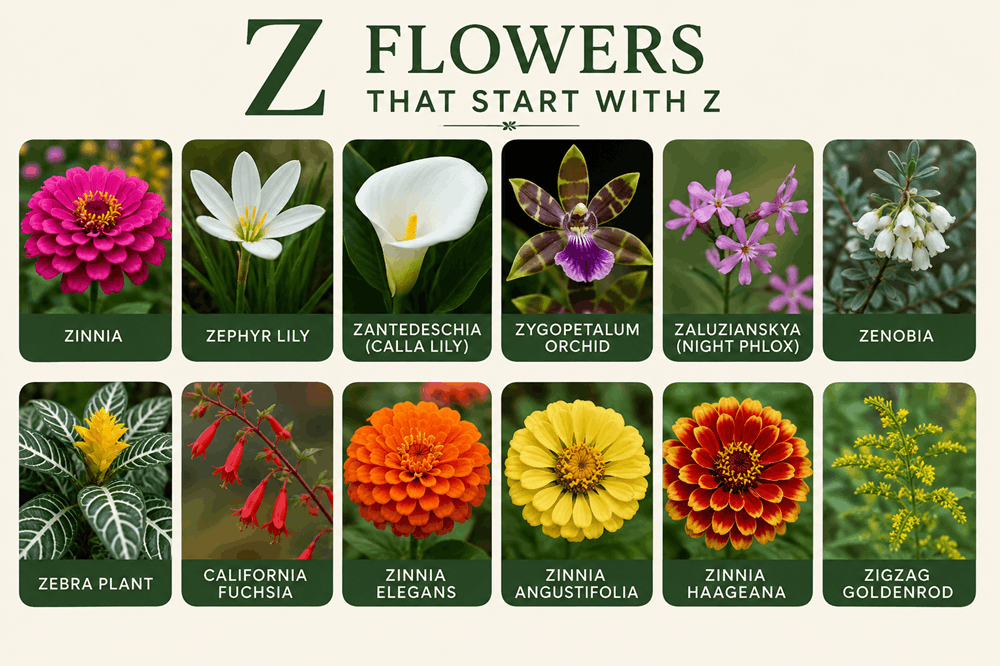
Flowers that start with Z are surprisingly varied, even though Z is one of the least common letters in plant names. Zinnias bring bold summer color, zephyr lilies appear almost magically after rain, and Zygopetalum orchids produce exotic, often fragrant flowers. There are also lesser-known choices such as Zenobia, Zaluzianskya, and California fuchsia, once widely called Zauschneria.
If you are building an alphabetical flower list, choosing plants for a garden, or simply curious about unusual names, these Z flowers offer much more than novelty.
1. Zinnia
Botanical name: Zinnia spp.
Zinnia is easily the best-known flower beginning with Z. These cheerful annuals produce daisy-like blooms in an enormous range of colors, including pink, red, orange, yellow, white, purple, green, and multicolored combinations.
Zinnias are especially popular because they grow quickly from seed and continue blooming through much of summer when regularly deadheaded. Depending on the variety, plants may remain compact or grow several feet tall.
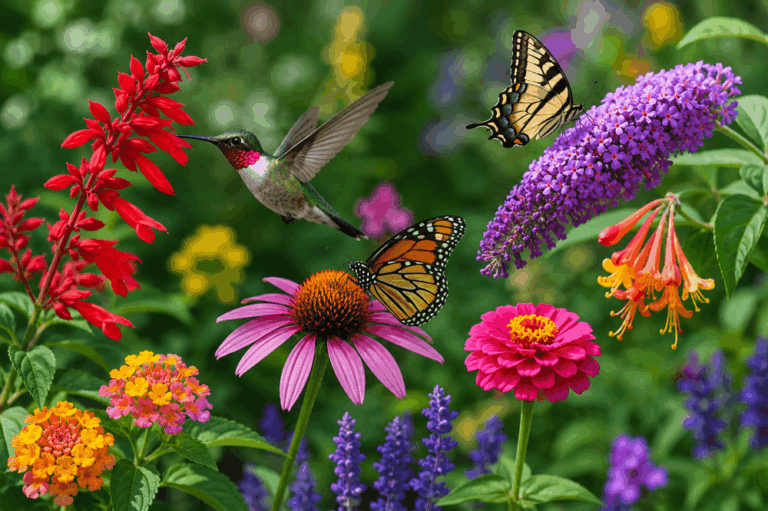
The flowers are also valuable to pollinators. Butterflies frequently visit open-centered varieties, making zinnias a practical choice for wildlife-friendly gardens.
Best growing conditions: Full sun, warm weather, and well-drained soil.
Common meaning: Friendship, affection, remembrance, and lasting bonds.
2. Zephyr Lily
Botanical name: Zephyranthes spp.
Zephyr lilies are delicate flowering bulbs known for suddenly producing blooms after periods of rain. For this reason, they are also commonly called rain lilies.
Their slender leaves resemble grass, while the flowers rise individually above the foliage. Depending on the species and cultivar, zephyr lilies may bloom in white, pink, yellow, or soft peach shades.
One of their most appealing characteristics is the way they seem to appear almost overnight following summer showers. A patch that looked like ordinary foliage can suddenly become filled with flowers.
Best growing conditions: Full sun to partial shade with soil that drains well but receives moisture during the growing season.
Common meaning: Renewal, new beginnings, hope, and unexpected beauty.
3. Zantedeschia
Botanical name: Zantedeschia spp.
Zantedeschia is the botanical genus better known as the calla lily. Despite its familiar name, it is not a true lily.
What appears to be one large flower is actually a specialized structure. The elegant trumpet-shaped portion is called a spathe, while the small true flowers are grouped on the central spike known as the spadix.
White calla lilies are classics in wedding and sympathy arrangements, but modern cultivars can produce yellow, burgundy, pink, orange, purple, and nearly black flowers.
Their architectural shape gives them a dramatically different appearance from typical garden flowers.
Best growing conditions: Bright light, rich soil, consistent moisture, and warm temperatures during active growth.
Common meaning: Beauty, purity, elegance, sympathy, and rebirth.
Calla lilies contain irritating calcium oxalate crystals, so they should not be treated as edible plants and should be kept away from pets or children likely to chew them.
4. Zygopetalum Orchid
Botanical name: Zygopetalum spp.
Zygopetalum orchids are among the most exotic flowers beginning with Z. Their blooms often feature dramatic combinations of green, brown, burgundy, and purple.
Many varieties also produce a noticeable sweet fragrance, giving them an additional attraction beyond their unusual appearance.
Although they look highly specialized, Zygopetalum orchids can be grown successfully by attentive home gardeners. They generally appreciate bright indirect light, good airflow, moderate temperatures, and an orchid-growing medium that drains freely.
Best growing conditions: Bright filtered light and evenly moist but well-aerated roots.
Common meaning: Orchids generally symbolize beauty, admiration, refinement, and rarity.
5. Zaluzianskya
Botanical name: Zaluzianskya capensis
Zaluzianskya is much easier to remember by one of its common names: night phlox or midnight candy.
This South African plant produces small flowers that may look relatively modest during daylight hours. As evening approaches, however, the blooms open more fully and release a strong sweet fragrance.
The scent is often described as combining hints of vanilla, honey, almond, or chocolate, although fragrance perception varies from person to person.
Night phlox is particularly interesting in gardens designed to be enjoyed after sunset. Planting it near patios, windows, or pathways makes its evening fragrance easier to notice.
Best growing conditions: Plenty of sunlight, moderate watering, and well-drained soil.
Notable feature: Strong nighttime fragrance.
6. Zenobia
Botanical name: Zenobia pulverulenta
Zenobia is an attractive flowering shrub native to the southeastern United States. It is sometimes called honeycup or dusty zenobia.
The plant produces clusters of small, bell-shaped white flowers that can resemble miniature bells hanging from arching branches. The foliage may develop a bluish or silvery appearance, adding interest even when the shrub is not flowering.
Zenobia naturally grows in moist, acidic environments and can be especially useful in gardens where plants such as azaleas, blueberries, or rhododendrons already thrive.
Best growing conditions: Acidic soil with consistent moisture and sun to partial shade.
Garden appeal: Delicate flowers combined with attractive blue-green foliage.
7. Zebra Plant
Botanical name: Aphelandra squarrosa
The zebra plant is primarily famous for its dramatic dark green leaves marked with bright white veins. However, mature plants can also produce striking yellow flower spikes.
The yellow structures that attract most attention are colorful bracts surrounding the smaller actual flowers. Together, they create an upright display that contrasts strongly against the striped foliage.
Zebra plants are usually grown as houseplants because they prefer warm temperatures and relatively high humidity.
Best growing conditions: Bright indirect light, warmth, humidity, and consistently moist but not waterlogged soil.
Why grow it: It combines ornamental foliage with colorful flowering displays.
8. Zauschneria, or California Fuchsia
Current botanical classification: Commonly placed within Epilobium, especially Epilobium canum.
Gardeners may still encounter the older name Zauschneria when looking for plants beginning with Z. These plants are widely known as California fuchsia.
They produce masses of narrow red or orange tubular flowers, often during late summer and fall when many other garden plants are beginning to decline.
Hummingbirds are particularly attracted to the tubular flowers.
California fuchsia is also valued in dry-climate gardening because established plants can tolerate relatively low-water conditions.
Best growing conditions: Full sun and excellent drainage.
Garden value: Late-season color, drought tolerance, and strong hummingbird appeal.
9. Zinnia Elegans
Botanical name: Zinnia elegans
Although zinnias have already appeared on this list, Zinnia elegans deserves separate mention because it is the species behind many of the familiar garden zinnias grown today.
Its cultivars vary dramatically. Some produce simple single flowers with visible centers, while others develop dense double blooms resembling dahlias or pom-poms.
Colors can range from soft pastels to intensely saturated reds, oranges, purples, and pinks.
For cut-flower gardeners, tall varieties are especially useful because their strong stems and long vase life make them excellent for summer arrangements.
10. Zinnia Angustifolia
Botanical name: Zinnia angustifolia
Narrowleaf zinnia has smaller flowers than many traditional garden zinnias, but it compensates with a long flowering season and a naturally tidy growth habit.
The plants tend to spread outward rather than producing the tall stems associated with classic cutting zinnias. This makes them useful along paths, borders, containers, and the front of flower beds.
They also tolerate hot summer conditions well.
Best growing conditions: Full sun and well-drained soil.
Best use: Borders, containers, mass plantings, and low-maintenance summer color.
11. Zinnia Haageana
Botanical name: Zinnia haageana
Zinnia haageana, sometimes called Mexican zinnia, offers a warmer and slightly more rustic appearance than many large-flowered zinnias.
Its flowers commonly appear in shades of orange, red, yellow, and mahogany, sometimes with contrasting rings or tips.
Because the plants generally stay relatively compact, they can work well in informal borders and pollinator gardens.
Best growing conditions: Hot, sunny locations with good drainage.
12. Zigzag Goldenrod
Botanical name: Solidago flexicaulis
Zigzag goldenrod earns its place on a Z flower list through its common name rather than its botanical name.
The plant gets its name from the distinctive way its stem changes direction slightly between leaves, creating a subtle zigzag shape.
Its small yellow flowers appear in clusters and provide useful late-season resources for bees and other insects. Unlike some goldenrods that perform best in open sunny areas, zigzag goldenrod is naturally suited to woodland edges and partly shaded gardens.
Best growing conditions: Partial shade with moderately moist, well-drained soil.
Best use: Native gardens, woodland borders, and pollinator plantings.
Which Z Flowers Are Easiest to Grow?
If you are choosing a Z flower for your own garden, zinnias are usually the easiest place to start.
They germinate quickly, enjoy summer heat, and do not require complicated care. Seeds can often be planted directly outdoors once frost danger has passed and the soil has warmed.
Zephyr lilies are another relatively straightforward choice in climates where the bulbs can remain outdoors. Once established, they may return year after year and surprise you with flowers following periods of rain.
For dry gardens, California fuchsia is especially valuable because established plants can handle heat and reduced watering better than many traditional flowering ornamentals.
Zygopetalum orchids and zebra plants require more attention because humidity, watering, temperature, and light must be managed more carefully.
Which Flowers Starting With Z Are Best for Bouquets?
Zinnias are the obvious winner for cut-flower arrangements.
Tall varieties produce sturdy stems and come in enough colors to fit everything from informal farmhouse bouquets to bright summer centerpieces.
Calla lilies, or Zantedeschia, are another excellent choice when a bouquet needs a cleaner, more elegant appearance. Their sculptural form works particularly well in weddings and formal arrangements.
Zygopetalum orchids can also be used when an arrangement needs something unusual or luxurious, although they are less commonly available than zinnias or calla lilies.
Are There Many Flowers That Start With Z?
There are fewer familiar flower names beginning with Z than with letters such as A, C, L, or R.
Part of the difficulty comes from how plants are named. Some flowers have botanical genera beginning with Z, while others qualify only through common names. Scientific classifications can also change over time. California fuchsia, for example, was long associated with the genus Zauschneria but is now generally classified within Epilobium.
That does not make Z an uninteresting letter. In fact, its relative rarity produces an unusually diverse group that includes annual flowers, bulbs, shrubs, orchids, houseplants, and native wildflowers.
What Is the Most Popular Flower That Starts With Z?
Zinnia is by far the most recognizable flower beginning with Z.
Its popularity comes from a useful combination of characteristics: zinnias are colorful, easy to grow from seed, attractive to pollinators, suitable for cutting, and available in a remarkable range of sizes and forms.
For gardeners who want something less familiar, zephyr lilies offer delicate surprise blooms, while Zaluzianskya provides fragrance after sunset. Zygopetalum orchids are a better choice for someone searching for an exotic indoor flower.
Bottom Line
Flowers that start with Z may be relatively uncommon, but they include some exceptional garden plants. Zinnias provide months of colorful summer blooms, zephyr lilies emerge dramatically after rain, Zantedeschia offers elegant calla-like flowers, and Zygopetalum orchids bring unusual color and fragrance indoors.
Lesser-known choices such as Zenobia, Zaluzianskya, and California fuchsia make the letter Z even more interesting. Whether you want an easy annual, a fragrant nighttime flower, a pollinator plant, or simply another entry for an alphabetical flower collection, Z has more possibilities than its rarity initially suggests.