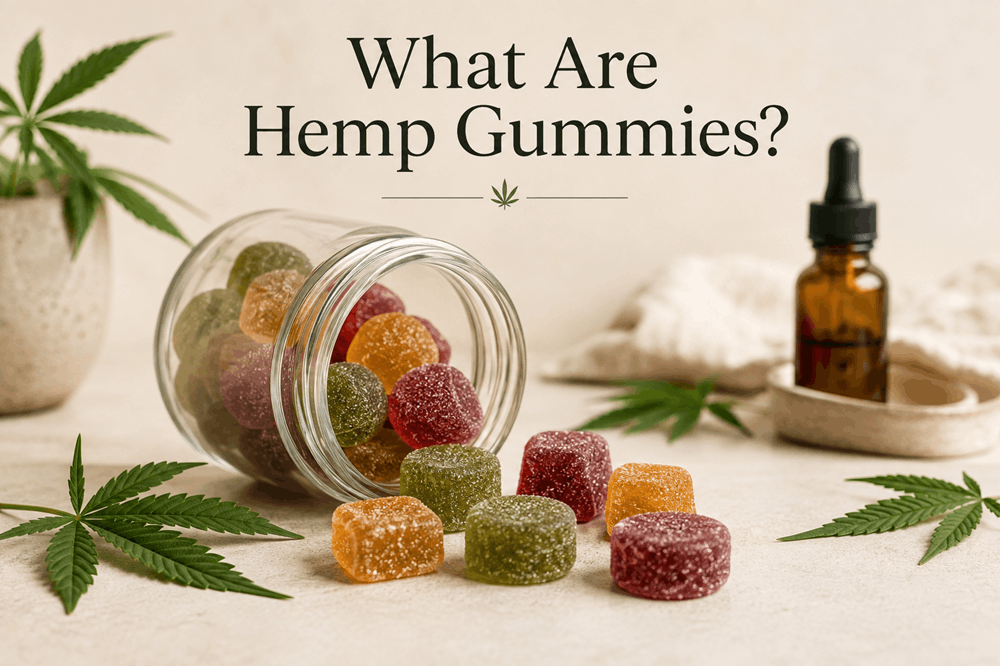
What Are Hemp Gummies? Types, Effects, Ingredients, Safety, and Buying Tips Explained
Hemp gummies are chewable products made with an ingredient obtained from hemp. Depending on the formulation, they may contain CBD, intoxicating THC, another cannabinoid, or only hemp seed oil. The word “hemp” does not reveal whether a gummy will make you high. Consumers must check the exact cannabinoids and milligrams listed on the package.
What Does “Hemp Gummy” Actually Mean?
Hemp gummies are soft, flavored candies containing one or more hemp-derived ingredients. Manufacturers usually combine the active ingredient with sugar, syrup, gelatin or pectin, flavoring, coloring, and other ingredients needed to create the gummy texture.
The term is broad and is not the name of one specific product. Two packages described as hemp gummies may produce completely different effects. One may contain non-intoxicating CBD, while another may contain enough delta-8 or delta-9 THC to cause substantial impairment.
The USDA’s hemp guidance explains that hemp is a legal and agricultural classification for certain Cannabis sativa plants and their derivatives. That classification does not mean every finished hemp product is non-intoxicating.
Before taking a gummy, identify what “hemp” means on that particular label.
The Main Types of Hemp Gummies
CBD Hemp Gummies
CBD gummies contain cannabidiol extracted from hemp. CBD does not normally produce the classic high associated with THC, but it is biologically active and can cause side effects.
People commonly buy CBD gummies for relaxation, sleep, discomfort, or stress. These uses are widely marketed, but most retail CBD gummies have not been approved by the FDA to diagnose, treat, or prevent a medical condition.
The FDA’s consumer information about CBD products notes that important questions remain about long-term use, appropriate intake, medication interactions, liver effects, and risks for vulnerable groups.
CBD gummies may contain one of three general extract types:
- Full-spectrum CBD includes CBD and other hemp compounds, potentially including measurable THC.
- Broad-spectrum CBD is generally processed to remove THC while retaining CBD and some other compounds.
- CBD isolate is intended to contain purified CBD with few or no other cannabinoids.
These labels describe manufacturing goals rather than guarantees. A batch-specific laboratory report is still needed to determine what was measured in the finished product.
Hemp-Derived Delta-9 THC Gummies
Some hemp gummies contain delta-9 THC, the cannabinoid most strongly associated with the traditional cannabis high. The molecule can remain intoxicating regardless of whether it came from legally classified hemp or marijuana.
Hemp-derived delta-9 gummies may cause:
- Euphoria or relaxation
- Altered sensory perception
- Changes in the perception of time
- Increased appetite
- Sleepiness
- Impaired memory and coordination
- Anxiety, confusion, or paranoia
A product should be judged by the number of THC milligrams in each gummy, not by the reassuring sound of the word “hemp.”
Delta-8 THC Gummies
Delta-8 THC is an intoxicating cannabinoid related to delta-9 THC. Hemp naturally produces only small amounts of delta-8, so commercial quantities are commonly manufactured by chemically converting hemp-derived CBD.
Although delta-8 is sometimes marketed as a milder form of THC, it can still produce a strong or unpleasant high. The FDA’s delta-8 THC safety guidance describes reports involving vomiting, hallucinations, anxiety, dizziness, confusion, tremors, and loss of consciousness.
The conversion process also creates quality concerns. Poor manufacturing may leave residual chemicals or produce unexpected reaction by-products that are not shown on a basic cannabinoid potency report.
Gummies With HHC or Other Cannabinoids
Some products contain HHC, delta-10 THC, THC-P, CBN, CBG, or proprietary cannabinoid blends. These ingredients may be combined with CBD or THC and marketed with terms such as sleep, energy, focus, calm, or euphoria.
Research on many of these concentrated cannabinoids remains limited. A product description may make confident claims about its effects even when controlled human evidence is weak or unavailable.
Proprietary blend names are especially difficult to evaluate when the package does not disclose the amount of each cannabinoid. The total number of milligrams in a blend is less useful when consumers cannot determine how those milligrams are divided.
Hemp Seed Oil Gummies
Some gummies contain hemp seed oil rather than CBD or THC. Hemp seed oil is pressed from hemp seeds and is primarily a nutritional oil containing unsaturated fats.
The seeds do not naturally contain meaningful concentrations of CBD or THC. A hemp seed oil gummy should therefore not be expected to cause a cannabis high or produce the effects associated with concentrated CBD.
Manufacturers sometimes emphasize the word “hemp” while listing no measurable cannabinoid content. If the label does not state the amount of CBD, THC, or another cannabinoid per serving, the product may contain only hemp seed oil.
Do Hemp Gummies Get You High?
Some do, and some do not.
Hemp gummies containing delta-9 THC, delta-8 THC, HHC, or another intoxicating cannabinoid can cause a high. CBD isolate gummies and plain hemp seed oil gummies should not normally be intoxicating.
Full-spectrum CBD gummies create more uncertainty because they may contain some THC. A small amount may not produce noticeable intoxication for most users, but larger servings, repeated use, individual sensitivity, or inaccurate labeling can change the experience.
Do not rely on terms such as:
- Legal hemp
- Natural
- Wellness gummy
- Full-spectrum
- Farm Bill compliant
- Relaxing
- Non-marijuana
None of these phrases tells you exactly how many milligrams of intoxicating cannabinoids are in one serving.
How Long Do Hemp Gummies Take to Work?
Gummies are swallowed and processed through the digestive system. Their effects generally begin more slowly than the effects of inhaled cannabinoids.
A person may not feel the full effect immediately. Food intake, metabolism, body composition, tolerance, formulation, and cannabinoid dose can all influence the timing.
The CDC’s guidance on cannabis edibles explains that edible effects may take up to two hours to appear. This delay can lead someone to take another gummy before the first serving has fully taken effect.
The result may be a much stronger combined dose than intended. Waiting for the complete effect of one serving is especially important with THC gummies.
Effects may also last for several hours and sometimes continue after the strongest part of the experience has passed. A person who no longer feels intensely high may still have impaired reaction time, attention, or coordination.
How to Read a Hemp Gummy Label
Start with the amount per gummy. The largest number on the front of the package often represents the total amount in the entire container rather than one serving.
For example, a package marked “500 mg” may contain 25 gummies with 20 milligrams in each piece. It could also contain 50 gummies with 10 milligrams each. The front label alone may not make the distinction obvious.
Check the following:
- The exact cannabinoid or cannabinoids
- Milligrams per gummy
- Milligrams per serving
- Total milligrams in the container
- Number of gummies in the package
- Suggested serving size
- Full ingredient list
- Batch or lot number
- Manufacturing or expiration date
- Link to a matching certificate of analysis
Be careful when a product lists only “hemp extract” without explaining which cannabinoids the extract contains.
What Is a Certificate of Analysis?
A certificate of analysis, commonly called a COA, is a laboratory report showing what was measured in a product sample. Many packages provide access through a QR code.
The report should match the batch or lot number on the gummy package. A report from another flavor, strength, or production run does not prove what is in the product you purchased.
A useful COA should show:
- CBD concentration
- Delta-9 THC concentration
- Delta-8 THC concentration when relevant
- Other detected cannabinoids
- Testing date
- Laboratory identity
- Sample or batch number
- Results for pesticides, solvents, heavy metals, and microorganisms
A potency-only report confirms fewer details than a full contaminant panel. Converted cannabinoids such as delta-8 may require particular attention to residual solvents and reaction by-products.
Are Hemp Gummies FDA-Approved?
Most retail hemp gummies are not FDA-approved medicines. The FDA has approved one prescription drug containing purified CBD for certain seizure disorders, but that approval does not apply to ordinary gummies sold online or in stores.
The agency’s cannabis and CBD regulatory guidance also explains that meeting the federal definition of hemp does not exempt a product from other food, drug, and labeling requirements.
Statements such as lab tested, doctor formulated, pharmaceutical grade, or made in an FDA-registered facility do not mean the FDA reviewed and approved the finished gummy.
Possible Side Effects
The effects depend on the active ingredient.
CBD gummies may cause:
- Sleepiness
- Diarrhea
- Changes in appetite
- Fatigue
- Medication interactions
- Changes in liver-enzyme levels
THC and other intoxicating gummies may cause:
- Impaired coordination
- Anxiety or panic
- Paranoia
- Confusion
- Dizziness
- Rapid heartbeat
- Nausea or vomiting
- Excessive sedation
Combining gummies with alcohol, sleep medication, sedatives, or other cannabis products can increase impairment and drowsiness.
Can Hemp Gummies Cause a Positive Drug Test?
Yes, depending on their contents.
Gummies containing delta-9 THC, delta-8 THC, or related intoxicating cannabinoids can lead to a positive cannabinoid drug test. Full-spectrum CBD products may also expose the user to enough THC to create a testing risk, particularly with regular use.
Standard drug tests generally do not excuse THC exposure because the product was labeled hemp-derived or legally sold. A product described as THC-free may reduce the risk, but labeling errors and contamination remain possible.
Anyone subject to employment, military, athletic, legal, or treatment-related testing should not assume that a hemp gummy is drug-test safe.
Keep Hemp Gummies Away From Children and Pets
Gummies can resemble ordinary candy. Bright colors, sweet flavors, and familiar shapes make accidental ingestion more likely.
Store them in their original child-resistant packaging, preferably inside a locked cabinet. Do not place them in an ordinary candy jar, plastic food bag, or unmarked container.
Children and pets can experience more serious effects because of their smaller body size. Seek prompt medical or veterinary guidance after an uncertain or potentially intoxicating exposure rather than waiting for severe symptoms.
How to Choose a Hemp Gummy
First decide whether you want CBD, THC, another cannabinoid, or simply hemp seed oil. Do not begin shopping until you understand which type matches your intention.
Choose products that provide:
- Clear cannabinoid amounts per gummy
- A complete ingredient list
- A readable batch number
- A current, matching laboratory report
- Contaminant testing
- Child-resistant packaging
- Manufacturer contact information
- Realistic claims rather than promises to cure disease
Avoid products that hide active ingredients behind vague blend names, imitate popular candy brands, make extreme medical claims, or provide a QR code leading to an unrelated report.
The Bottom Line
Hemp gummies are chewable products made with hemp-derived ingredients, but the term does not identify one specific cannabinoid or effect. A hemp gummy may contain CBD, delta-8 THC, hemp-derived delta-9 THC, HHC, another cannabinoid, or only hemp seed oil.
Some hemp gummies can cause a strong high, while others should not be intoxicating. The difference is determined by the ingredients and milligrams—not by the word “hemp.”
Before using one, read the cannabinoid amounts per gummy, match the batch number to a laboratory report, check for contaminant testing, and consider medication, driving, pregnancy, drug-testing, and child-safety risks. Treat every gummy according to what it actually contains rather than how harmless its packaging appears.