Best Soil for Cannabis: How to Choose the Right Growing Medium
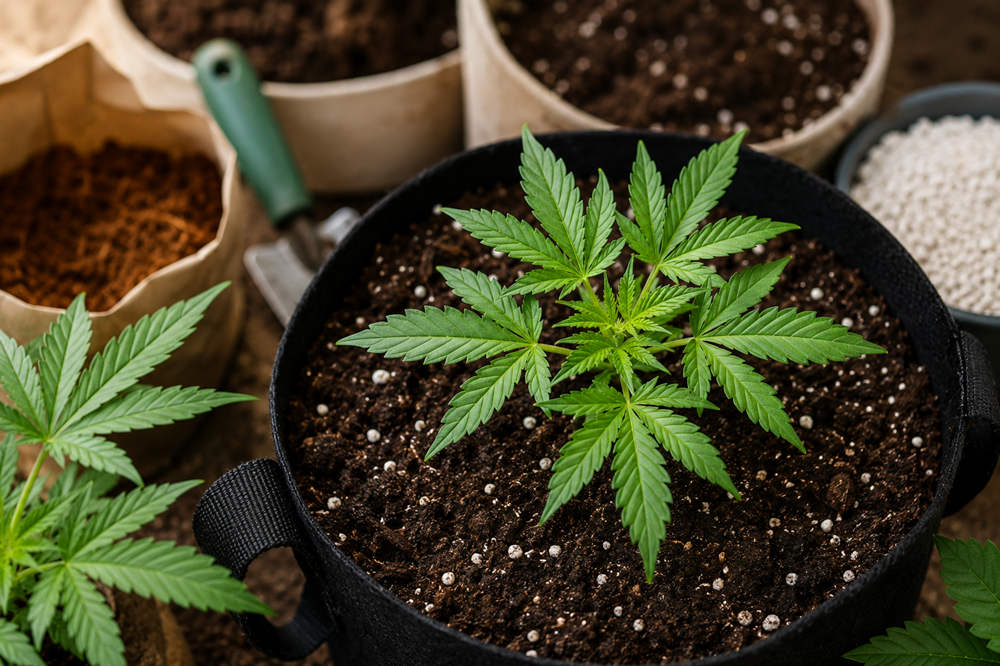
For most cannabis grown in containers, the best soil is a lightweight potting medium that drains freely, holds moderate moisture, and maintains enough pore space for oxygen to reach the roots. Peat-based mixes, coco coir, and properly prepared living soil can all work, but each requires a different approach to watering and nutrition.
Dense garden soil is usually unsuitable for containers because it can compact and remain wet for too long. It may work well for outdoor, in-ground cultivation when its drainage, fertility, pH, and contamination risks have been evaluated.
There is no single formula that performs best in every setting. Cannabis studies comparing growing substrates have found that peat, coir, and blended media can influence root development, biomass, and floral yield differently depending on the cultivar and production system. The best choice is therefore the medium whose physical and chemical properties match the way the plant will be grown.
What Does Good Cannabis Soil Need?
A suitable root medium must provide water, oxygen, structural support, and accessible nutrients at the same time. Fertility alone cannot compensate for poor drainage or unstable pH.
Drainage and Aeration
After irrigation, excess water should leave the container while small pores retain enough moisture for the plant. Larger pores then refill with air, supplying oxygen for root respiration and nutrient uptake.
A medium dominated by fine particles can remain saturated because water occupies most of its pore space. A very coarse medium presents the opposite problem: it may dry too quickly and require frequent irrigation. The goal is a stable balance rather than the fastest possible drainage.
Container drainage also depends on the pot itself. Drainage holes must remain open, and containers should not sit in trays of standing water. University extension guidance on container growing media recommends lightweight potting mixes with coarse ingredients instead of soil dug directly from the ground.
Water-Holding Capacity
The appropriate level of moisture retention depends on the growing environment. Outdoor pots exposed to direct sun and wind may need a more water-retentive mix than plants kept indoors under moderate conditions.
Container size also changes how quickly a medium dries. Small pots have less water reserve and larger temperature fluctuations, while larger containers usually maintain more stable root-zone conditions.
A Manageable pH
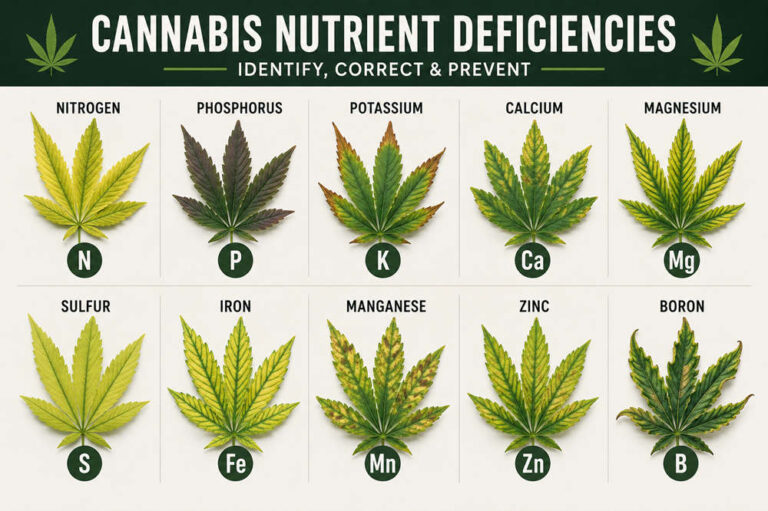
Root-zone pH affects the chemical availability of nutrients. Even a fertile soil can produce apparent deficiency symptoms when its pH limits the plant’s ability to absorb particular elements.
As a practical starting point, peat- and coir-based media are commonly managed at approximately pH 5.5 to 6.5. Mineral soils are often managed closer to pH 6.0 to 7.0. These are broad working ranges rather than universal cannabis requirements; the appropriate target depends on the medium, irrigation water, fertilizer, cultivar, and testing method.
A cannabis substrate-pH study found reduced plant growth at pH 3.0 and 4.0 compared with conditions at pH 5.0 or above. The research also showed that strongly acidic conditions can increase the accumulation of certain micronutrients. This supports monitoring pH rather than relying only on leaf appearance.
Moderate Fertility
The richest soil is not necessarily the best soil. Excessive fertilizer increases the concentration of dissolved salts around the roots, which can interfere with water uptake and injure young tissue.
High levels of one nutrient may also disrupt the uptake or distribution of others. Cannabis research has found that raising phosphorus beyond an adequate supply does not necessarily increase floral yield or cannabinoid concentration. In one study, increasing phosphorus input threefold produced a large increase in phosphorus lost through leachate without improving yield.
These findings do not mean that cannabis needs little nutrition. They show that nutrients should be supplied according to plant demand rather than added on the assumption that more fertilizer will produce a larger harvest.
Comparing Cannabis Growing Media
Many products described as cannabis “soil” contain little or no natural mineral soil. They are more accurately classified as potting mixes or soilless substrates.
| Growing medium | Main strengths | Main limitations | Common use |
|---|---|---|---|
| Peat-based potting mix | Retains water, is lightweight, and is widely available | Can become difficult to rewet after severe drying; pH must be managed | General indoor and outdoor container growing |
| Coco coir | Combines useful water retention with good root-zone aeration | Requires planned fertilization and properly processed coir | Controlled container systems with frequent irrigation |
| Living soil | Supports microbial activity and organic nutrient cycling | Formulas vary widely and may be too concentrated for young plants | Larger containers and organic-style cultivation |
| Native mineral soil | Can support large outdoor root systems and retain nutrients | May be compacted, poorly drained, unbalanced, or contaminated | Outdoor, in-ground cultivation after testing |
Peat-Based Potting Mix
Peat moss holds substantial moisture while remaining lightweight. Commercial mixes usually combine it with perlite, bark, or another coarse material to maintain drainage.
Because natural peat is acidic, manufacturers commonly add lime to adjust and buffer the pH. Some products also contain starter fertilizer or controlled-release nutrients. Reading the label is important because a pre-fertilized mix should not be treated like an unfertilized substrate.
Peat may repel water after becoming extremely dry. Slow, even irrigation can help rehydrate the entire container rather than allowing water to run down gaps around the edges.
Coco Coir
Coco coir is produced from coconut husks and is considered a soilless substrate. Properly prepared coir can hold water while maintaining air space, which makes it useful in systems where irrigation and fertilizer are closely controlled.
Coir does not provide complete nutrition. It is generally paired with a fertilizer program and irrigated more frequently than conventional soil. Its interactions with calcium, magnesium, potassium, and sodium also make product quality important. Washed and buffered horticultural coir is preferable to poorly processed material with elevated salts.
Living Soil
Living soil is designed to support microorganisms that participate in the decomposition of organic matter and the cycling of nutrients. It commonly contains compost, worm castings, a base material, coarse aeration ingredients, and selected mineral amendments.
The name is not a quality standard. One living-soil mix may be balanced and mature, while another may contain excessive nutrients, unfinished compost, or too many fine particles. Larger soil volumes are usually easier to manage because they provide more moisture and nutrient buffering.
Native Mineral Soil
Natural soil contains sand, silt, clay, organic matter, minerals, water, air, and living organisms. A loam with stable structure is often easier to manage than soil dominated by either sand or clay.
Sandy soil drains rapidly but may have limited water- and nutrient-holding capacity. Clay-rich soil can retain more water and nutrients but may become compacted or poorly aerated. These characteristics should be assessed before planting rather than corrected with a generic amendment package.
Useful Ingredients in a Cannabis Soil Mix
A dependable mix uses different materials for specific functions. The proportions should reflect the irrigation system, container, climate, and fertilizer plan rather than a fixed universal recipe.
Base Materials
Peat moss and coco coir are common base materials because they retain water without adding the weight of mineral soil. They are normally combined with coarser ingredients to prevent the mix from settling and losing pore space.
Mature compost can supply organic matter, microorganisms, and nutrients. Its composition varies, however, so it should be treated as an active component rather than neutral filler.
Aeration Materials
Perlite, pumice, coarse bark, and rice hulls can create larger pores that improve gas exchange and drainage.
Perlite is lightweight and widely available. Pumice is heavier and tends to remain more evenly distributed through the mix. Rice hulls gradually decompose, while aged bark can add both structure and limited moisture retention. The best option is the one that maintains porosity for the expected length of the crop.
Organic Matter
Stable organic matter can improve nutrient retention, aggregation, microbial activity, and moisture management. Mature plant-based compost and worm castings are common additions.
Large quantities of fine compost can make a container mix dense and excessively wet. Manure-based compost may also contain substantial phosphorus, potassium, sodium, or soluble salts. Research-based guidance on excessive compost use notes that testing is the most reliable way to identify accumulated nutrients and salts.
Finished compost should have an earthy odor and a relatively uniform appearance. Sour, rotten, or ammonia-like odors can indicate anaerobic conditions or incomplete decomposition.
Mineral and pH Amendments
Calcitic or dolomitic lime may be used to raise the pH of an acidic medium. Dolomitic lime supplies both calcium and magnesium, while calcitic lime contains a higher proportion of calcium.
Gypsum supplies calcium and sulfur but does not raise pH in the same way as lime. These materials should be selected to correct a measured condition, not included automatically because they appear in a general soil recipe.
The Best Soil for Different Growing Situations
Indoor Containers
A lightweight peat- or coir-based potting medium is generally the most manageable choice for indoor containers. It should have a consistent texture, visible aeration material, and clearly identified nutrient content.
Ordinary garden soil is less suitable indoors because it may compact after repeated watering. It can also introduce weed seeds, insects, or soilborne pathogens into the growing space.
Outdoor Containers
Outdoor containers experience stronger sunlight, wind, rain, and temperature fluctuations. A suitable mix may need slightly greater moisture retention than an indoor mix, but it must still drain efficiently after heavy rain.
The container material affects moisture loss. Fabric and unglazed clay pots dry faster than thick plastic containers. Larger pots usually provide more stable moisture and root temperatures than smaller ones.
Growing Directly in the Ground
For in-ground cultivation, test the existing soil before adding fertilizer, lime, sulfur, or mineral amendments. A soil test can identify pH, organic matter, phosphorus, potassium, soluble salts, and other properties needed for an informed plan.
Slow-draining ground may require raised beds or a better planting location. Adding a small amount of coarse material to heavy clay does not automatically correct its structure and may create an undesirable consistency. Regular additions of mature organic matter and protection from compaction are more useful long-term strategies.
Past land use also matters. Soil near old buildings, industrial sites, heavily traveled roads, treated lumber, or former dumping areas may contain unwanted contaminants. Cannabis sativa can accumulate certain metals, although uptake varies with the contaminant, soil chemistry, cultivar, and plant tissue. Ground with an uncertain history should be tested before plants intended for ingestion or inhalation are grown there.
Seedlings and Young Plants
Seedlings benefit from a light, evenly textured medium with moderate moisture retention. The mix should be porous but not so coarse that the area around a small root system dries immediately.
A lightly fertilized propagation mix is generally safer than a concentrated living soil or heavily amended potting product. Nutrition can be increased gradually after the plant develops a larger root system and several sets of leaves.
How to Evaluate Bagged Cannabis Soil
Marketing terms such as “premium,” “organic,” “super,” and “cannabis-specific” do not describe how the medium will behave after irrigation. The following details are more informative:
- Base material: Check whether the product is primarily peat, coir, compost, bark, mineral soil, or a combination.
- Texture: The mix should feel loose and resilient rather than muddy, sticky, or heavily compacted.
- Aeration: Look for perlite, pumice, coarse bark, rice hulls, or another material that preserves pore space.
- Added fertilizer: Determine whether the product contains a mild starter charge, slow-release fertilizer, or concentrated organic amendments.
- Growth-stage suitability: A nutrient-rich flowering mix may be too concentrated for seedlings or newly rooted cuttings.
- Bag condition: Avoid products that are waterlogged, strongly sour-smelling, or visibly contaminated.
- Technical information: Useful labels may provide pH, electrical conductivity, ingredient lists, or batch-testing details.
Formulas can vary among manufacturers and may change over time. Testing a small quantity before filling multiple large containers can reveal how quickly the mix drains, dries, and responds to the intended fertilizer program.
Testing Soil, Substrate, and Irrigation Water
pH and Electrical Conductivity
Measure pH with a method appropriate to the material. Native soil, peat-based potting mix, coir, and irrigation runoff are not always tested or interpreted in the same way.
Electrical conductivity, or EC, estimates the concentration of dissolved salts. A high result can indicate excessive fertilizer, saline water, nutrient-rich compost, poor drainage, or inadequate leaching. Because test procedures produce different numerical ranges, results should be compared only with guidance for the same method.
Irrigation-Water Quality
Water changes the root zone every time the plant is irrigated. Water pH describes its current acidity or alkalinity, while water alkalinity indicates its capacity to resist pH change and influence the growing medium over time.
A water source can have an acceptable pH but enough alkalinity to gradually push a peat- or coir-based medium upward. Testing may also identify sodium, chloride, bicarbonates, and total salts that could accumulate around the roots.
Nutrients and Contaminants
A basic laboratory soil test generally provides more reliable guidance than choosing amendments from visible plant symptoms alone. Optional tests may include soluble salts, lead, other trace elements, or contaminants associated with the site’s history.
Testing before amending is especially important because adding nutrients to an existing excess can make the root-zone imbalance harder to correct.
Which Soil Is Best for Cannabis?
For most container growers, the best general choice is a clean, loose peat- or coco-based potting medium with coarse aeration material, moderate fertility, and predictable drainage. Peat is straightforward and moisture-retentive, while coco coir offers greater control when it is paired with regular irrigation and a complete fertilizer program.
Living soil can support biological nutrient cycling, but its ingredients, maturity, and concentration must be evaluated carefully. Native mineral soil is most appropriate for in-ground cultivation after drainage, fertility, pH, and possible contamination have been assessed.
The most useful indicators are not marketing labels but measurable root-zone properties: sufficient oxygen, balanced moisture retention, manageable pH, appropriate nutrient levels, and low contamination risk.