How to Store Cannabis Seeds and Keep Them Viable
Store cannabis seeds in a dry, sealed container away from heat, direct light, and frequent temperature changes. A cool cupboard can work for short-term storage, while a refrigerator or freezer offers better protection when seeds must be preserved for longer.
The most important factors are moisture and temperature. Cannabis seeds tolerate drying and cold storage, but their ability to germinate gradually declines when they are exposed to warm or humid conditions.
Why Storage Conditions Matter
A cannabis seed contains a living embryo. Although the seed appears inactive, chemical reactions continue slowly inside it. Warm temperatures speed up those reactions, while excess moisture can encourage mold, premature germination, and faster deterioration.
A 2025 study of industrial hemp seeds found that viability declined more rapidly when high moisture levels were combined with warmer storage temperatures. For intermediate storage, the researchers obtained better results at approximately 4°C to 10°C when seed moisture remained below 8 percent.
Most home growers cannot measure seed moisture precisely. The practical lesson is simply to make sure the seeds are properly dried before sealing them and to prevent humid air from reaching them during storage.
Prepare Cannabis Seeds for Storage
Begin by checking the condition of the seeds. Remove any that are cracked, crushed, soft, moldy, wet, or damaged by insects. A deteriorating seed can introduce moisture or contamination into a container holding otherwise healthy seeds.
Color alone does not confirm quality. Mature cannabis seeds are commonly brown, gray, tan, or mottled, but their appearance varies by cultivar. A seed that looks normal may still have low viability, so visual inspection should be used mainly to identify obvious damage.
Dry Freshly Collected Seeds Carefully
Purchased cannabis seeds are usually dry enough to store in their original packets. Keep those packets closed until you are ready to place them inside a more protective container.
Freshly collected seeds require additional preparation. Allow them to mature and dry in a cool environment with low humidity before sealing them. Do not use an oven, heater, hair dryer, or direct sunlight, since excessive heat can injure the embryo.
Professional seed banks use carefully controlled humidity and moisture testing, but the same level of precision is rarely available at home. When the drying conditions are uncertain, refrigeration is more forgiving than freezing.
Label Each Seed Lot
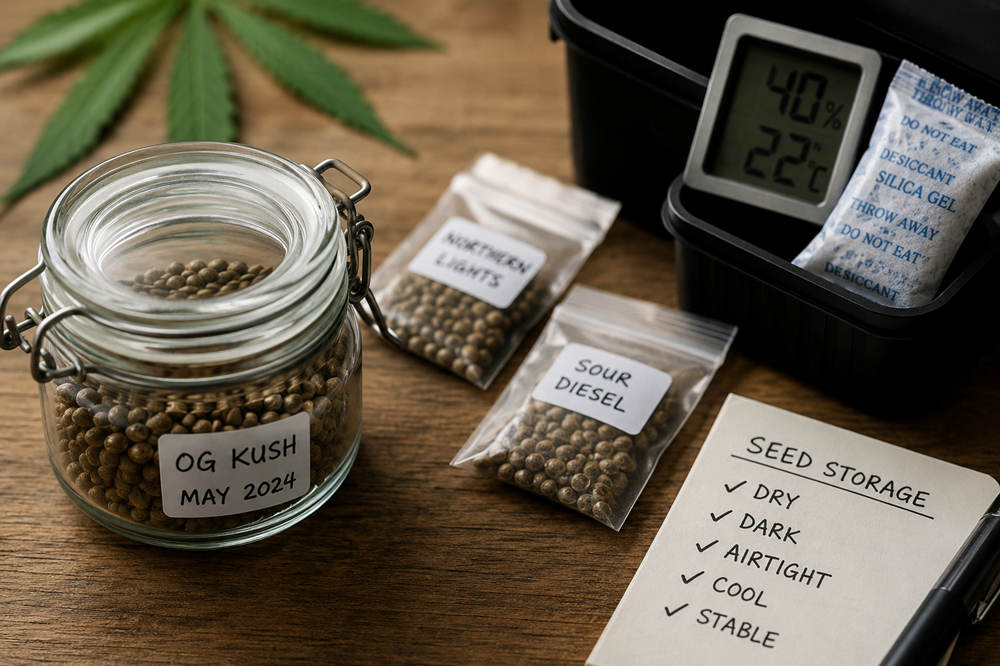
Separate different cultivars into individual packets or seed tubes. Include the cultivar name, source, and storage date on each label.
This information is more useful than appearance because seeds from unrelated cultivars may look nearly identical. Dating each lot also makes it easier to decide which seeds should be tested or used first.
Choose an Airtight Storage Container
The container should prevent moisture from entering while protecting the seeds from crushing, pests, spills, and household odors.
Suitable options include:
- Small glass jars with tight-fitting lids
- Sealed seed tubes
- Foil-laminate seed packets
- Moisture-resistant plastic containers
- Vacuum-sealed bags intended for dry storage
Original paper packets are useful for labeling and separating cultivars, but paper alone does not provide reliable protection from humid air. Place the packets inside a sealed jar or moisture-resistant outer container.
A small silica gel packet can help maintain a dry environment. It should be clean, intact, and added only after the seeds are already dry. A desiccant cannot safely correct seeds that were sealed while damp.
Use a container that is large enough to hold the packets without crushing them but not so large that the contents move around excessively. When only a few seeds will be used at a time, dividing the collection into several small containers reduces how often the entire supply is exposed to room air.
Where Should Cannabis Seeds Be Stored?
The best location depends on the intended storage period and how often the seeds will be accessed.
Cool Cupboard for Short-Term Storage
A cool interior cupboard or closet is suitable when the seeds are likely to be used relatively soon. Choose a location with a stable indoor temperature and little exposure to light.
Avoid windowsills, kitchens, bathrooms, garages, sheds, vehicles, and attics. These locations are vulnerable to heat, humidity, or large daily temperature changes.
Even in a cupboard, the seeds should remain in an airtight container. A dark cabinet does not protect them from humid air on its own.
Refrigerator for Intermediate Storage
Refrigeration offers a practical balance between preservation and accessibility. The temperatures align closely with those tested in recent hemp research, provided that the seeds remain dry and properly sealed.
Place the container in a stable area toward the back of the refrigerator rather than in the door. The door warms each time the refrigerator is opened and is therefore more vulnerable to repeated temperature changes.
The refrigerator itself may be humid, but that humidity should not reach the seeds when the packaging is airtight. A sealed jar, moisture-resistant bag, or foil-laminate packet is therefore more important than simply placing a paper envelope on a refrigerator shelf.
Freezer for Longer-Term Preservation
Freezing is suitable for cannabis seeds because hemp has demonstrated orthodox storage behavior, meaning properly matured seeds can tolerate drying and cold temperatures. Research on hemp seed longevity found that reducing seed moisture and storage temperature extended survival.
Professional facilities such as the USDA National Laboratory for Genetic Resources Preservation dry seeds, package them in moisture-resistant materials, and store long-term collections at approximately −18°C.
Home freezing can work on the same basic principle, but it is appropriate only when the seeds are thoroughly dry and the container is dependable. Moisture trapped inside the seed or packaging can make freezing less successful.
Divide seeds into small portions before freezing so the same container does not have to be thawed repeatedly. Once a package is placed in long-term freezer storage, leave it undisturbed until its contents are needed.
How to Remove Seeds From Cold Storage
Do not open a refrigerated or frozen container as soon as it is removed. Cold packaging exposed to warm room air may collect condensation, which can transfer moisture to the seeds.
Allow the sealed container to reach room temperature before opening it. Keeping the lid closed during warming prevents humid air from touching the cold seeds.
After opening, remove the seeds you intend to use and close the remaining supply promptly. Seeds intended for continued storage should not be left in a warm or humid room.
Repeated warming and cooling are more damaging than a single controlled transition. Separating the collection into smaller packets helps prevent unnecessary temperature cycles.
How Long Do Cannabis Seeds Last?
There is no guaranteed shelf life for cannabis seeds. Germination may remain high for years under suitable conditions, while badly matured or poorly stored seeds can lose viability much sooner.
Longevity is influenced by:
- The maturity and health of the seed at harvest
- Its moisture level when packaged
- The storage temperature
- The quality of the container seal
- Temperature and humidity fluctuations
- The number of times the package is opened
- Natural differences among cultivars and seed lots
The FAO guide to conserving orthodox seeds explains that lowering moisture and temperature generally extends storage life. However, even professional seed banks monitor stored collections because no storage method preserves viability forever.
Claims that every cannabis seed will remain viable for a fixed number of years should therefore be treated cautiously. Storage quality matters, but so does the condition of the seed before it enters storage.
How to Check Older Cannabis Seeds
Inspect older seeds before attempting to germinate them. Seeds with mold, deep cracks, soft shells, pest damage, or wet residue should be discarded.
Do not squeeze, scrape, cut, or crush a valuable seed to test whether it is alive. These methods can damage a viable embryo and do not provide a dependable assessment of the remaining collection.
When enough seeds are available, a small germination test gives a more useful estimate. Test a recorded number under the same conditions, then compare how many sprout. The result represents that sample rather than guaranteeing the performance of every seed in the lot.
Older seeds may also germinate more slowly or unevenly than fresh seeds. Allow enough time before deciding that they are no longer viable.
Common Cannabis Seed Storage Mistakes
Sealing Seeds Before They Are Dry
Trapped moisture creates conditions in which mold and deterioration can develop. Freshly collected seeds should never move directly from the plant into an airtight jar or freezer.
Relying on a Paper Envelope Alone
Paper packets help with organization but allow moisture to pass through. They require an airtight outer container when used for anything beyond basic short-term storage in a dry room.
Using an Unstable Storage Location
A refrigerator door, sunny shelf, vehicle, shed, or attic exposes seeds to repeated temperature changes. Choose a location that remains consistently cool instead.
Opening Containers While They Are Cold
Opening cold packaging allows warm, humid air to reach the seeds. Let the closed container warm to room temperature first.
Thawing the Same Collection Repeatedly
A large freezer container may need to be removed every time a few seeds are required. Smaller sealed portions keep the rest of the collection at a stable temperature.
Storing Seeds Without Labels
Once seeds are separated from their original packaging, identification can be difficult or impossible. Label every cultivar before placing it in storage.
Final Thoughts
Successful cannabis seed storage depends primarily on controlling moisture and temperature. Keep the seeds dry, place them in moisture-resistant packaging, and choose a location that will remain stable.
A cool cupboard is adequate for shorter periods. Refrigeration is a convenient choice for intermediate storage, while freezing is better suited to thoroughly dried seeds that can remain sealed and undisturbed for longer.
Cannabis seed possession and germination laws vary by jurisdiction. Confirm the rules in your area before storing seeds for cultivation or attempting to germinate them.