Cannabis Email Marketing: A Practical Guide for Dispensaries and Brands
Cannabis businesses often have fewer advertising options than companies in less regulated industries. Paid campaigns may be rejected, social media accounts can face restrictions, and state advertising rules limit how products and promotions may be presented.
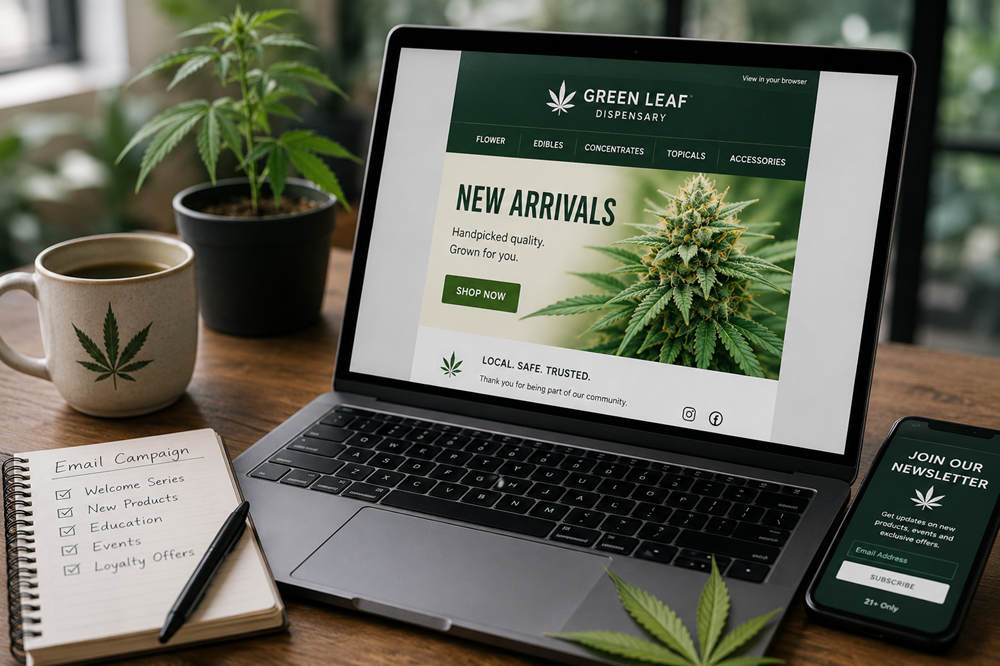
Cannabis email marketing gives licensed dispensaries and brands a direct way to communicate with adults who have chosen to hear from them. It can strengthen customer retention, explain unfamiliar products, support loyalty programs, and promote store news without depending entirely on a third-party social platform.
Email is not an unregulated workaround. Every program needs a legitimate subscriber list, appropriate age controls, accurate content, dependable technology, and procedures that reflect the rules in each market where the business operates.
What Cannabis Email Marketing Can Accomplish
Email is primarily a relationship and retention channel. It helps a dispensary remain useful between store visits and gives a cannabis brand space to explain products in more detail than a short social post allows.
A well-planned program can:
- Introduce new products and restocked inventory
- Bring customers back after an initial purchase
- Explain cannabinoids, product formats, labels, and responsible use
- Support loyalty memberships and customer appreciation programs
- Promote licensed events and local store activities
- Share changes to hours, ordering, delivery, or pickup services
- Reconnect with subscribers who have stopped engaging
Email also gives the business more control over its audience. A social platform can limit reach or suspend an account, but a properly collected email list can usually be exported and retained. The company should still choose its provider carefully, since email platforms maintain their own acceptable-use policies.
Understand the Rules Before Sending
Cannabis email campaigns must comply with both general commercial email law and cannabis-specific advertising requirements. Following one set of rules does not automatically satisfy the other.
Federal Commercial Email Requirements
The federal CAN-SPAM Act establishes requirements for commercial email sent in the United States. Marketing messages must use accurate sender and routing information, avoid deceptive subject lines, include a valid physical postal address, and provide a clear method for opting out.
Unsubscribe requests must be honored within 10 business days. The sender cannot charge a fee, require unnecessary personal information, or make the recipient complete a complicated process to stop future messages.
A dispensary or brand may remain responsible when an agency, consultant, or technology provider sends campaigns on its behalf. Before granting an outside partner access to the list, the company should confirm how addresses were collected, how opt-outs are processed, and who reviews each message before it is released.
State Cannabis Advertising Rules
Cannabis advertising laws vary by state and may also be affected by local licensing conditions. Requirements can address age verification, promotional offers, product claims, youth-oriented imagery, required disclosures, and the identity of the licensed business responsible for the message.
California illustrates how specific these requirements can become. Under the state’s current cannabis regulations, a licensee must use age affirmation before adding a potential customer to a mailing list or beginning direct, individualized marketing. California also restricts child-oriented imagery and certain promotions involving free cannabis goods, raffles, sweepstakes, and buy-one-get-one-free offers.
Those rules should not be treated as a national standard. A company serving several states may need separate subscriber forms, campaign versions, offers, and disclaimers for each market.
Email content should also avoid unsupported statements that a cannabis product treats a disease, guarantees a particular effect, is risk-free, or has been approved as safe by a government agency. Compliance guidance should be reviewed with professionals familiar with the applicable jurisdiction rather than treated as one-time setup work.
Build a Permission-Based Email List
The quality of a subscriber list matters more than its raw size. A smaller group of adults who knowingly requested messages is more valuable than thousands of addresses that do not recognize the sender.
Legitimate signup opportunities may include:
- An age-controlled form on the company website
- An optional signup during online ordering
- In-store loyalty enrollment
- Registration for an educational or community event
- A QR code on legally permitted printed materials
- A useful product or responsible-use guide
- A preference center for locations and topics
The form should explain what the subscriber is joining. Instead of using only “Sign up for updates,” it can state that messages may include store news, product education, events, inventory announcements, and occasional offers.
Do not make marketing consent a hidden condition of an unrelated transaction. A customer who provides an email address for an order receipt has not necessarily requested promotional messages. Transactional and marketing permissions should be handled separately.
Keep Clear Subscription Records
Consent records should show when and where the person subscribed, what language appeared on the form, which age-confirmation process was used, and which preferences the subscriber selected.
These records help the business answer complaints, investigate unusual list activity, and identify outdated forms that no longer reflect current rules. They are particularly important when contacts enter the email system through several locations, websites, events, or retail partners.
Avoid Purchased and Shared Lists
Purchased, rented, scraped, and loosely shared lists create both deliverability and compliance risks. The recipients may have agreed to hear from another organization, but that does not mean they expect messages from the dispensary or brand using the list.
Major providers commonly prohibit these list sources. Mailchimp’s current audience requirements, for example, state that contacts should be collected by the sender rather than obtained from purchased, rented, or scraped third-party lists.
Brand and retailer partnerships require the same care. A shopper who joins a dispensary newsletter should not automatically be enrolled in separate campaigns from every manufacturer whose products appear in the store.
Segment Subscribers by Relevant Interests
A dispensary list may include people from several cities, customers interested in different product categories, new subscribers, active loyalty members, and readers who have not clicked an email for months. Treating all of them as one audience produces unnecessary messages.
Useful segments can be based on:
- Preferred store or service area
- Product interests selected by the subscriber
- Loyalty membership status
- Event registration or attendance
- Recent email clicks
- Previous purchases where their use is permitted
- Time since the last order or store interaction
- New, active, highly engaged, or inactive status
Location-based segmentation prevents customers from receiving repeated announcements about a store they are unlikely to visit. Interest-based segmentation helps a brand send flower content to readers interested in flower and edible education to those who requested information about edibles.
Purchase information should be handled carefully. A marketing team should not infer a medical condition, disability, or other sensitive personal characteristic from the products someone views or buys. Segmentation should improve relevance without constructing intrusive health profiles.
Cannabis Email Campaigns Worth Sending
A useful email calendar combines educational, operational, community, and commercial messages. If every campaign contains a discount, subscribers may learn to ignore regular prices and wait for the next promotion.
Welcome Series
A welcome series begins soon after signup, when the subscriber is most likely to remember joining. The first message can confirm the subscription and explain what the reader will receive.
Later messages may introduce the company, explain ordering or store services, describe the loyalty program, and invite the reader to select preferred topics and locations. The sequence should be short enough that the new subscriber does not feel overwhelmed during the first week.
Product and Inventory Updates
These campaigns can announce a new strain, format, brand partnership, limited release, or returning product. The email should explain what is available, where it can be found, and why the announcement is relevant.
Product descriptions should remain factual. Cannabinoid content, format, ingredients, source, package size, and verified product characteristics are more reliable than promises about how every customer will feel.
Because dispensary inventory can change quickly, product links should lead to a current menu or location-specific page. The message should state when availability is limited or differs between stores.
Educational Emails
Educational content gives subscribers a reason to remain on the list when they are not planning an immediate purchase. Useful topics include:
- How to read a cannabis label
- Differences between common product formats
- Onset time and duration considerations
- Basic cannabinoid and terpene terminology
- Safe storage around children and pets
- Responsible-use considerations
- Changes to local cannabis laws
The goal is to help readers understand products and regulations, not to provide individualized medical advice. A complicated subject is often better divided into a short series than compressed into one long newsletter.
Loyalty Communications
Loyalty emails can display a point balance, explain membership tiers, announce an earned benefit, or notify the customer that a permitted reward is approaching its expiration date.
The most useful loyalty messages give the reader a specific update rather than repeatedly describing the entire program. Promotional structures should be reviewed for the state and locality in which the offer will be used.
Event and Community Announcements
Email can promote educational workshops, vendor appearances, permitted cannabis events, charitable activities, and neighborhood initiatives.
An event announcement should clearly state the date, time, location, age requirement, registration process, admission cost, and rules concerning consumption or product sales. A brief reminder can be sent close to the event without repeating every detail from the first message.
Re-Engagement Campaigns
A re-engagement campaign is intended for subscribers who have stopped opening or clicking messages. It can ask whether they still want email, invite them to change their preferred frequency, or let them select more relevant topics.
Contacts who remain inactive can be suppressed from routine campaigns. Continuing to send to people who show no interest increases costs and may weaken sender reputation.
Promotional Campaigns
Promotional email can support a product launch, seasonal inventory plan, store opening, or customer-retention effort. Every offer should include accurate dates, participating locations, eligibility requirements, exclusions, and availability details.
The subject line should not exaggerate the discount or create false urgency. The promotion itself must also be permitted in the relevant jurisdiction. An offer that is valid for one store or state may be prohibited or require different wording elsewhere.
Write and Design Emails for Mobile Readers
Many subscribers will first see the message on a phone. Its purpose should be clear without requiring them to scroll through several oversized images.
An effective email normally includes:
- A recognizable sender name
- An accurate subject line
- Preview text that adds useful context
- A short opening
- One primary call to action
- Readable type and spacing
- Descriptive links
- Alternative text for meaningful images
- Required business details and disclosures
- An easy-to-find unsubscribe option
Each campaign should have one central purpose. A message that simultaneously promotes several products, two events, a loyalty update, and a long educational article forces too many choices into one screen.
Important information should appear as live text rather than being embedded entirely in an image. This makes the campaign easier to read when images are blocked and improves accessibility for people using assistive technology.
Subject lines should be interesting without pretending to be personal replies, order confirmations, security alerts, or emergencies. Accuracy protects both customer trust and regulatory compliance.
Choose a Platform That Supports the Business Model
Email providers maintain their own rules for regulated products. A company should not assume that a popular platform automatically accepts licensed cannabis businesses, hemp-derived products, CBD campaigns, and cannabis text messaging under the same terms.
Before importing subscriber data, ask the provider to confirm whether it supports:
- The company’s license type and products
- The states in which messages will be sent
- Promotional and educational cannabis email
- Age-controlled signup forms
- Point-of-sale and ecommerce integrations
- Consent and preference records
- Account exports and backups
- The planned sending volume
The answer should be obtained in writing when possible. Platform policies can change, and an informal statement made during a sales call may not protect the account during a later compliance review.
Treat Email and SMS as Separate Channels
Permission to use a provider’s email service does not necessarily include permission to send cannabis-related text messages. Wireless carriers and messaging platforms apply separate restrictions to SMS and MMS content.
For example, providers may publish specific SMS prohibited-content rules that differ from their general email policies. A business should evaluate email and text marketing independently rather than copying the same list, consent process, and campaign into both systems.
Use Automation Selectively
Automation is most useful when it responds to a clear customer action. Appropriate flows may include:
- A welcome sequence after subscription
- An event reminder after registration
- A loyalty status update
- A request to update interests or store preferences
- A re-engagement series after inactivity
- General product education following a relevant purchase
Post-purchase emails should use discreet subject lines and preview text. A detailed reference to a cannabis purchase could appear on a shared screen, workplace inbox, or lock-screen notification.
Every automated flow needs an owner and a review schedule. Old offers, expired event information, broken links, and outdated legal language can continue sending unnoticed when no one regularly checks the sequence.
Protect Deliverability and Sender Reputation
Deliverability determines whether a message reaches the inbox, is filtered into spam, or is rejected. Mailbox providers evaluate domain authentication, complaint levels, list quality, sending patterns, and recipient engagement.
The sending domain should be authenticated with SPF, DKIM, and DMARC as appropriate. Under Google’s current email sender guidelines, all senders to personal Gmail accounts need SPF or DKIM. Senders exceeding 5,000 messages per day to Gmail accounts face additional requirements, including SPF, DKIM, DMARC, and easier unsubscribing.
Yahoo also requires qualifying senders to support one-click unsubscribe through the proper technical header. Its sender guidance explains that a standard unsubscribe link in the message body does not by itself satisfy that particular requirement.
Other important practices include:
- Sending only to addresses collected through legitimate methods
- Removing hard bounces and invalid contacts
- Increasing volume gradually on a new sending domain
- Using a consistent and recognizable sender identity
- Monitoring spam complaints and delivery failures
- Avoiding sudden unexplained increases in frequency
- Suppressing contacts who remain inactive
- Testing links and layouts before each campaign
Making the unsubscribe process easy can protect the list. A subscriber who leaves normally is less damaging than one who reports the email as spam because the opt-out link was hidden or difficult to use.
Measure Performance Beyond Open Rates
Email reporting should connect each campaign to its intended purpose. A product launch, event reminder, educational article, and re-engagement sequence should not all be judged by the same metric.
Delivery rate shows how many messages were accepted by receiving mail systems. A decline may point to invalid addresses, authentication failures, or reputation problems.
Bounce rate measures failed deliveries. Hard bounces usually indicate invalid or unavailable addresses that should be removed, while temporary failures may need further monitoring.
Click-through rate shows whether recipients interacted with the links in the message. It can help reveal whether the content, audience, and call to action matched one another.
Conversion rate measures the completed action the campaign was designed to produce, such as viewing a menu, placing an order, registering for an event, or updating communication preferences.
Attributed orders or revenue can help compare commercial campaigns, but attribution settings must remain consistent. An email platform may claim credit for an order that was also influenced by search, social media, an in-store visit, or another channel.
Unsubscribe and complaint rates can reveal excessive frequency, weak targeting, unexpected content, or poor list sources.
Performance by segment shows differences hidden by an overall average. A product announcement may perform strongly among subscribers who selected that category while attracting little interest from the rest of the list.
Use Open Rates Carefully
Open rates are no longer a dependable standalone measure of reader interest. Features such as Apple’s Mail Privacy Protection can prevent senders from reliably determining whether a protected user opened a message.
Clicks, menu visits, purchases, registrations, preference updates, and other completed actions generally provide stronger evidence that the campaign influenced customer behavior.
When testing improvements, change one meaningful variable at a time. Comparing two subject lines is useful. Changing the subject line, audience, offer, layout, and send time simultaneously makes it difficult to understand why the results changed.
Conclusion
Cannabis email marketing is most effective when it is built around permission, relevance, and accurate communication. A licensed business should collect addresses transparently, confirm age where required, organize subscribers by useful preferences, and send messages with a clear purpose. Email does not remove the regulatory challenges facing the cannabis industry, but it can become a dependable retention channel when the company respects subscriber choices and reviews each campaign carefully.