Flowers That Bloom All Summer: Twenty Long-Lasting Choices for Continuous Garden Color
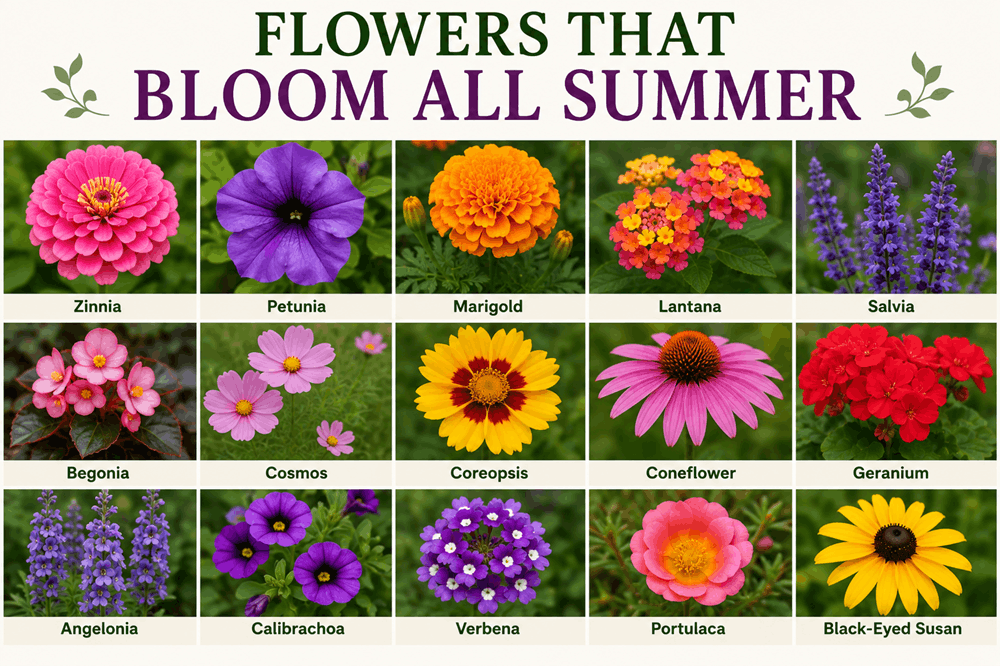
Flowers that bloom all summer include zinnias, petunias, marigolds, lantana, salvia, begonias, cosmos, coreopsis, coneflowers, and many other dependable plants. The longest-lasting displays usually come from choosing flowers suited to your climate, giving them enough sunlight, and removing faded blooms when needed. By mixing annuals and perennials with overlapping flowering periods, you can keep beds, borders, and containers colorful from early summer until fall.
What Does “Bloom All Summer” Really Mean?
Very few flowers produce fresh blooms continuously without slowing down. When gardeners describe a plant as blooming all summer, they usually mean that it flowers repeatedly for most of the warm season.
Some plants bloom heavily, pause briefly during extreme heat, and begin flowering again as temperatures moderate. Others continue almost nonstop if faded flowers are removed.
Climate also matters. A flower that performs from May through September in one region may stop during July heat somewhere warmer or be killed by an early frost farther north.
For the strongest display, choose several long-blooming flowers rather than depending on one plant to provide color for the entire season.
1. Zinnias
Zinnias are among the easiest annual flowers for continuous summer color. They thrive in heat, prefer full sun, and begin flowering relatively quickly when grown from seed.
Colors include white, yellow, orange, red, pink, purple, green, and many multicolored combinations. Flower shapes range from simple daisies to tightly layered pom-poms.
Regular cutting or deadheading encourages plants to continue producing new buds. Tall varieties are excellent for cutting gardens, while compact types work well in containers and border edges.
Zinnias also attract butterflies and other pollinators throughout summer.
2. Petunias
Petunias can flower from late spring until frost when given enough sunlight and regular care.
Their trumpet-shaped blooms come in nearly every color, including white, yellow, pink, red, purple, blue-toned violet, black, and striped or spotted patterns.
Trailing petunias are especially useful in hanging baskets, window boxes, and large containers. Mounding types work well in flower beds.
Many modern varieties flower without constant deadheading, although trimming leggy stems during midsummer can encourage fresh, compact growth.
3. Marigolds
Marigolds are tough annuals that handle summer heat extremely well. Their cheerful yellow, orange, gold, red, and bicolored flowers can continue from late spring until frost.
French marigolds remain relatively compact, while African marigolds become taller and produce larger flower heads.
Plant them in full sun and well-drained soil. Removing faded flowers encourages stronger reblooming.
Marigolds work particularly well in vegetable gardens, sunny borders, containers, and mass plantings.
4. Lantana
Lantana thrives during hot weather when many other flowering plants begin struggling.
Its small tubular flowers appear in rounded clusters and often change color as they mature. Yellow, orange, red, pink, purple, and white may appear on the same plant.
Established lantana tolerates drought and strong sunlight. In warm climates, it can grow as a perennial shrub, while colder areas generally treat it as an annual.
The flowers are especially attractive to butterflies.
Some lantana varieties can spread invasively in warm regions, so choose locally appropriate cultivars.
5. Salvia
Salvia includes many annual and perennial flowers capable of blooming for months.
Flower spikes may be red, blue, purple, pink, white, or coral. Red salvias are particularly attractive to hummingbirds, while blue and purple varieties are frequently visited by bees and butterflies.
Most salvias prefer full sun and good drainage. Many become relatively drought tolerant after establishment.
Trimming faded flower spikes can encourage another flush of blooms and prevent plants from becoming untidy.
6. Begonias
Begonias are excellent long-blooming flowers for gardens that do not receive full sun.
Wax begonias can produce pink, red, or white flowers continuously from late spring until frost. Tuberous begonias provide larger and more dramatic blooms, especially in shaded containers and hanging baskets.
Most begonias prefer bright shade, morning sun, or filtered light rather than intense afternoon heat.
They appreciate regular moisture but should never be left in waterlogged soil.
7. Cosmos
Cosmos create an airy summer display with delicate stems, feathery foliage, and daisy-shaped flowers.
Common colors include white, pink, crimson, orange, yellow, and chocolate-burgundy.
Cosmos grow readily from seed and often bloom better in ordinary soil than in heavily fertilized beds. Excess fertilizer can result in tall leafy plants with fewer flowers.
Regularly cutting the blooms encourages continued production through summer and into fall.
8. Coreopsis
Coreopsis, also called tickseed, produces cheerful daisy-like blooms for an extended period.
Yellow and gold are the traditional colors, but modern varieties may also be red, pink, orange, cream, or bicolored.
Many coreopsis plants tolerate heat, drought, and relatively poor soil once established.
Some perennial varieties benefit from being lightly cut back after their first major flowering period. Fresh growth can then produce another flush of flowers later in summer.
9. Coneflowers
Coneflowers are dependable summer perennials with prominent raised centers surrounded by long petals.
Purple-pink is the classic color, but cultivated varieties now include white, yellow, orange, red, green, and coral.
Coneflowers generally prefer full sun and well-drained soil. Established plants tolerate dry conditions and can flower for weeks or months.
Removing faded blooms may extend flowering, but leaving some seed heads later in the season provides food for birds.
10. Geraniums
The geraniums commonly grown in patio pots and window boxes are technically pelargoniums, but they remain some of the most reliable warm-season flowers.
They produce clusters of red, pink, salmon, white, purple, or orange flowers throughout summer.
Geraniums prefer bright light and good drainage. Allowing the upper layer of soil to dry somewhat between waterings can help prevent root problems.
Remove old flower stems after blooming to keep plants producing fresh buds.
11. Angelonia
Angelonia is often called summer snapdragon because its flower spikes resemble miniature snapdragons but tolerate heat much better.
Colors include purple, lavender, pink, white, and blue-toned shades.
Angelonia performs well in full sun and can flower continuously through hot summer weather with surprisingly little maintenance.
Its upright shape works well in containers and mixed borders where a taller accent is needed without using a large plant.
12. Calibrachoa
Calibrachoa produces hundreds of small petunia-like flowers and is often sold under names such as million bells.
Its trailing stems make it ideal for hanging baskets, window boxes, and container edges.
Flowers come in yellow, orange, pink, red, purple, white, blue-violet, and multicolored patterns.
Calibrachoa prefers plenty of sunlight, consistent moisture, and regular feeding because container-grown plants use nutrients quickly.
Most modern varieties do not require frequent deadheading.
13. Verbena
Verbena produces clusters of small flowers over a long season. Purple, pink, red, white, lavender, and bicolored forms are commonly available.
Trailing verbena works well in baskets and containers, while upright varieties fit easily into sunny garden beds.
Verbena prefers full sun, warmth, and well-drained soil. Overly wet conditions can encourage disease.
If flowering begins to slow, lightly trimming the plant can stimulate fresh growth and another round of blooms.
14. Gaillardia
Gaillardia, commonly called blanket flower, is ideal for hot, sunny gardens.
The daisy-like flowers typically combine yellow, orange, red, and burgundy, creating a warm sunset effect.
Gaillardia tolerates heat and relatively dry soil and often continues flowering through summer with minimal attention.
Removing faded blooms can extend the season, although the seed heads may also be left for wildlife and winter interest.
15. Black-Eyed Susans
Black-eyed Susans produce golden-yellow petals surrounding prominent dark centers. They are especially effective when planted in generous groups.
Depending on the variety and climate, flowering may begin in early or midsummer and continue well into fall.
These plants prefer full sun and tolerate ordinary soil once established.
They attract bees and butterflies during flowering, while mature seed heads may attract birds later in the season.
16. Pentas
Pentas produce rounded clusters of tiny star-shaped flowers in red, pink, purple, lavender, or white.
They love warm weather and can bloom continuously through summer in sunny gardens.
Pentas are especially valuable for butterfly and hummingbird gardens because their tubular flowers provide accessible nectar.
In frost-free climates, they may survive as perennial shrubs. In colder areas, they are generally grown as annuals.
17. Portulaca
Portulaca, commonly called moss rose, is an excellent flower for extremely hot, dry locations.
Its succulent leaves store moisture, while colorful flowers open in bright sunlight. Blooms may be pink, red, orange, yellow, white, peach, or striped.
Portulaca grows well in shallow containers, rock gardens, gravel beds, and dry border edges.
It performs poorly in heavy, constantly wet soil but can thrive where other annual flowers struggle with drought.
18. Yarrow
Yarrow produces flat clusters of tiny flowers above fern-like foliage. White is common among wild varieties, while garden cultivars may bloom in yellow, pink, peach, red, orange, and cream.
Established yarrow tolerates heat, drought, and poor soil remarkably well.
Flowering can continue for much of summer, particularly if old flower stems are cut back.
Yarrow also attracts pollinators and works well in meadow gardens and naturalistic arrangements.
19. Catmint
Catmint produces soft clouds of lavender-blue flowers above aromatic gray-green leaves.
The first flowering period can be exceptionally heavy in late spring or early summer. Cutting the plant back afterward encourages fresh growth and additional flowers throughout summer.
Catmint thrives in sunny, well-drained locations and becomes drought tolerant after establishment.
It works particularly well along paths, around roses, and near the front of perennial borders.
20. Sweet Alyssum
Sweet alyssum forms low-growing carpets of tiny white, pink, lavender, or purple flowers with a light honey fragrance.
In mild climates, it can bloom for much of summer. In extremely hot regions, flowering may slow during the hottest part of the season and return as temperatures cool.
Sweet alyssum works beautifully along pathways, between stones, and around container edges.
Trimming tired plants can encourage fresh growth and improve their appearance later in the season.
Which Flowers Bloom All Summer in Full Sun?
For a hot, sunny garden, some of the strongest choices include:
- Zinnias
- Marigolds
- Lantana
- Salvia
- Cosmos
- Coreopsis
- Coneflowers
- Angelonia
- Gaillardia
- Black-eyed Susans
- Pentas
- Portulaca
- Yarrow
Most of these plants need at least six hours of direct sunlight for their best flowering.
Which Flowers Bloom All Summer in Partial Shade?
Gardens with less sunlight can still provide continuous color.
Begonias are among the best choices, particularly for locations with morning sunlight and afternoon shade. New Guinea impatiens can also flower for months in bright shade or partial sun.
Some lobelias, torenias, and shade-adapted annuals can extend the display as well.
Always pay attention to climate. A plant that tolerates full sun in a cool northern region may appreciate afternoon shade in a hot southern garden.
Best Flowers for Containers That Bloom All Summer
Containers make it easy to maintain continuous color near patios, entrances, balconies, and porches.
Excellent choices include:
- Petunias
- Calibrachoa
- Geraniums
- Angelonia
- Begonias
- Verbena
- Pentas
- Sweet alyssum
- Compact zinnias
- Portulaca
Container plants require more regular watering than flowers growing directly in the ground because pots dry out quickly during warm weather.
They may also need periodic fertilizer because repeated watering gradually washes nutrients from the potting mix.
Do You Need to Deadhead Summer Flowers?
Deadheading means removing flowers after they fade. Many plants respond by producing additional buds instead of putting energy into seeds.
Zinnias, marigolds, cosmos, coreopsis, geraniums, and gaillardia generally benefit from regular deadheading.
Other modern varieties, including many petunias and calibrachoas, have been bred to keep flowering with very little maintenance.
Even when deadheading is not essential, removing brown flowers can make the plant look cleaner.
How to Keep Flowers Blooming Through Summer
Long-blooming plants still need appropriate care if they are expected to perform for several months.
Start by placing each flower in suitable light. A full-sun plant growing in shade may survive but produce far fewer flowers.
Water deeply enough to reach the roots rather than providing a tiny amount every day. Container plants are an exception because they may require daily watering during extremely hot weather.
Do not overfertilize. Excessive nitrogen can create large leafy plants that produce surprisingly few flowers.
Remove fading blooms when necessary and trim back plants that have become stretched or tired. Many annuals respond to a light midsummer haircut with a fresh round of growth.
Combine Annuals and Perennials for Longer Color
Annual flowers often provide the most continuous display because their entire life cycle occurs in one growing season. Zinnias, marigolds, petunias, and angelonia can flower heavily for months.
Perennials return year after year but may have more concentrated flowering periods. Coneflowers, coreopsis, yarrow, catmint, and black-eyed Susans can still provide long-lasting summer color, especially when different varieties are combined.
Using both types gives you the best balance.
Perennials provide permanent structure, while annuals fill gaps and keep the garden colorful while perennial flowers move through their natural cycles.
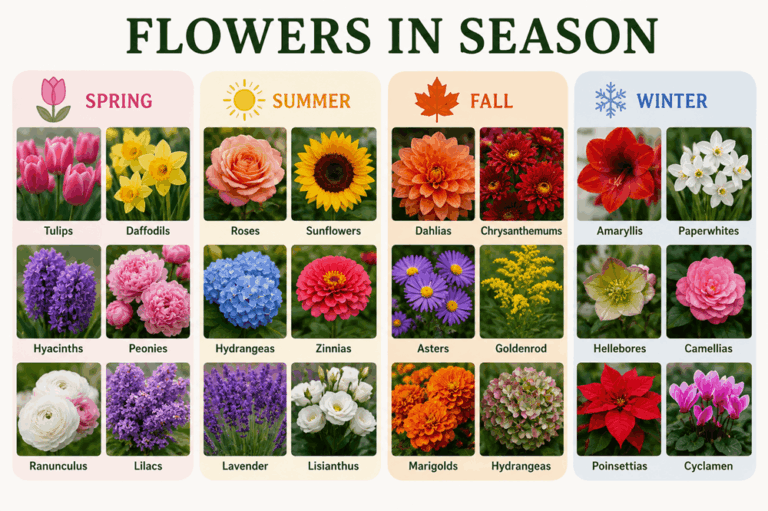
Plan for Early, Mid, and Late Summer
The easiest way to create a garden that appears to bloom continuously is to plan for succession.
Early summer might feature catmint, coreopsis, salvia, and some coneflowers. Midsummer brings heavy displays from zinnias, lantana, cosmos, petunias, and pentas. Late summer can rely on black-eyed Susans, coneflowers, yarrow, salvias, and continued annual flowering.
Once the blooming periods overlap, there is rarely a time when the garden feels empty.
The Bottom Line
Flowers that bloom all summer include zinnias, petunias, marigolds, lantana, salvia, begonias, cosmos, coreopsis, coneflowers, geraniums, angelonia, calibrachoa, verbena, gaillardia, black-eyed Susans, pentas, portulaca, yarrow, catmint, and sweet alyssum.
For hot full-sun gardens, zinnias, lantana, portulaca, gaillardia, and salvia are particularly dependable. Begonias are a stronger choice where afternoon shade is available, while petunias, calibrachoa, and geraniums excel in containers.
The secret to flowers all summer is not finding one perfect plant. Choose several varieties with long or overlapping bloom periods, give them the correct amount of sunlight and water, and remove faded flowers when necessary. With that combination, your garden can remain colorful from the first warm weeks of summer until autumn finally brings the flowering season to an end.