Is Weed Legal in Tennessee? Marijuana and Hemp Laws Explained for 2026
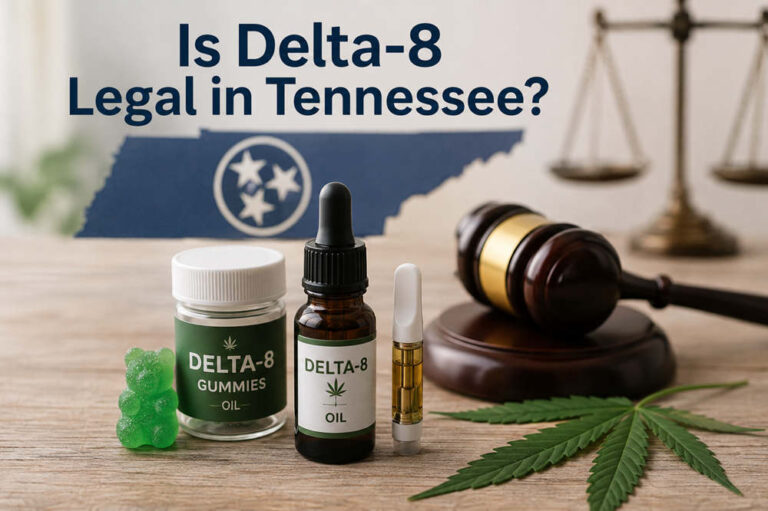
No. Recreational marijuana is not legal in Tennessee as of August 2026. Ordinary marijuana possession remains prohibited, the state does not have a legal adult-use dispensary system, and there is no general right to grow marijuana at home.
Hemp is different. Tennessee permits certain hemp-derived cannabinoid products under a separate regulatory framework, but the products must meet strict THC, testing, labeling, and licensing requirements. The distinction between marijuana and compliant hemp is especially important in 2026 because Tennessee now counts THCA when determining total THC for regulated hemp products.
Is Weed Legal in Tennessee? The Quick Answer
| Question | Tennessee Law in 2026 |
|---|---|
| Recreational marijuana | Illegal |
| Possession of marijuana | Generally illegal |
| Adult-use marijuana dispensaries | Not legal |
| Comprehensive medical marijuana program | No |
| Growing marijuana at home | Not permitted for ordinary personal use |
| Qualifying hemp-derived cannabinoid products | Legal when they meet applicable Tennessee requirements |
| Products above 0.3% total THC | Illegal under Tennessee’s current hemp framework |
| THCA | Included when total THC is calculated |
| THCp in regulated hemp products | Prohibited |
The word “weed” can therefore be misleading in Tennessee. Marijuana remains controlled, while some products derived from legally defined hemp can be sold under a separate set of rules.
Is Recreational Marijuana Legal in Tennessee?
Tennessee has not created a recreational cannabis market for adults. Being 21 or older does not provide a legal right to buy, possess, use, or cultivate marijuana in the state.
Tennessee law also prohibits the manufacture, delivery, sale, and possession with intent to manufacture, deliver, or sell marijuana. The seriousness of those offenses depends on factors including the amount and conduct involved.
Legalization legislation has been introduced but has not established an adult-use system. The proposed Tennessee Cannabis Act, SB 809/HB 836, would have created a regulated framework for adult marijuana use. The House version failed in the Criminal Justice Subcommittee on April 1, 2025, while the Senate version did not become law.
What Happens If You Are Caught With Marijuana in Tennessee?
Simple possession or casual exchange of a controlled substance can generally be prosecuted as a Class A misdemeanor under Tennessee law. That makes possession a criminal matter rather than a civil violation comparable to a traffic ticket.
More serious conduct is addressed separately. Allegations involving manufacture, sale, delivery, or possession with intent to sell or deliver can result in felony charges, with the classification depending on the amount and circumstances.
Actual penalties in an individual case can also be affected by prior convictions and other facts. For that reason, a possession charge and a distribution-related charge should not be treated as equivalent simply because both involve marijuana.
Is Medical Marijuana Legal in Tennessee?
Tennessee does not operate a comprehensive medical marijuana system with patient cards and state-licensed marijuana dispensaries.
The state does have a Medical Cannabis Commission, but its existence does not mean Tennessee residents can obtain a conventional medical marijuana card and purchase cannabis flower from medical dispensaries. The commission has been tasked with studying medical cannabis policy and making recommendations to state lawmakers.
Tennessee law also excludes certain cannabis-related products from the legal definition of marijuana, including qualifying hemp, FDA-approved prescription medications, and limited-THC products used in particular research or treatment circumstances. These narrow exceptions do not amount to a general medical marijuana program.
A broader Tennessee Medical Cannabis Act, SB 489/HB 872, was introduced in 2025. It proposed patient cards and a regulated medical cannabis system, but SB 489 failed in the Senate Judiciary Committee on February 25, 2025.
Why Can Tennessee Stores Sell Hemp-Derived THC Products?
Tennessee law distinguishes marijuana from hemp-derived cannabinoid products that meet the state’s legal requirements. This is why consumers may encounter cannabinoid gummies, beverages, vapes, or other products in Tennessee even though recreational marijuana has not been legalized.
Public Chapter 526 reorganized the state’s hemp-derived cannabinoid system, with the Tennessee Alcoholic Beverage Commission taking responsibility for regulating suppliers, wholesalers, retailers, and other aspects of the market beginning in 2026. Hemp cultivation itself remains under the Tennessee Department of Agriculture.
Under the Tennessee Alcoholic Beverage Commission’s current hemp guidance, cannabis-derived products generally fall into three groups:
- Products with non-detectable THC can be legal without a TABC hemp-derived cannabinoid license.
- Products containing no more than 0.3% total THC can be legal if they satisfy all other applicable requirements and are handled through the regulated system.
- Products containing more than 0.3% total THC are illegal.
For hemp and regulated hemp-derived products, the relevant THC limits are evaluated on a dry-weight basis where required by Tennessee law. Retail availability alone should not be treated as proof that a specific product is compliant.
Are THCA, Delta-8, CBD, and Other Cannabinoids Legal in Tennessee?
The legality of a cannabinoid product cannot be determined from the cannabinoid name on its package alone. Its chemical composition, total THC concentration, source, testing, and compliance with Tennessee’s hemp rules all matter.
THCA
THCA is particularly important under Tennessee’s current framework because TABC licensees are subject to a total-THC calculation that accounts for the potential conversion of THCA into delta-9 THC.
Tennessee calculates total THC as:
(THCA × 0.877) + delta-9 THC
The resulting concentration must not exceed 0.3% where the state’s total-THC limit applies. As a practical matter, flower containing substantial levels of THCA will generally exceed that ceiling once THCA is included in the calculation.
This means a product cannot necessarily qualify as lawful Tennessee hemp merely because its measured delta-9 THC level is below 0.3%. The THCA concentration also matters.
Delta-8 THC
Delta-8 requires a more careful answer. Tennessee’s stated total-THC formula specifically calculates THCA together with delta-9 THC; it does not simply add every cannabinoid carrying a “THC” name into that formula.
At the same time, calling a product “Delta-8” does not create a legal exemption. A product sold through Tennessee’s hemp-derived cannabinoid market must fit the state’s applicable product, licensing, testing, packaging, and labeling rules. Tennessee also prohibits regulated products containing synthetic cannabinoids.
The legality of a particular Delta-8 product therefore depends on the finished product and how it fits Tennessee law, rather than the Delta-8 label by itself.
CBD
CBD is not automatically treated as marijuana. Many CBD products can fall within lawful hemp categories, but the full cannabinoid profile remains important. A product marketed as CBD may still contain measurable THC or other regulated cannabinoids.
CBD products with non-detectable THC can fall outside the TABC licensing system, while products containing regulated hemp-derived cannabinoids may be subject to additional requirements.
THCp and Synthetic Cannabinoids
Tennessee’s current rules are clearer about THCp and synthetic cannabinoids. TABC states that products regulated under Public Chapter 526 may not contain THCp, and synthetic cannabinoids are prohibited.
For consumers, this is another reason not to treat terms such as “hemp-derived,” “legal THC,” or “farm-bill compliant” as substitutes for checking whether a product actually meets current Tennessee requirements.
What Should You Look for on a Legal Hemp Product?
Tennessee’s 2026 framework gives consumers several practical compliance indicators to look for.
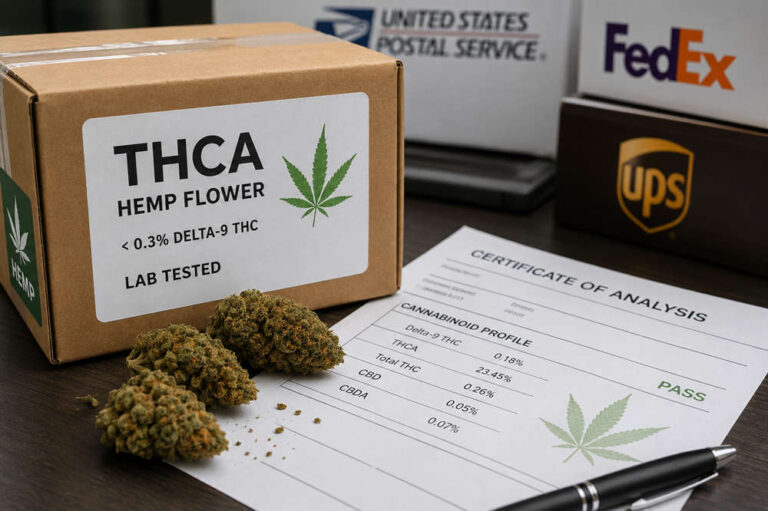
Regulated products must meet applicable testing, serving-size, packaging, and labeling requirements. TABC also requires compliant products covered by its system to carry a QR code linking to the product’s Certificate of Analysis, commonly called a COA.
A COA provides laboratory information about the cannabinoid composition of a particular product or batch. For Tennessee legality, the relevant information includes the THC profile and whether the product falls within the state’s permitted limits.
A QR code or COA does not by itself guarantee that every legal requirement has been satisfied, but it gives consumers a more useful basis for evaluating a product than marketing language alone.
Can You Grow Weed at Home in Tennessee?
Tennessee does not provide ordinary residents with a recreational home-grow allowance. Cultivating marijuana can implicate the state’s laws governing marijuana production rather than merely its simple-possession provisions.
Licensed hemp cultivation is a different activity. The Tennessee Department of Agriculture’s hemp producer program regulates people who lawfully cultivate hemp or possess rooted hemp plants.
A state hemp producer license should not be confused with permission to grow marijuana for personal recreational use.
Can You Bring Marijuana Into Tennessee From Another State?
Marijuana purchased legally in another state does not become lawful to possess simply because the purchase itself was permitted where it occurred.
Once a person enters Tennessee, Tennessee possession laws apply. Transporting marijuana across state lines can also create separate federal legal issues because state legalization does not authorize interstate marijuana commerce.
Travelers should therefore not assume that packaging, a receipt from a licensed dispensary, or legal status in the state of purchase provides protection under Tennessee law.
Could Tennessee Marijuana Laws Change?
Cannabis policy continues to appear before Tennessee lawmakers, but introduced bills and current law must be kept separate.
One pending proposal, SB 960/HB 1370, would place three non-binding marijuana questions before voters in the November 2026 election. They concern medical marijuana, decriminalization of possession of less than one ounce, and regulated recreational sales.
As of August 9, 2026, SB 960 remains a proposal. The Senate bill was assigned to the General Subcommittee of the Senate State and Local Government Committee on March 24, 2026. The proposed ballot questions therefore should not be mistaken for current marijuana rights or for a statewide legalization vote that automatically changes the law.
Tennessee’s hemp rules have already changed significantly, however. Public Chapter 526 became law in 2025 and established the regulatory system now being administered by TABC. Because cannabis and hemp laws can continue to change through legislation, regulations, or court decisions, dated information should be checked against current state sources.
What Tennessee Consumers Should Keep in Mind
- Distinguish marijuana from hemp. Tennessee applies different legal rules to ordinary marijuana and qualifying hemp-derived products.
- Check the cannabinoid profile. THCA contributes to Tennessee’s total-THC calculation.
- Look for the COA. Regulated products should include a QR code linking to laboratory results where required.
- Do not rely on product names. Labels such as THCA, Delta-8, CBD, or “hemp-derived” do not establish legality on their own.
- Check current state rules. Tennessee’s hemp regulatory framework changed substantially in 2026 and may continue to evolve.
The Bottom Line
Recreational marijuana remains illegal in Tennessee as of August 9, 2026, and the state does not operate a broad medical marijuana dispensary program.
Qualifying hemp-derived products occupy a separate legal category. Under Tennessee’s current system, products subject to the total-THC standard must stay within the applicable 0.3% limit, with THCA included in the calculation, while also meeting the state’s other licensing, testing, packaging, and labeling requirements.
This article is for general educational purposes only and is not legal advice. Cannabis and hemp laws can change, and the application of a law can depend on the specific product and circumstances.