Hemp Seeds Benefits: Nutrition, Heart Health, Digestion, Protein, and Practical Uses Explained
Hemp seeds are nutrient-dense seeds that provide plant protein, unsaturated fats, magnesium, phosphorus, iron, zinc, and other minerals. They can support a balanced diet, particularly when they replace foods high in saturated fat or add protein to plant-based meals. However, hemp seeds are not a medical treatment, and claims about curing inflammation, heart disease, hormonal problems, or skin conditions go beyond the available human evidence.
What Are Hemp Seeds?
Hemp seeds come from varieties of the Cannabis sativa plant grown for food, fiber, oil, and other industrial uses. Although hemp belongs to the cannabis family, the seeds are consumed as an ordinary food rather than an intoxicating cannabis product.
Hemp seeds naturally contain little or no meaningful THC or CBD. Trace cannabinoids may occasionally appear when the outer surface of a seed comes into contact with other parts of the plant during harvesting or processing. Properly cleaned food-grade hemp seeds should not produce a cannabis high.
The FDA has evaluated hulled hemp seeds, hemp seed protein powder, and hemp seed oil as food ingredients and raised no questions about their generally recognized as safe conclusions under their intended conditions of use.
Several forms are commonly sold:
- Whole hemp seeds retain their hard outer shell.
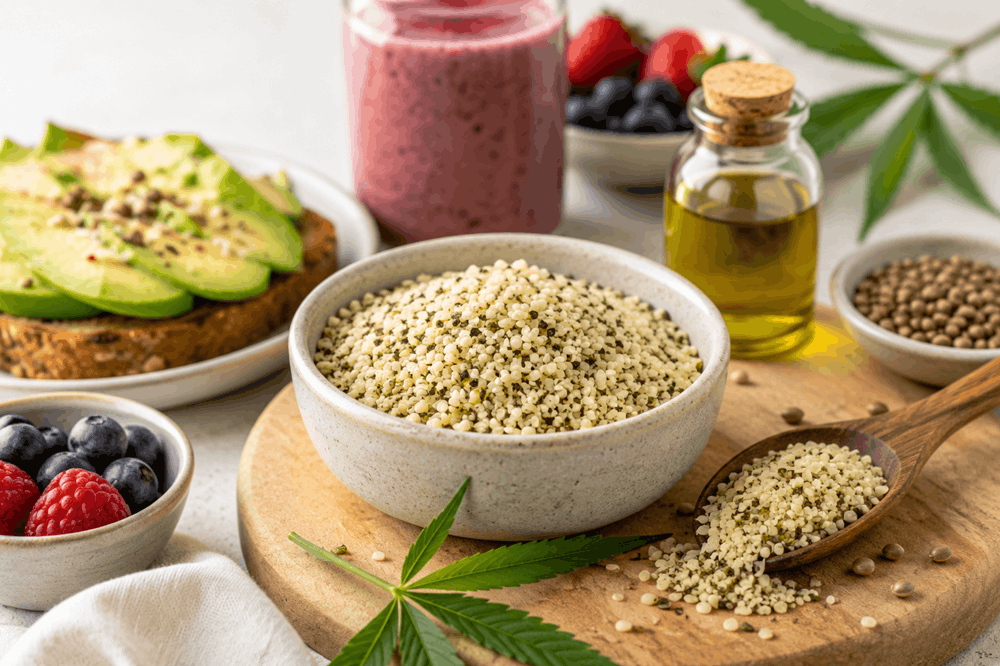
- Hulled hemp seeds, often called hemp hearts, contain the soft inner kernel.
- Hemp seed oil is pressed from the seeds and contains mostly fat.
- Hemp protein powder is made from the material remaining after much of the oil has been removed.
These products have different nutritional profiles. Hemp hearts are rich in protein and fat but contain less fiber than whole seeds. Hemp seed oil contains fatty acids but almost no protein or fiber. Hemp protein powder generally provides more protein and fiber per calorie than the whole seed.
Hemp Seeds Provide Substantial Plant Protein
One of the clearest hemp seed benefits is their protein content. A typical one-ounce serving of hulled hemp seeds provides roughly nine grams of protein, although the exact amount varies by brand and processing method.
Hemp protein contains all nine amino acids that the body cannot make on its own. This is why hemp is often described as a complete plant protein. That description does not mean hemp seeds provide every essential amino acid in ideal proportions or that they replace all other protein sources.
They can nevertheless make it easier to add protein to meals without meat, dairy, or eggs. Hemp hearts can be useful for vegans, vegetarians, people with dairy allergies, and anyone trying to vary their protein sources.
Protein contributes to:
- Muscle maintenance and repair
- The production of enzymes and hormones
- Normal immune function
- The structure of skin, hair, and other tissues
- Fullness after eating
Hemp seeds should be viewed as one part of a varied protein intake. Beans, lentils, soy foods, nuts, grains, eggs, fish, dairy, and meat provide different combinations of amino acids and additional nutrients.
They Contain Omega-3 and Omega-6 Fatty Acids
Most of the fat in hemp seeds is unsaturated. The seeds contain linoleic acid, an omega-6 fatty acid, and alpha-linolenic acid, or ALA, an omega-3 fatty acid. They also contain smaller amounts of other fatty acids, including gamma-linolenic acid.
Replacing some saturated fat with unsaturated fat can support a heart-conscious eating pattern. Hemp seeds may help with that substitution when they replace ingredients such as processed meat, butter, cream-based toppings, or heavily refined snack foods.
The omega-3 in hemp seeds is ALA. The body can convert some ALA into the longer-chain omega-3 fats EPA and DHA, but that conversion is limited. Hemp seeds therefore should not be considered nutritionally identical to oily fish or algae-derived EPA and DHA.
A recent review concluded that hemp seeds have a promising nutritional profile for cardiovascular health but also emphasized the need for more long-term randomized human trials. Their fatty acids and other plant compounds are scientifically interesting, but evidence does not yet support treating hemp seeds as a proven therapy for high cholesterol, hypertension, or cardiovascular disease.
Hemp Seeds Are Rich in Important Minerals
Hulled hemp seeds provide several minerals involved in normal body functions. They are particularly notable for magnesium and phosphorus and also contribute iron, zinc, copper, manganese, and potassium.
Magnesium
Magnesium is involved in muscle and nerve function, energy production, blood glucose regulation, and normal heart rhythm. Hemp hearts can make a meaningful contribution to daily magnesium intake.
Phosphorus
Phosphorus helps form bones and teeth and is involved in energy metabolism and cell function. Most people obtain enough phosphorus from food, but hemp seeds are still a concentrated dietary source.
Iron
Iron is needed to make hemoglobin, the protein that carries oxygen in the blood. Hemp seeds provide non-heme iron, the form found in plant foods.
Non-heme iron is generally absorbed less efficiently than iron from animal foods. Eating hemp seeds alongside a source of vitamin C, such as berries, citrus fruit, tomatoes, or bell peppers, may help improve iron absorption.
Zinc
Zinc supports immune function, wound healing, cell division, and normal growth. Hemp seeds can contribute to zinc intake, although they should not be expected to correct a clinically diagnosed deficiency by themselves.
Whole Hemp Seeds May Support Digestion
Fiber supports normal bowel function, feeds parts of the gut microbiome, and can contribute to fullness. However, the fiber benefit depends heavily on which form of hemp seed you buy.
Most of the fiber is located in the outer shell. Whole hemp seeds therefore contain considerably more fiber than shelled hemp hearts. Hemp hearts are easier to chew and add to meals, but they should not be described as an exceptionally high-fiber food.
Someone seeking digestive benefits may obtain more fiber from whole hemp seeds, hemp protein powder, beans, lentils, oats, vegetables, berries, chia seeds, or ground flaxseed.
Increasing fiber too quickly can cause gas, bloating, or changes in bowel movements. It is usually more comfortable to increase fiber gradually while drinking enough fluid.
Protein and Fat May Help Meals Feel More Satisfying
Hemp seeds contain both protein and fat, two nutrients that can make a meal feel more substantial. Adding hemp hearts to a low-protein breakfast, salad, or snack may help it remain satisfying longer.
This does not mean hemp seeds automatically cause weight loss. They are calorie-dense, and a few extra spoonfuls can add considerable energy to a meal. Whether they help with weight management depends on portion size, the rest of the diet, and what they replace.
For example, adding hemp seeds to sweetened cereal without changing anything else increases calories. Replacing a sugary topping with hemp hearts may improve the meal’s protein and nutrient profile.
The practical benefit comes from using them intentionally rather than treating them as a supplement that overrides total food intake.
Hemp Seeds Can Strengthen Plant-Based Meals
Plant-based meals are not automatically high in protein, iron, zinc, or healthy fats. A meal built mainly from fruit, lettuce, or refined grains may be nutritious in some ways but still lack staying power.
Hemp hearts offer a convenient way to add several nutrients at once. They have a mild, slightly nutty flavor and require no soaking, grinding, or cooking.
Useful combinations include:
- Oatmeal with hemp hearts, berries, and yogurt or soy milk
- A smoothie containing hemp seeds and fruit
- A salad topped with hemp hearts and beans
- Whole-grain toast with avocado and hemp seeds
- Soup finished with hemp hearts for texture
- Hummus blended with hemp seeds
- Pasta or roasted vegetables sprinkled with hemp hearts
Hemp seeds should complement other whole foods rather than replace vegetables, fruit, legumes, and whole grains.
Do Hemp Seeds Reduce Inflammation?
Hemp seeds contain unsaturated fatty acids and naturally occurring plant compounds that have shown antioxidant or anti-inflammatory activity in laboratory research. This has encouraged claims that eating hemp seeds can treat inflammatory diseases.
The nutritional composition is promising, but a food containing anti-inflammatory compounds is not the same as a proven treatment. Laboratory findings, animal experiments, and small human studies cannot establish that ordinary servings will relieve arthritis, autoimmune disease, chronic pain, or another medical condition.
Hemp seeds may fit within an overall dietary pattern associated with better health, especially when that pattern includes vegetables, fruit, whole grains, legumes, nuts, seeds, and minimally processed foods. Their contribution should be understood as nutritional support rather than disease treatment. Reviews of hemp seed composition repeatedly note the abundance of protein, polyunsaturated fats, and bioactive compounds while also recognizing that stronger clinical evidence is needed.
Can Hemp Seeds Improve Skin?
The fats in hemp seeds contribute to normal cell membranes and the skin barrier. Hemp seed oil has also been studied in connection with dry or irritated skin.
However, eating hemp seeds should not be expected to clear acne, cure eczema, reverse aging, or replace prescribed skin treatment. Skin conditions can involve genetics, hormones, allergies, immune activity, medications, infection, and environmental exposure.
A nutrient-rich diet can support normal skin health, but no individual seed controls every factor affecting the skin.
Hemp Seeds, CBD, and THC Are Different
Hemp seeds are frequently confused with CBD products because both come from hemp. The seeds themselves do not naturally contain meaningful concentrations of CBD.
CBD is mainly obtained from the flowers and other above-ground portions of cannabinoid-rich hemp. Hemp seed oil, by contrast, is pressed from seeds and is primarily a nutritional oil.
A bottle labeled “hemp seed oil” should not be expected to produce the effects associated with concentrated CBD. A CBD oil may use hemp seed oil as its carrier, but the CBD must be extracted and added separately.
The same distinction applies to THC. Food-grade hemp seeds should not make you high. If a seed product produces intoxicating effects, contamination or the presence of added cannabinoids should be considered.
Possible Downsides of Hemp Seeds
Hemp seeds are generally well tolerated as food, but they are not ideal for every person or every diet.
They Are Calorie-Dense
Much of their energy comes from fat. This makes hemp seeds nutritious but easy to overuse when portions are not measured. One to three tablespoons may be enough to improve a meal without overwhelming it.
They May Cause Digestive Discomfort
Large servings can cause loose stools, bloating, or stomach discomfort, particularly when someone is not accustomed to seeds or fiber-rich foods.
Allergic Reactions Are Possible
Hemp seed allergy appears to be uncommon, but any food can cause an allergic reaction. Stop eating the product and seek urgent medical care for trouble breathing, throat swelling, faintness, or rapidly developing hives.
Some Medical Diets Require Caution
People with advanced kidney disease may need to monitor potassium, phosphorus, protein, or total mineral intake. Hemp seeds can be concentrated sources of several of these nutrients. A renal dietitian can determine whether they fit an individual treatment plan.
People with digestive disorders, seed allergies, or medically prescribed dietary restrictions should also obtain individualized advice rather than relying on general serving recommendations.
How to Choose and Store Hemp Seeds
Look for food-grade hemp seeds in sealed packaging with a clear expiration or best-by date. Hulled seeds should have a mild, nutty smell. A bitter, paint-like, or stale odor may indicate that the fats have oxidized.
Because hemp seeds contain substantial unsaturated fat, heat, oxygen, and light can gradually damage their quality. Store the package tightly sealed in a cool, dark place. Refrigeration can help preserve freshness after opening, especially in a warm kitchen.
A product does not need CBD, added herbs, sweeteners, or complicated wellness claims to provide nutritional value. Plain hemp hearts are often the simplest choice.
The Bottom Line
Hemp seeds are a nutritious food that supplies plant protein, unsaturated fats, magnesium, phosphorus, iron, zinc, and other nutrients. Whole seeds can also provide fiber, while hulled hemp hearts are softer and more convenient but contain less of the outer-shell fiber.
The strongest benefits come from their nutritional composition and their ability to improve ordinary meals. They may support heart-conscious and plant-based eating patterns, help add protein, and make meals more satisfying.
Hemp seeds should not be presented as a cure for inflammation, heart disease, skin problems, hormonal symptoms, or digestive disorders. They are most useful as one nutrient-dense ingredient within a varied diet—not as a medical treatment or a substitute for professional care.