Cannabis Advertising: Rules, Channels, and Compliant Strategies
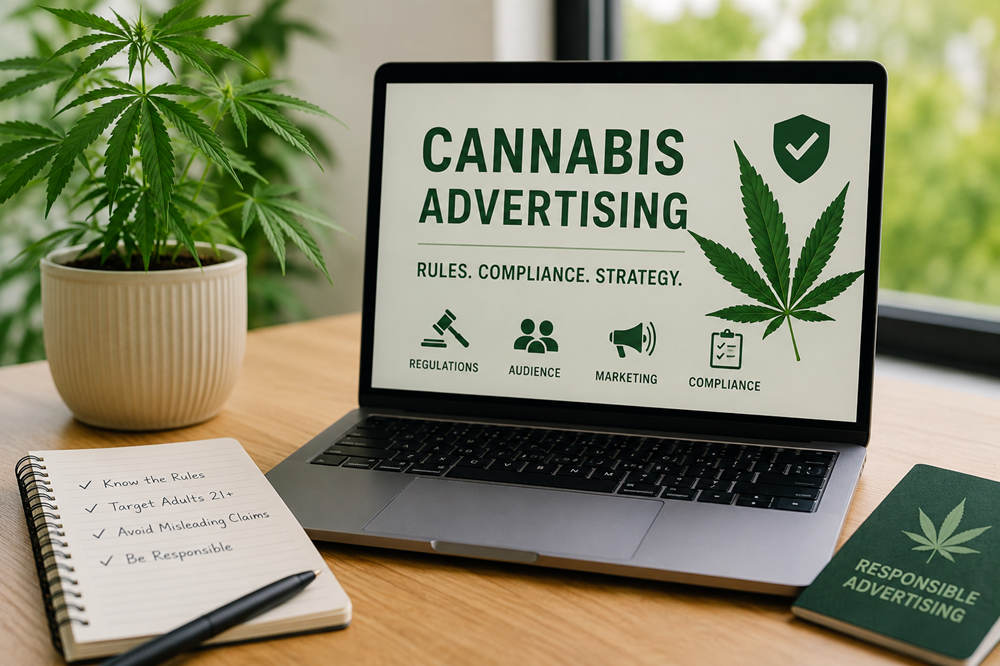
Cannabis businesses can advertise, but they operate within a more complicated system than most consumer brands. A campaign may need to satisfy state cannabis regulations, local ordinances, federal consumer-protection standards, and the private policies of the platform or publisher carrying the advertisement.
Legal cannabis sales in a state do not automatically make every advertising method lawful. The permitted audience, wording, imagery, placement, disclosures, and geographic reach can change according to the product and jurisdiction.
This article primarily discusses advertising by state-licensed marijuana businesses in the United States. Hemp, CBD, delta-8 THC, medical cannabis, and cannabis products sold in other countries may be governed by different rules.
What Cannabis Advertising Includes
Cannabis advertising is a paid or controlled message intended to promote a cannabis company, product, service, location, event, or offer. It can appear through search engines, websites, email, text messages, print publications, outdoor displays, directories, sponsorships, or physical signs.
Advertising is narrower than marketing. Marketing includes broader activities such as product development, pricing, customer research, branding, distribution, loyalty programs, and customer retention. Advertising concentrates on the messages and placements used to attract attention or encourage a specific action.
Cannabis campaigns can also take different forms:
- Brand advertising builds awareness of a company without emphasizing a specific product.
- Product advertising promotes a particular item, category, price, or offer.
- Educational content answers questions or explains cannabis-related subjects without directly asking for a purchase.
- Business-to-business advertising targets cultivators, retailers, manufacturers, laboratories, investors, or other industry professionals.
The distinction matters because a publisher may permit an advertisement for cultivation equipment or legal services while rejecting a direct promotion for cannabis flower or edibles.
Why Cannabis Advertising Is Restricted
No single nationwide rule governs every cannabis advertisement. Businesses usually need to examine three separate layers before launching a campaign.
Federal consumer-protection and product rules
State legalization does not remove the duty to make truthful and supportable advertising claims. Under Federal Trade Commission advertising standards, claims must not be deceptive or unfair and should be supported by appropriate evidence.
Health and safety statements deserve particular caution. A cannabis business should not claim that a product cures anxiety, eliminates pain, treats insomnia, prevents disease, or produces another medical outcome without lawful authorization and reliable substantiation.
The Food and Drug Administration’s rules for cannabis-derived products may also apply to CBD, hemp-derived products, foods, cosmetics, supplements, and products presented as treatments. Claims that a product diagnoses, treats, mitigates, cures, or prevents a disease can cause it to be treated as a drug under federal law.
State and local cannabis regulations
State regulators may control who can advertise, which products can appear, where advertisements can be placed, and what warnings or license information must accompany them. Rules may also cover discounts, giveaways, sponsorships, billboards, store signs, direct communications, product images, and proximity to locations commonly used by minors.
California provides a clear example. Cannabis advertising in certain broadcast, print, and digital media may only appear where reliable audience data indicates that at least 71.6 percent of the audience is reasonably expected to be 21 or older. The state also prohibits advertising and product presentation that are attractive to people under 21. These requirements are summarized in the California Department of Cannabis Control’s guidance on youth-oriented cannabis marketing.
Other states use different standards. New York’s Part 129 marketing and advertising rules, for example, govern advertising by cannabis licensees operating within that state. Businesses entering a new market must review the rules for that jurisdiction rather than copying a campaign approved elsewhere.
Municipalities can add restrictions involving signs, storefront visibility, outdoor placements, event permits, and local business zones. State compliance therefore does not always resolve every local requirement.
Advertising-platform policies
Search engines, social networks, publishers, and advertising networks can reject campaigns that may otherwise be lawful. Their internal policies may restrict particular products, destinations, keywords, images, advertiser types, or geographic markets.
Google generally restricts promotions for recreational drugs, although its limited Canadian cannabis advertising pilot permits certain legally allowed cannabis products and services in Search campaigns. The pilot began on August 25, 2025, and is scheduled to continue through December 31, 2026.
Other platforms take a stricter approach. TikTok’s dangerous products and services policy prohibits advertisements and landing pages that promote or provide access to recreational drugs and related paraphernalia.
Platform approval should never be treated as confirmation that a campaign complies with cannabis law. A platform evaluates its own policies, while the licensed business remains responsible for the laws that apply to its advertising.
Core Cannabis Advertising Requirements
Requirements vary, but most campaigns should be assessed against several fundamental principles.
Connect the campaign to a licensed market
The business, product, offer, store location, delivery area, and landing page should correspond with the markets the advertiser is legally authorized to serve.
A dispensary licensed in one state should not imply that it can ship regulated marijuana nationwide. A delivery advertisement should not target neighborhoods outside the company’s approved service area, and a promotion should not feature products unavailable through the named licensed retailer.
Direct advertisements toward adults
Cannabis advertising should appear in media with an adult audience that satisfies the applicable state standard. Advertisers may need reliable demographic information from publishers, event organizers, media companies, or advertising networks.
A website age gate can help restrict direct access, but it does not prove that an external advertisement was shown to an appropriate audience. Audience selection and advertisement placement must be evaluated separately from the destination page.
Avoid imagery and language that appeal to minors
Cannabis advertisements should not use cartoons, toys, school imagery, childlike characters, or designs that imitate products commonly marketed to children. Packaging and promotional materials that resemble familiar candy, cereal, snacks, or beverages can also create accidental-ingestion and youth-appeal concerns.
Adult-focused branding can still be distinctive. Photography, typography, illustration, materials, and color can create a recognizable identity without copying children’s entertainment or conventional food packaging.
Use accurate and supportable claims
An advertisement can communicate more than its literal wording. Images, testimonials, product names, comparisons, and omissions may create implied claims about potency, effects, safety, purity, onset time, environmental practices, or medical benefits.
High-risk phrases include:
- Completely safe
- Guaranteed relaxation
- Non-addictive
- Clinically proven
- Hangover-free
- Cures anxiety
- Eliminates pain
- Works for everyone
Customer reviews require the same care. Republishing a testimonial that says a product cured a medical condition may convey a health claim even when the company did not write the original statement.
Display required information clearly
Some jurisdictions require age statements, health warnings, license details, responsible-use language, or other disclosures. Requirements can differ by medium, so the final advertisement must be reviewed at its actual size.
A warning that is readable in a full-page design may become illegible when adapted for a mobile screen. Disclosures should be noticeable and understandable rather than hidden in small text or placed where users are unlikely to see them.
Preserve campaign records
Advertisers should retain final creative files, audience data, targeting settings, placement details, publication dates, landing-page versions, approvals, and evidence supporting objective claims.
Good records make it easier to respond to a regulator, investigate a complaint, appeal a platform decision, or identify material that needs to be removed after a rule changes.
Where Cannabis Businesses Can Advertise
The available channel mix depends on the license, budget, market, audience, and type of message. No channel should be assumed to be available in every jurisdiction.
Business websites and search visibility
A business website can provide store hours, locations, product categories, delivery boundaries, age requirements, testing information, and educational resources. It also gives the company direct control over updates when products or regulations change.
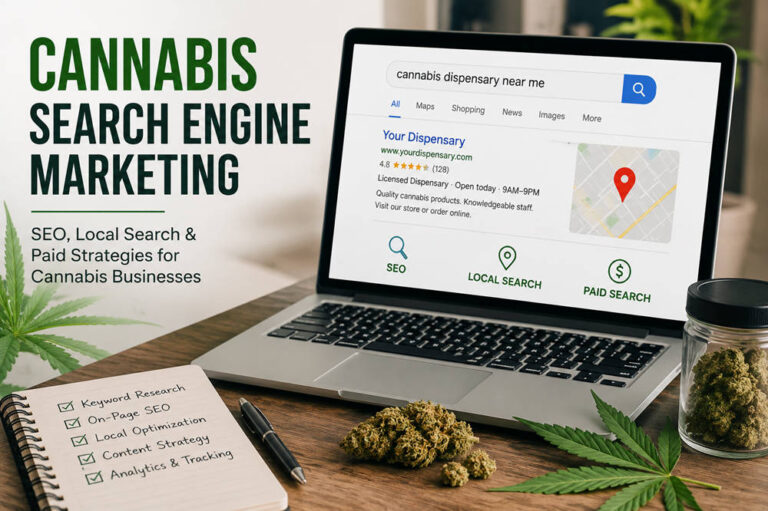
Search engine optimization can help adults find useful information without purchasing a direct product advertisement. Local pages, educational articles, store profiles, and clear product-category descriptions can attract relevant searches over time.
Educational content must still be accurate. Publishing an unsupported medical claim in an article does not make the claim safer than placing it in a paid advertisement.
Email marketing
Email allows a business to communicate with customers who have joined its mailing list. Campaigns may include store news, educational content, event notices, loyalty updates, and promotions permitted in the recipient’s location.
The CAN-SPAM Act requires commercial messages to use accurate sender information, avoid deceptive subject lines, include a valid postal address, and provide a functioning way to stop future emails.
Cannabis businesses should also consider age controls, privacy obligations, and whether recipients live in a market where the advertised offer is available.
Permission-based text messaging
Text messages can distribute timely updates, but a phone number collected for order coordination should not automatically be treated as consent for recurring promotions.
The Telephone Consumer Protection Act and related FCC rules regulate certain automated marketing calls and texts. Businesses should use a clear consent process, identify the sender, explain what subscribers are agreeing to receive, and provide an effective opt-out method.
Cannabis publications and directories
Cannabis-focused publications, dispensary directories, trade newsletters, and industry marketplaces may accept campaigns that large consumer platforms reject.
Before purchasing space, advertisers should examine the outlet’s audience demographics, geographic reach, age controls, traffic quality, editorial reputation, reporting methods, and creative-review process. A cannabis-focused audience does not automatically make every placement compliant or worthwhile.
Print and outdoor advertising
Depending on local rules, businesses may be able to use newspapers, magazines, direct mail, billboards, transit displays, storefront signs, or other physical placements.
Outdoor advertising requires careful location review. Restrictions may apply near schools, playgrounds, childcare facilities, or other youth-oriented areas. Local sign codes can also regulate dimensions, lighting, window coverage, and installation.
Events and partnerships
Licensed cannabis events, trade shows, educational panels, arts programs, and partnerships with businesses serving similar adult audiences can provide alternatives to conventional digital advertising.
Before participating, a sponsor should confirm the event’s admission rules, expected audience, cannabis permissions, local approvals, brand-placement terms, and rules for reusing photographs or promotional material after the event.
Specialized digital advertising
Some publishers and advertising networks offer cannabis-compatible display, location-based, directory, or programmatic placements. Vendor acceptance does not remove the advertiser’s compliance responsibilities.
Businesses should ask how the provider verifies audience age, limits restricted geography, protects customer data, screens invalid traffic, reviews creative, and measures store visits or conversions.
Prelaunch Campaign Review
Once the strategy and creative are complete, a final review should examine the campaign as one connected customer journey.
- Confirm the product and responsible licensee. Make sure the named company is authorized to promote the product or service in the targeted market.
- Verify the audience and placement. Check age composition, geography, location restrictions, and the publisher’s current policies.
- Inspect the creative. Review imagery, claims, offers, warnings, license information, and readability in the final format.
- Test the destination. Make sure the landing page, menu, location details, age controls, prices, and availability agree with the advertisement.
- Document approval. Save the materials reviewed, the supporting information, the approval date, and the person responsible for future checks.
A new review is appropriate when a campaign is adapted for another state, audience, product, placement, or advertising platform.
Measuring Cannabis Advertising Performance
The metrics used should reflect the purpose of the campaign. A brand-awareness placement and a limited store promotion should not be evaluated in the same way.
Useful measurements may include:
- Website visits from the licensed service area
- Menu and store-location views
- Direction requests
- Email or SMS registrations
- Age-verified account creation
- Event registrations
- Promotion-code use
- First-time customer acquisition cost
- Repeat purchase rate
- Revenue attributable to the campaign
Impressions and follower counts show exposure, but they do not establish that the campaign reached qualified adults or generated meaningful business activity.
Measurement should also remain proportionate. Tagged links, campaign codes, aggregated sales comparisons, and location-page activity may provide useful insight without collecting unnecessary personal information.
Keeping Active Campaigns Current
Compliance work continues after publication. Cannabis regulations, local ordinances, platform rules, license details, product availability, and required warnings can all change while an advertisement remains active.
Each business should assign responsibility for ongoing reviews and maintain a campaign inventory showing:
- Where the advertisement is running
- Which market and license it supports
- When it was last reviewed
- When the placement expires or renews
- Who can pause or remove it
Campaigns should be reassessed before renewal and after a relevant regulatory or platform-policy change. Old landing pages, scheduled emails, automated messages, and evergreen digital advertisements should be included in the review rather than focusing only on newly created material.
Conclusion
Effective cannabis advertising begins with a clear understanding of the product, licensed market, audience, and channel. Businesses must communicate accurately, avoid youth-oriented content, include required information, and ensure that the advertisement and its destination tell the same truthful story.
A durable strategy usually combines an informative website, permission-based communication, carefully selected local placements, adult-focused partnerships, and paid media used only where the law and platform rules permit it.
This article provides general educational information and is not legal advice. Cannabis businesses should review current regulator guidance and consult qualified counsel about campaigns in specific jurisdictions.