White Runtz THCA Flower: Genetics, Aroma, Effects, and Lab Testing
White Runtz THCA flower is associated with sweet fruit, creamy dessert ne the cultivar, but they do not establish the potency, terpene profile, or quality of every package carrying the name.
A current certificate of analysis provides more useful batch-specific information. It can show measured cannabinoids, reported terpenes, testing dates, and whether the sample was screened for common contaminants.
What Is White Runtz THCA Flower?
White Runtz THCA flower is cannabis flower sold under the White Runtz cultivar name and marketed for containing a substantial concentration of tetrahydrocannabinolic acid, or THCA.
THCA is the acidic precursor of delta-9 THC. It is not associated with the characteristic intoxication of delta-9 THC in the same way, but heat can convert THCA into delta-9 THC through decarboxylation. Smoking, vaporizing, or otherwise heating high-THCA flower can therefore produce strong intoxicating effects.
Dried flower may also contain some delta-9 THC before it is heated. Additional conversion can occur gradually through exposure to heat, light, and time, so the chemical profile of stored flower does not remain perfectly fixed.
The THCA label should not be interpreted as meaning the flower is similar to non-intoxicating CBD hemp. In practical terms, high-THCA flower can resemble the high-THC cannabis sold in regulated adult-use or medical markets.
White Runtz Genetics and Lineage
White Runtz is generally described as a selection from the Runtz line, which is associated with Zkittlez and Gelato genetics. It is usually marketed as a hybrid cultivar.
Descriptions of the lineage often connect Zkittlez with bright fruit and candy characteristics, while Gelato is associated with creamier dessert and fuel-like notes. White Runtz is commonly presented as combining parts of both profiles.
These are conventional cultivar descriptions rather than verified rules of inheritance. Cannabis names are not controlled through one universal genetic-registration system, and flower sold under the same name may come from different selections, growers, or production environments.
An analysis of nearly 90,000 commercial cannabis samples found that familiar strain names and indica, sativa, or hybrid labels did not consistently correspond to clearly distinct chemical profiles. For that reason, “hybrid” provides less practical information than a batch’s cannabinoid and terpene results.
Appearance, Aroma, and Flavor
Typical appearance
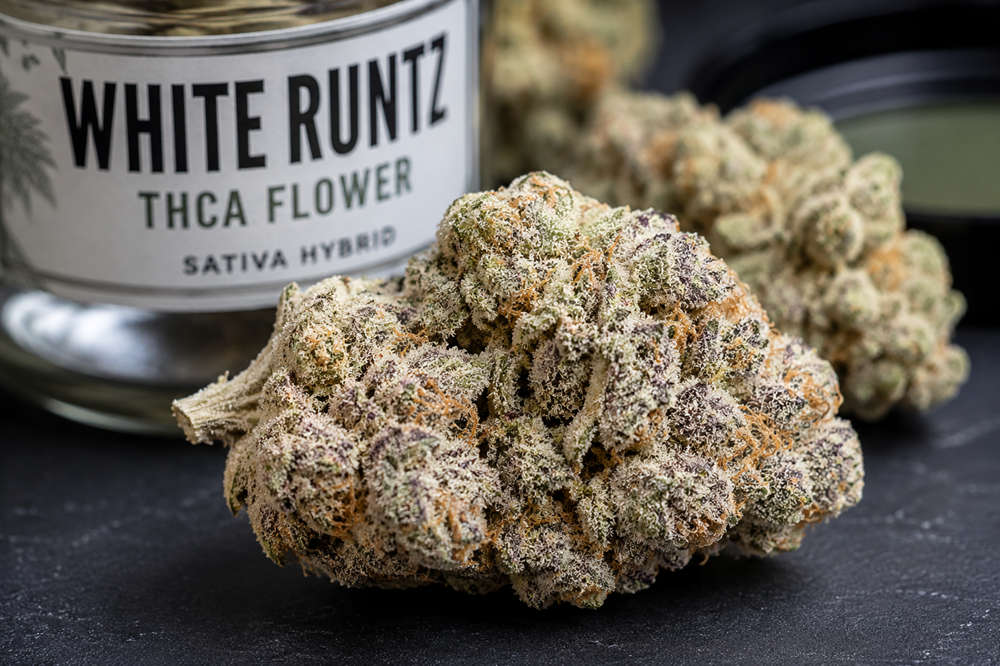
The “White” part of the name is commonly connected to the cultivar’s frosty surface. Mature flowers may develop enough visible trichomes to give the buds a pale, dusted appearance.
Commonly reported visual characteristics include:
- Compact or rounded flower structure
- Medium to deep green coloration
- Occasional purple or violet areas
- Orange, amber, or rust-colored pistils
- A prominent layer of clear or milky trichomes
Flower structure and color can change with phenotype, cultivation, harvest timing, and curing. Heavy trichome coverage may be visually appealing, but appearance alone cannot confirm cannabinoid content, freshness, or safety.
Aroma and flavor
White Runtz is usually described as a sweet, fruit-forward cultivar with a creamy or lightly gassy background. Frequently reported notes include:
- Peach, berry, or mixed fruit
- Candy or sugar
- Vanilla or cream
- Citrus
- Flowers
- Pepper, earth, or fuel
Consumer descriptions of White Runtz often mention peach, vanilla, and floral qualities. These reports reflect personal perception rather than a standardized flavor profile.
The actual aroma of a batch depends on its genetics, growing conditions, drying, curing, age, and storage. Heat and excess air can reduce aromatic intensity, while poor curing may leave flower smelling grassy or hay-like.
Cannabinoids and Terpenes Vary by Batch
White Runtz does not have one dependable THCA percentage. A result published for one harvest applies only to the sample represented by that laboratory report.
A cannabinoid panel may list:
- THCA
- Delta-9 THC
- CBGA and CBG
- CBDA and CBD
- Other minor cannabinoids
Laboratory reports may also show total THC, which estimates the potential delta-9 THC available when THCA is converted. The commonly used calculation is:
Total THC = delta-9 THC + (THCA × 0.877)
The conversion factor accounts for the difference in molecular weight when THCA loses part of its structure during decarboxylation.
For federally regulated hemp production, USDA testing guidance requires compliance methods to consider the potential conversion of THCA into delta-9 THC and report total THC on a dry-weight basis. Those rules concern licensed hemp-production and preharvest compliance. Retail testing requirements may follow different state programs.
Possible terpene findings
Some White Runtz batches may report caryophyllene, limonene, linalool, myrcene, or other terpenes. Their presence and relative concentrations can change from one harvest to another.
A terpene panel can help explain why a sample smells fruity, floral, peppery, or earthy. It cannot reliably guarantee that the flower will feel calming, energizing, sedating, or uplifting to a particular person.
What Effects Do Consumers Report?
Consumers often describe White Runtz as euphoric, tingly, and physically relaxing. Some report an initial change in mood or mental activity followed by a heavier body sensation.
These descriptions are anecdotal. They do not establish how every White Runtz batch will affect every person.
The experience can vary with:
- The cannabinoid concentration of the batch
- The amount consumed
- Personal tolerance
- The method of consumption
- Individual biology
- Mood and surroundings
- Alcohol, medications, or other substances
Possible unwanted effects include dry mouth, dry eyes, anxiety, dizziness, impaired coordination, confusion, rapid heart rate, or excessive drowsiness. Greater THC exposure can increase the intensity of both desired and unpleasant effects.
Reports that consumers use White Runtz for pain, stress, anxiety, sleep, or other symptoms do not establish medical effectiveness. A strain name should not replace professional medical advice, an evidence-based treatment plan, or individualized dosing guidance.
How to Read a White Runtz Certificate of Analysis
A certificate of analysis, or COA, describes the sample submitted to a laboratory. It is most useful when the report can be matched directly to the product being evaluated.
Confirm the product and batch
Compare the report with the package and look for:
- Product or sample name
- Batch or lot number
- Producer or submitting company
- Laboratory name
- Sample type or matrix
- Date received and date tested
- Report or certificate number
A generic White Runtz report may not represent the flower in a specific package. The batch number and producer should match, and the testing date should be reasonably close to the relevant harvest or production period.
Review the cannabinoid results
Check the separate values for THCA and delta-9 THC rather than relying only on a large potency number printed on the label. Determine whether the report also provides total THC.
Pay attention to the measurement units. Results may be shown as percentages, milligrams per gram, or both. The report should also indicate whether the measurements are reported on an as-received or dry-weight basis.
Check what else was tested
A potency panel does not demonstrate that the sample passed comprehensive safety testing. A fuller COA may include results for:
- Pesticides
- Heavy metals
- Yeast and mold
- Pathogenic microorganisms
- Mycotoxins
- Residual solvents, when relevant
- Water activity or moisture
- Foreign material
Testing panels and acceptable limits vary among jurisdictions. A simple “pass” symbol provides limited information unless the report identifies the substances tested, the limits applied, and the results obtained.
Quality and Freshness Indicators
A COA and a physical inspection serve different purposes. Laboratory testing can identify measured compounds and screened contaminants, while examining the flower may reveal poor handling, improper storage, or an uneven cure.
Potential freshness and quality indicators include:
- A recognizable aroma without a musty or strongly chemical odor
- Flower that is not crushed into excessive powder
- A texture that is neither extremely brittle nor unusually damp
- Limited seeds, large stems, and loose plant debris
- Packaging that reduces exposure to light, heat, and excess air
A strong hay-like smell may indicate that the flower was dried or cured poorly. Extremely dry buds can crumble and lose aroma, while unusually wet flower may burn unevenly and create conditions more favorable to microbial growth.
Signs that flower should not be used
Fuzzy growth, web-like material, insects, unexplained powder, or a basement-like odor are reasons not to use the flower. However, visual inspection cannot reliably confirm that a sample is free from mold, pesticides, heavy metals, or other contaminants.
Trichomes are normally clear, milky, or amber glandular structures. Because mold and plant resin can sometimes be difficult to distinguish without expertise, uncertain flower should not be consumed merely because some areas appear crystalline.
Potency, Safety, and Responsible Adult Use
High-THCA flower can produce substantial THC exposure after heating. The prominence of “THCA” on a package does not indicate that the product is mild or non-intoxicating.
Adults who choose to use cannabis can reduce avoidable risk by taking several precautions:
- Begin with a small amount when trying an unfamiliar batch.
- Allow time to assess the effect before using more.
- Do not drive, cycle in traffic, or operate machinery while impaired.
- Avoid combining cannabis with alcohol or other impairing substances.
- Use it in a familiar environment, especially when tolerance is low.
- Store it securely away from children and pets.
- Do not consume flower that appears damaged or contaminated.
Recent cannabis use can affect thinking, attention, memory, coordination, movement, and time perception. The effects of cannabis on brain function can make driving and other safety-sensitive activities dangerous.
Smoking also produces combustion byproducts. Secondhand cannabis smoke can expose nearby people to THC and many of the same toxic chemicals found in tobacco smoke, although research into its long-term health effects remains limited.
People who are pregnant or breastfeeding, under the legal age, taking medications, or managing a physical or mental health condition should seek individualized guidance from a qualified healthcare professional.
Is White Runtz THCA Flower Legal?
This section reflects federal information available on July 22, 2026. State and local rules may differ and can change independently.
The legal status of White Runtz THCA flower cannot be determined from the strain name, package language, or delta-9 THC result alone. Relevant factors can include federal law, total THC, state restrictions, product form, testing methods, possession limits, age requirements, and where the product is sold or delivered.
Under the federal hemp definition currently in effect, hemp is generally distinguished from marijuana using a delta-9 THC concentration limit of no more than 0.3% on a dry-weight basis. Licensed hemp producers are also subject to preharvest compliance testing that considers the potential conversion of THCA into delta-9 THC.
Congress enacted a delayed amendment through Public Law 119-37. Section 781 is scheduled to take effect 365 days after the law’s November 12, 2025 enactment, making the effective date November 12, 2026.
The amended plant definition uses a limit of no more than 0.3% total tetrahydrocannabinols on a dry-weight basis and expressly includes THCA. Unless later legislation changes the provision, high-THCA flower would generally be unable to qualify under that definition after the effective date.
State laws may already apply stricter standards. A jurisdiction may regulate total THC, restrict smokable hemp, limit intoxicating hemp products, impose licensing and age rules, or classify high-THCA flower as marijuana.
Statements such as “Farm Bill compliant” or “legal in all 50 states” should therefore not be treated as definitive. The laws in effect where the flower is produced, sold, shipped, possessed, and used must each be considered.
Final Perspective
White Runtz is commonly associated with Zkittlez and Gelato genetics, visible trichome coverage, and a sweet profile combining fruit, cream, flowers, and occasional fuel-like notes. These characteristics describe the cultivar’s general identity, not the exact contents of every product.
A matching COA, testing date, contaminant panels, storage condition, and physical freshness provide the clearest picture of a specific batch. The strain name can suggest what the flower may resemble, but laboratory data and careful inspection are more dependable than fixed potency claims or promised effects.