Day of the Dead Flower Names: Traditional Blooms and Their Meanings Explained
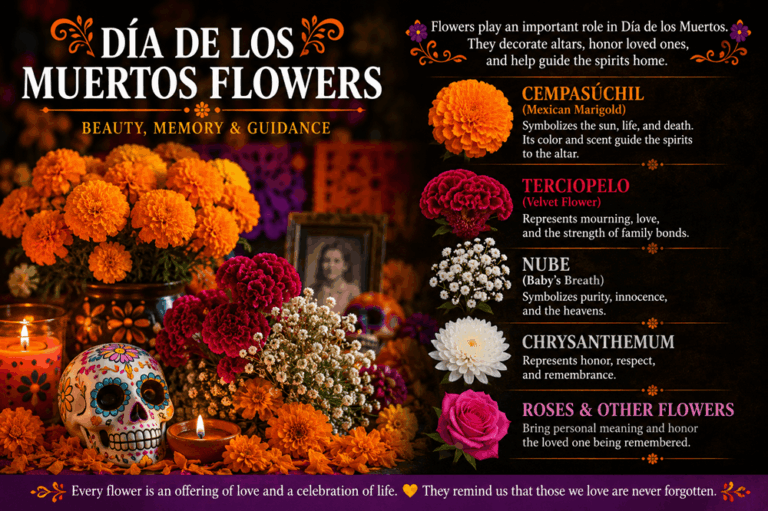
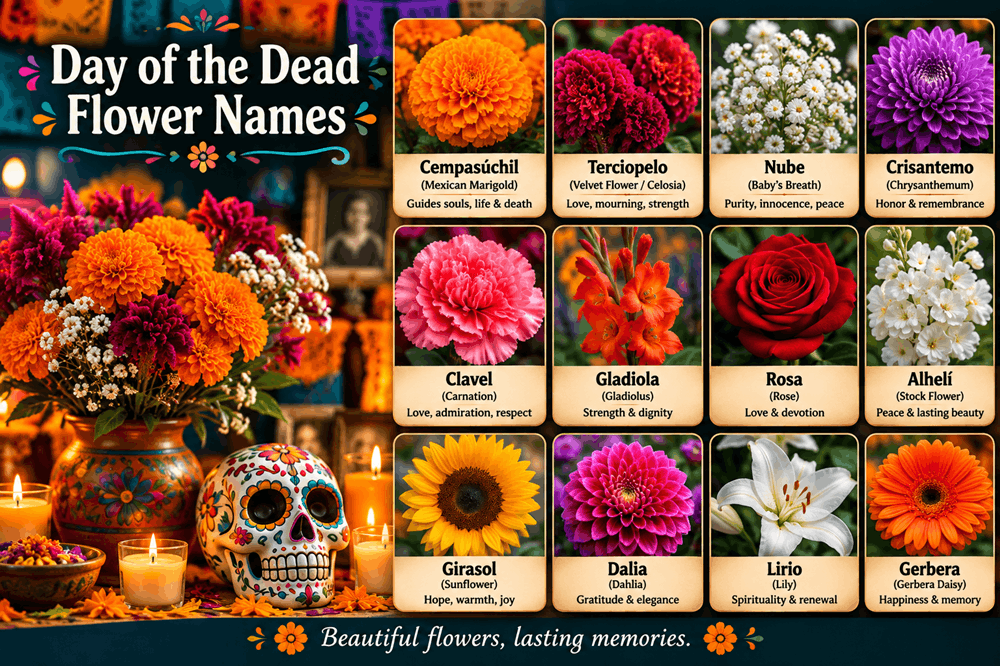
The best-known Day of the Dead flower name is cempasúchil, the orange Mexican marigold traditionally placed on altars and graves. Other common flowers include terciopelo, nube, chrysanthemums, carnations, gladioli, and roses. Each flower adds color, fragrance, texture, or personal meaning to the ofrenda created for deceased loved ones.
What Is the Main Day of the Dead Flower Called?
The main Day of the Dead flower is called cempasúchil. In English, it is commonly known as the Mexican marigold or Aztec marigold. Its scientific name is Tagetes erecta.
Cempasúchil is usually orange or golden yellow and has a strong, recognizable fragrance. Families place whole flowers in vases, use them to decorate graves, or remove the petals to form paths leading toward an altar.
According to the Mexican Secretariat of Agriculture’s explanation of cempasúchil, the flower’s warm color was associated with the sun, while its scent was traditionally believed to guide the souls of the dead toward the offerings prepared for them.
Cempasúchil may also be called:
- Flor de muerto
- Flor de los muertos
- Mexican marigold
- Aztec marigold
- Cempoalxóchitl
- Cempohualxochitl
- Flor de veinte pétalos
The spelling varies because the modern Spanish word developed from a Nahuatl name. It is commonly interpreted as “twenty flowers” or “flower of twenty petals,” referring to the bloom’s many layered petals rather than an exact botanical count.
Cempasúchil: The Mexican Marigold
Cempasúchil is the flower most strongly associated with Día de los Muertos. Its vivid orange color appears on family altars, cemetery graves, public displays, flower arches, and petal carpets throughout the season.
The flower traditionally represents the relationship between life and death. Its bright appearance prevents an altar from feeling entirely dark or mournful. Instead, it helps create a warm and welcoming space for remembering the deceased.
Families may arrange cempasúchil in several ways:
- Placing bouquets beside a photograph
- Scattering petals around candles and food
- Creating a path from the doorway to the altar
- Building an arch above the ofrenda
- Covering a grave with whole flowers and petals
- Forming crosses, circles, or decorative patterns
The National Institute of Anthropology and History’s guide to ofrendas identifies cempasúchil petals as a traditional way to mark the path from the entrance of a home to the altar.
Terciopelo: The Velvet Flower
Another important Day of the Dead flower is terciopelo. The Spanish word means “velvet,” describing the flower’s soft, dense, and richly textured appearance.
Terciopelo may also be called:
- Celosía
- Cresta de gallo
- Mano de león
- Velvet flower
- Cockscomb
Many flowers sold as terciopelo belong to the Celosia genus. Some have folded, brainlike crests, while others grow as feathery plumes. Deep red and burgundy varieties are especially common during Día de los Muertos, although pink, yellow, orange, and purple flowers may also be used.
Terciopelo is often associated with mourning, lasting affection, family strength, and the vitality of life. Its deep red color creates a strong contrast beside orange cempasúchil.
In some communities, the name mano de león, meaning “lion’s paw,” is used for a type of celosia placed on altars and graves. Regional flower names are not always applied in exactly the same way, so one market may use several names for similar flowers.
Nube: Baby’s Breath
Nube is the Spanish word for “cloud.” It refers to clusters of tiny white flowers that create a soft, airy appearance around larger blooms.
Nube may also be called:
- Velo de novia
- Baby’s breath
- Bridal veil
- Gypsophila
The flowers usually come from plants in the Gypsophila genus. They are commonly combined with cempasúchil, terciopelo, chrysanthemums, or roses rather than used alone.
White nube is associated with tenderness, innocence, purity, peace, and the heavens. It is often mentioned in connection with altars for deceased children, sometimes called angelitos, although families may use it on any ofrenda.
The Mexican government’s guide to Day of the Dead altar flowers identifies nube as one of the traditional seasonal flowers and notes its use on altars dedicated to children.
Crisantemo: Chrysanthemum
Crisantemo is the Spanish name for chrysanthemum. These flowers are widely used for funerals, memorials, cemetery visits, and religious occasions in many cultures.
Chrysanthemums have full flower heads composed of many small petals. They are available in white, yellow, purple, pink, red, and orange.
Common symbolic associations include:
- Honor
- Respect
- Grief
- Remembrance
- Peace
- Continuing affection
Purple chrysanthemums are particularly visible during Día de los Muertos in some areas, while white chrysanthemums may be chosen for peace and solemn remembrance. Yellow varieties blend naturally with cempasúchil and add brightness to an arrangement.
Chrysanthemums also remain fresh for a relatively long time, making them practical for altars and graves that will be displayed for several days.
Clavel: Carnation
Clavel is the Spanish name for carnation. Carnations are widely available, reasonably durable, and sold in many colors, making them useful for cemetery arrangements and family altars.
Different colors can communicate different emotions:
- Red carnations: deep love and admiration
- White carnations: remembrance, peace, and innocence
- Pink carnations: gratitude and affection
- Purple carnations: dignity, grief, or spiritual reflection
These meanings are flexible rather than official rules. A family may select carnations because they were the deceased person’s favorite flowers or because they are locally available during the celebration.
Gladiola: Gladiolus
Gladiola is the Spanish name commonly used for gladiolus. These tall flowers add height and structure to altar arrangements.
Gladioli grow along long upright stems and may be white, pink, red, yellow, orange, or purple. They are commonly associated with strength, dignity, remembrance, sincerity, and moral character.
Their vertical shape makes them useful behind framed photographs or at the sides of a large ofrenda. They are also frequently carried to cemeteries and placed in tall grave vases.
Rosa: Rose
Rosa means rose in Spanish. Roses are not as uniquely connected with Día de los Muertos as cempasúchil, but they are commonly used to express personal love and remembrance.
Red roses may honor a spouse or romantic partner. White roses may symbolize peace, respect, or spiritual remembrance. Pink roses can express tenderness and gratitude, while yellow roses may represent friendship and warmth.
A rose may be particularly meaningful when it was connected to the deceased person’s garden, wedding, personality, or favorite color.
Alhelí: Stock Flower
Alhelí is commonly known in English as stock. These flowers grow along upright stems and have a sweet, noticeable fragrance.
White alhelí may be placed on an altar to symbolize peace, purity, affection, or lasting beauty. The flower’s fragrance also complements the traditional belief that aromas help make an ofrenda welcoming to returning souls.
Like nube, white alhelí may appear on altars for children, but it is not restricted to that use.
Girasol: Sunflower
Girasol is the Spanish word for sunflower. Sunflowers are not required for Día de los Muertos, but they may be added for their bright golden color and connection with sunlight.
They can symbolize:
- Warmth
- Devotion
- Loyalty
- Hope
- Joyful remembrance
Sunflowers can complement orange marigolds or replace them when fresh cempasúchil is unavailable. They may also be chosen simply because the person being honored loved them.
Other Day of the Dead Flower Names
Other flowers found on graves and ofrendas may include:
- Lirio: lily
- Orquídea: orchid
- Dalia: dahlia
- Gerbera: gerbera daisy
- Margarita: daisy
- Flor de nube: baby’s breath
- Flor de muerto: a general name often used for cempasúchil
- Manita de león: another regional name connected with celosia
Flower choices depend on region, season, family customs, cost, and availability. A Day of the Dead altar in Michoacán may not look identical to one in Oaxaca, Puebla, Mexico City, or a Mexican American community in the United States.
Which Flowers Should You Put on an Ofrenda?
Cempasúchil is the traditional first choice when it is available. It can be combined with red terciopelo, white nube, chrysanthemums, carnations, or the deceased person’s favorite flowers.
A balanced arrangement might include:
- Orange cempasúchil for guidance and tradition
- Red terciopelo for depth and family love
- White nube for softness and peace
- Purple chrysanthemums for remembrance
- A personal flower connected with the deceased
You do not need every traditional flower. A small bouquet beside a photograph can be meaningful when it is prepared with care.
Do the Flowers Have to Be Fresh?
Fresh flowers are valued because their fragrance is an important part of the tradition. However, paper, fabric, dried, and artificial flowers may also be used.
Paper cempasúchil is especially useful when Mexican marigolds are unavailable or expensive. Families living outside Mexico often adapt their altars using locally available flowers and handmade decorations.
The Smithsonian’s introduction to Día de los Muertos identifies cempasúchil as a central symbol placed on ofrendas and graves, but Day of the Dead practices also vary among families and communities.
The Bottom Line
The main Day of the Dead flower name is cempasúchil, the orange Mexican marigold used to decorate altars, graves, arches, and paths. Its bright color and fragrance are traditionally believed to guide deceased loved ones toward the ofrenda.
Other important flower names include terciopelo or celosia, nube or baby’s breath, crisantemo or chrysanthemum, clavel or carnation, gladiola, rosa, and alhelí.
There is no single flower list that every family must follow. Traditional blooms can be combined with flowers that hold a personal connection to the person being remembered. The purpose is not simply to decorate an altar, but to express welcome, memory, affection, and the continuing bond between the living and the dead.