What Is a Cannabis Restaurant? How Cannabis Dining Works
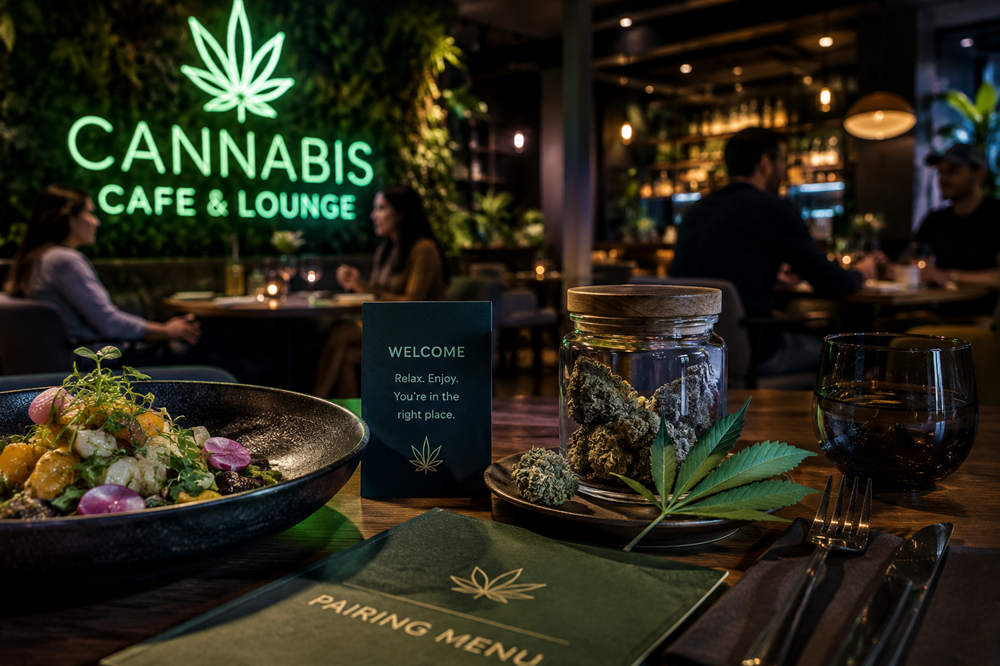
A cannabis restaurant combines food, hospitality, and legal cannabis consumption in one social setting. Depending on the venue, guests may eat a conventional meal while using cannabis, order packaged edibles or drinks, or attend a carefully measured infused dinner.
The term can be misleading because many cannabis restaurants do not add THC to their food. Some are licensed consumption lounges with a separate kitchen, while others organize private dining events or offer cannabis products alongside an ordinary menu. What a venue can serve depends on state law, local approval, and the licenses it holds.
What Is a Cannabis Restaurant?
“Cannabis restaurant” is an informal name for a venue where adults can legally consume cannabis while enjoying food or nonalcoholic drinks. Regulators may instead describe the business as a cannabis cafe, consumption lounge, hospitality establishment, or social consumption venue.
Unlike a dispensary, it provides a designated place for onsite use. Unlike a conventional restaurant, it must follow cannabis rules covering age verification, product sourcing, storage, sales, security, serving limits, and permitted consumption methods.
There is no single national model. One venue may resemble a restaurant with table service, while another operates more like a tasting room or lounge. The name alone does not reveal whether the food is infused, whether smoking is allowed, or whether customers may bring cannabis purchased elsewhere.
Does a Cannabis Restaurant Serve Infused Food?
Sometimes, but many do not. Cannabis dining generally falls into four formats, each with a different relationship between the meal and the cannabis product.
Regular Food With Separately Served Cannabis
This is one of the most common models. Guests order conventional dishes from a kitchen and purchase cannabis separately from a licensed menu.
The meal may include familiar restaurant food such as salads, sandwiches, small plates, or desserts, but none of it contains THC unless the menu clearly states otherwise. Keeping the two menus separate allows diners to stop consuming cannabis without giving up the rest of their meal.
Packaged Edibles and Cannabis Drinks
Some lounges sell ready-to-consume products supplied by licensed manufacturers. These may include gummies, chocolates, baked products, tablets, or cannabis beverages.
They are not prepared like ordinary restaurant dishes. They typically arrive in approved packaging or are divided into permitted single servings, with the cannabinoid amount displayed on the label or menu.
Guests should check both the amount per serving and the total amount in the container. A package may contain several servings even when it appears small enough to consume at once.
Chef-Prepared Infused Dining
Infused dinners place measured amounts of THC, CBD, or other cannabinoids directly into selected courses. They are more commonly offered as private dinners, limited-seat events, or specialized tasting menus than as ordinary restaurant service.
A responsible infused menu should state the amount in each course and the planned total for the meal. Diners should also be able to skip a serving or choose a non-infused alternative.
Calling an event private does not automatically make it legal. Its organizers may still need to comply with cannabis licensing, food-safety requirements, local event rules, possession limits, and restrictions on public sales.
Food and Cannabis Pairings
A pairing menu keeps the cannabis separate from the dish but selects products that complement the meal. A citrusy aroma may accompany a bright appetizer, while earthy characteristics might be paired with mushrooms, roasted vegetables, or smoked ingredients.
These pairings are primarily sensory. Terpenes and product labels can describe aroma and flavor, but they cannot reliably predict how every person will feel. Potency, serving size, consumption method, tolerance, medications, and individual biology can all influence the experience.
What About Hemp-Derived THC in Restaurants?
Some bars, cafes, and restaurants have marketed drinks or foods made with intoxicating cannabinoids derived from hemp. These products may be sold outside the state-licensed marijuana system, but that does not mean they are legally or regulatorily equivalent to dispensary products.
State approaches differ considerably, and the rules continue to change. Some jurisdictions impose age limits, potency caps, testing requirements, or outright restrictions on intoxicating hemp products.
Federal food law is another concern. The U.S. Food and Drug Administration states that THC and CBD generally cannot be added to conventional food introduced into interstate commerce, regardless of whether they came from marijuana or hemp.
Diners should not assume that a hemp-derived THC drink has been tested, labeled, or dosed according to the same standards as a product sold by a licensed cannabis retailer. The menu should identify the cannabinoid, amount per serving, manufacturer, and applicable age restriction.
What to Expect During a Visit
A typical visit begins with an identification check. Adult-use venues generally require valid government-issued photo identification showing that the customer meets the minimum legal age.
After entry, guests may receive separate food and cannabis menus. Staff can explain product formats, cannabinoid amounts, consumption methods, and venue rules, but they should not guarantee a particular feeling or make unsupported medical claims.
The cannabis menu may include flower, pre-rolls, vapor products, concentrates, edibles, or drinks. The selection depends on the venue’s license and local regulations. Some businesses permit smoking or vaping in specially designed areas, while others allow only smokeless products.
Guests may be given equipment such as vaporizers or water pipes, sometimes with a rental or cleaning fee. Businesses that permit inhalation may use separate rooms, patios, filtration systems, or other measures required by local building and workplace rules.
Food service then operates much like it would in another restaurant. Diners may order individual dishes or a fixed menu, although the venue may impose reservation deposits, table time limits, service charges, or minimum purchases.
Staff may decline an additional cannabis sale if a guest appears significantly impaired or uncomfortable. A well-run venue should also provide water, clearly explain closing procedures, and help guests identify safe transportation options.
Where Are Cannabis Restaurants Legal?
Legal adult-use cannabis does not automatically make cannabis restaurants legal. A state may allow private possession and consumption while continuing to prohibit public-use businesses.
These venues can be governed by several layers of law, including state cannabis licensing, local zoning, food-service permits, smoking restrictions, building codes, ventilation requirements, fire regulations, and workplace protections.
Local approval is especially important. A lounge may be permitted in one city but prohibited in a neighboring community within the same state.
California Cannabis Cafes
California permits certain licensed cannabis retailers and microbusinesses to operate consumption areas when the local jurisdiction authorizes them.
Under AB 1775, qualifying lounge operators may prepare and sell nonalcoholic, non-cannabis-infused food and beverages onsite. They may also host certain live events and sell tickets. The law does not allow every restaurant in California to sell cannabis or freely add THC to its dishes.
The distinction is important: a California cannabis cafe may serve freshly prepared food, but the kitchen menu itself remains non-infused under this framework. Cannabis products continue to be handled through the licensed side of the business.
Visitors can use the California Department of Cannabis Control license search to verify whether a cannabis business holds an active state license. Local authorization should be checked separately because a state license does not eliminate city or county requirements.
Nevada Consumption Lounges
Nevada recognizes two main lounge structures: a retail lounge attached or immediately adjacent to an adult-use cannabis store, and an independent consumption lounge operating under its own license.
Licensed lounges sell single-use or ready-to-consume cannabis products intended for onsite use. The Nevada Cannabis Compliance Board states that customers cannot take unfinished cannabis or cannabis products home after a lounge visit.
Nevada also prohibits the sale or consumption of alcohol inside licensed cannabis lounges. Diners should not expect the venue to operate like a bar simply because it offers food, beverages, music, or evening service.
The state maintains a public list of active cannabis licensees. Travelers should confirm that a venue holds an active lounge license rather than relying only on map listings, advertisements, or social media.
Why Local Rules Matter
Other states and municipalities have adopted their own social-consumption systems, but legal authorization does not always mean that lounges are currently open.
A local government may prohibit these businesses, limit the number of licenses, restrict indoor smoking, require separation from food preparation, or control whether customers may bring outside cannabis.
Rules can also change after a venue opens. Before making a reservation, check the state cannabis regulator, the relevant city or county, and the venue’s current policies.
Can Cannabis Restaurants Serve Alcohol?
Alcohol and cannabis are governed through separate licensing systems. A business that can serve one is not automatically authorized to serve the other in the same consumption area.
California’s cannabis-cafe framework specifically authorizes nonalcoholic beverages. Nevada expressly prohibits alcohol from being sold or consumed in licensed cannabis lounges.
Even where a nearby restaurant or bar serves alcohol, combining it with cannabis can increase impairment and make the experience harder to judge. Guests should not bring alcohol into a lounge unless the venue clearly confirms that doing so is lawful, which is uncommon in regulated consumption settings.
What to Check Before Visiting
A cannabis restaurant can offer a very different experience from one venue to another. Review the following details before reserving a table:
- License status: Verify the business through an official state database.
- Menu type: Confirm whether the food is non-infused, infused, or paired with separately served cannabis.
- Cannabinoid amounts: Look for the THC and CBD content of every edible, drink, or infused course.
- Outside products: Find out whether cannabis must be purchased onsite.
- Consumption methods: Check whether smoking, vaping, concentrates, edibles, or beverages are permitted.
- Ventilation: Ask about separate areas if smoke or vapor sensitivity is a concern.
- Food accommodations: Confirm whether the kitchen can handle allergies or dietary requirements.
- Costs: Review deposits, service charges, equipment fees, minimum purchases, and cancellation rules.
- Leftover policies: Determine whether unused products must be consumed or surrendered before leaving.
- Transportation: Arrange a sober ride in advance.
Someone unfamiliar with cannabis dining may feel more comfortable at a venue that serves conventional food and keeps cannabis products separate. This makes the dose easier to understand and control.
How to Enjoy Cannabis Dining Responsibly
Begin with a modest amount, especially when using an unfamiliar product or trying a different consumption method. A restaurant atmosphere does not make cannabis effects more predictable.
Edibles require patience. The Centers for Disease Control and Prevention notes that edible cannabis may take 30 minutes to two hours to produce noticeable intoxicating effects. Taking another serving before the first one has fully taken effect can lead to unintended overconsumption.
Read an infused menu from beginning to end before eating the first course. Add together the THC amounts across the meal rather than judging each dish in isolation, and remember that you do not need to finish every serving.
Avoid mixing cannabis with alcohol or other impairing substances. The combined effects may be stronger and less predictable than using either one by itself.
Tell a staff member if you begin to feel anxious, dizzy, confused, nauseated, or unusually uncomfortable. Stop consuming cannabis, move to a calmer area, drink water, and allow time for the effects to pass. Severe symptoms may require medical assistance.
Do not drive after consuming intoxicating cannabis. The National Highway Traffic Safety Administration states that driving while impaired by marijuana or another potentially impairing substance is illegal throughout the United States. Use a sober driver, taxi, rideshare service, public transportation, or nearby accommodation instead.
The Future of Cannabis Dining
Cannabis restaurants provide a structured alternative to consuming at home or in an unauthorized public location. They can offer adults a social environment with trained staff, clear menus, measured servings, food, and designated consumption spaces.
They also give chefs and hospitality teams opportunities to explore flavor, aroma, menu pacing, and social rituals without treating cannabis as a novelty added indiscriminately to every dish.
Operating one remains complicated. Businesses must coordinate cannabis rules with food safety, zoning, ventilation, insurance, security, product tracking, employee protections, and impaired-customer management.
The venues most likely to succeed are those that treat compliance, hospitality, and responsible consumption as equally important. For diners, the experience becomes much easier to understand once four questions are answered: Is the business licensed? Does the food contain THC? How much cannabis is being served? And how will everyone get home safely?