Lemon Cherry Gelato THCA Flower: Genetics, Aroma, Effects, and Quality
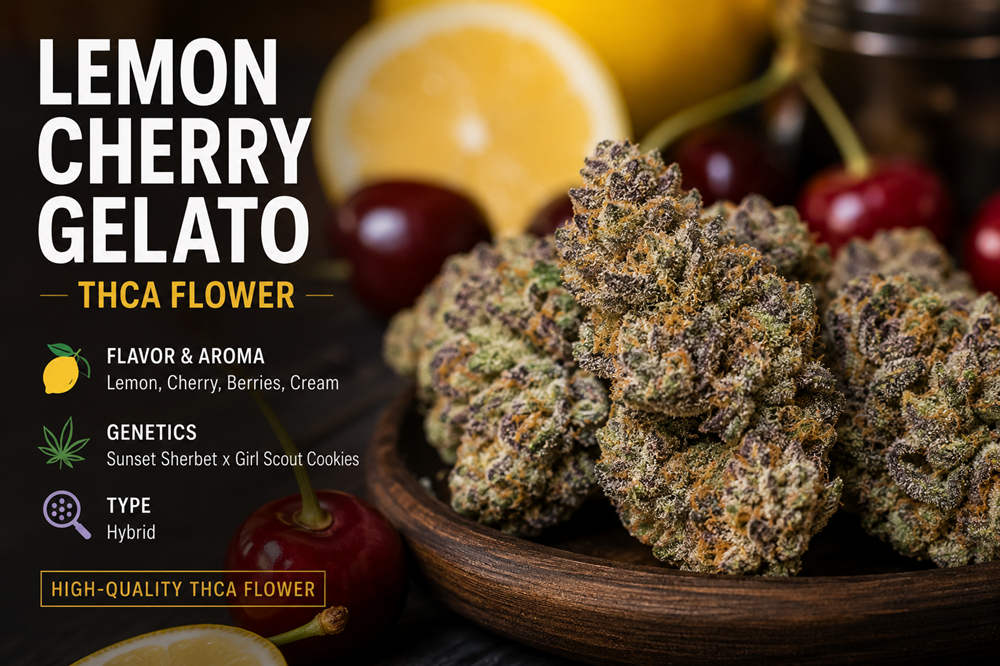
Lemon Cherry Gelato THCA flower is known for a sweet, fruit-forward profile that may combine citrus, cherry, berries, and creamy notes. It is widely described as a hybrid, although products carrying the name can differ considerably between growers and harvests.
This guide explains what the name means, which characteristics are commonly associated with the cultivar, and how to evaluate the flower without relying on promotional potency or effect claims.
What Is Lemon Cherry Gelato THCA Flower?
Lemon Cherry Gelato THCA flower is dried cannabis flower sold under the Lemon Cherry Gelato cultivar name. Its laboratory profile typically contains more tetrahydrocannabinolic acid, or THCA, than already-active delta-9 THC.
THCA is a chemical precursor to delta-9 THC. It is not generally considered intoxicating in the same way as delta-9 THC, but heating it can convert a substantial portion into THC through a process called decarboxylation. Smoking, vaping, or cooking the flower can therefore produce intoxicating effects.
“Lemon Cherry Gelato” describes the marketed cultivar, while “THCA flower” refers to the form in which its cannabinoids are present before heating. The phrase does not identify a separate cannabis species or guarantee that the product has passed any particular safety standard.
What Are the Genetics of Lemon Cherry Gelato?
The commonly reported Lemon Cherry Gelato lineage connects the cultivar to Sunset Sherbet and Girl Scout Cookies, also known as GSC. Some accounts describe it as a Gelato selection or bagseed, while others associate certain versions with Runtz-related genetics or an additional unidentified parent.
Because several origins are reported, Sunset Sherbet and GSC are best treated as the cultivar’s commonly attributed lineage rather than a conclusively documented family tree.
Cannabis names are not governed by a universal naming or genetic-registration system. Clones may be renamed, unrelated plants can be sold under familiar labels, and different phenotypes from one seed line may express distinct traits. A study of the phytochemical diversity of commercial cannabis also found limited consistency among some samples sharing the same strain name. Information about the breeder, source cut, or seed line is therefore more meaningful than the label by itself.
Appearance, Aroma, and Flavor
Typical appearance
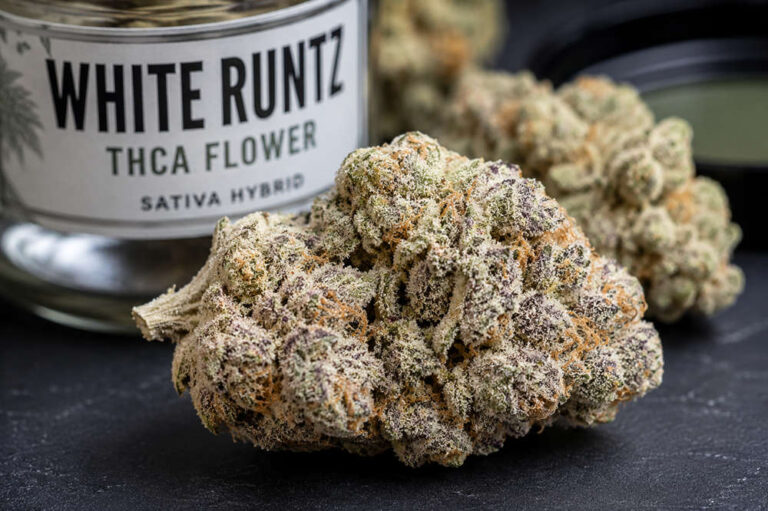
Lemon Cherry Gelato flower is often described as having compact or moderately dense buds covered with visible trichomes. Green flowers may be mixed with purple leaves and orange or amber pistils, although the precise coloring depends on genetics and growing conditions.
Not every example develops deep purple tones, and color alone does not establish authenticity. Harvest timing, temperature, plant health, trimming, and curing can all influence the flower’s final appearance.
Common aroma and flavor notes
The cultivar’s name reflects the sensory profile commonly associated with it. Descriptions often include lemon peel, sweet cherry, berries, fruit candy, and cream. Some batches add pepper, earth, herbs, pine, or fuel beneath the sweeter notes.
Aroma may change after the flower is broken apart, exposing compounds that were less noticeable on the surface. Flavor can also differ from the aroma because heat changes the volatile compounds released during use.
Drying and storage matter as much as genetics. Excess heat, light, oxygen, and time can weaken the brighter citrus and fruit notes, while poor curing may leave the flower smelling grassy, musty, or unusually harsh.
Cannabinoids and Terpenes Can Vary by Batch
No single THCA percentage accurately represents every Lemon Cherry Gelato product. Cannabinoid levels can differ between genetic cuts, individual plants, growing environments, harvests, sampled buds, and testing laboratories.
A certificate of analysis may report THCA and delta-9 THC as separate results. Federal hemp regulations use the following calculation to estimate potential total THC:
Total THC = delta-9 THC + (THCA × 0.877)
The conversion factor accounts for the difference in molecular weight as THCA loses part of its structure during decarboxylation. The resulting figure is a laboratory calculation, not a promise that every calculated milligram will be absorbed during use.
Limonene, beta-caryophyllene, and linalool are frequently mentioned in Lemon Cherry Gelato descriptions. Other batches may contain more myrcene, humulene, pinene, or different aromatic compounds. A terpene panel from the relevant lot is the only practical way to determine which terpenes a laboratory detected in that sample.
Terpene results can help explain aroma, but they should not be turned into fixed effect predictions. A compound associated with citrus or floral scents does not guarantee energy, relaxation, sleep, or relief from a health condition.
What Effects Are Commonly Reported?
Online consumer reports commonly describe Lemon Cherry Gelato as relaxing, mood-elevating, sociable, or physically tingly. Some users report an initially cheerful or talkative experience followed by a slower, heavier feeling. Others describe sedation without a noticeably energetic stage.
These accounts are subjective observations rather than established properties of the cultivar. The experience may change with THC exposure, tolerance, consumption method, setting, expectations, and the chemical profile of the individual batch.
Unwanted effects may include dry mouth, dizziness, poor concentration, anxiety, panic, paranoia, nausea, or excessive drowsiness. These reactions can be more likely when someone consumes more THC than expected or has little previous tolerance.
Lemon Cherry Gelato is generally marketed as a hybrid, sometimes with an indica-leaning description. However, broad commercial labels such as indica, sativa, and hybrid provide limited information about a flower’s precise chemistry or how a particular person will respond.
How to Evaluate Lemon Cherry Gelato THCA Flower
Check the batch-specific COA
A useful certificate of analysis should correspond to the flower in the package. Compare the report’s batch or lot number with the product label and check the laboratory name, sample identifier, test date, and cannabinoid results.
Be cautious when one undated report appears to cover multiple harvests or products. A COA for a different batch cannot confirm the composition of the flower currently being evaluated.
The report should also make its units clear. Cannabinoids may be shown as percentages, milligrams per gram, or both. Confirm whether the listed THC figure represents delta-9 THC alone or a calculated total.
Look beyond the THCA percentage
A large potency number does not establish overall quality. Regulated cannabis testing laboratories may screen products for pesticides, heavy metals, microbial contaminants, mycotoxins, residual solvents, moisture, water activity, and foreign material in addition to measuring cannabinoids.
Review which panels were actually completed. A QR code may lead to a potency report without showing contaminant testing. Each tested category should indicate a result, reporting limit, or clear pass-or-fail status.
Testing requirements differ between jurisdictions. A product that passes one program has met that program’s limits; the result should not be interpreted as a universal guarantee that the flower is risk-free.
Inspect freshness and condition
Fresh flower generally retains a recognizable natural aroma and some resilience when handled. Buds that immediately crumble into powder may be excessively dry, while flower that feels wet, unusually soft, or spongy may not have been cured or stored properly.
Look inside dense buds rather than inspecting only the surface. Fuzzy growth, web-like material, musty odors, internal browning, unexplained dampness, or ammonia-like smells are reasons not to use the flower.
Trichomes can resemble tiny clear or cloudy crystals. Mold is more likely to appear irregular, powdery, fuzzy, or thread-like. When the difference is unclear, visual inspection should not be used to dismiss a possible contamination problem.
Safety and Responsible Adult Use
Heating high-THCA flower can produce enough delta-9 THC to impair reaction time, coordination, perception, memory, and judgment. Because cannabis can interfere with the skills required for safe driving, a person who has used it should not drive, cycle in traffic, operate machinery, or perform other safety-sensitive activities.
Using cannabis with alcohol or another intoxicating substance can increase impairment. People with limited tolerance should be especially cautious because inhaled THC can begin acting quickly, while its full intensity may continue developing after the first inhalation.
Store cannabis flower and related accessories securely away from children and animals. Avoid exposing other people to smoke or vapor, particularly in enclosed spaces.
THCA flower can also lead to a positive cannabis drug test after THC is formed and metabolized. A hemp label does not prevent employment, athletic, legal, or medical testing consequences.
Cannabis use during pregnancy or breastfeeding may create additional risks, so pregnant or breastfeeding people should discuss their situation with a qualified health professional. People taking medications or managing conditions that may be affected by intoxication, anxiety, heart-rate changes, or sedation should also seek individualized medical guidance.
Is Lemon Cherry Gelato THCA Flower Legal?
The legality of Lemon Cherry Gelato THCA flower depends on more than the strain name or the delta-9 THC number printed on its package. Federal hemp provisions, state controlled-substance laws, total-THC standards, product restrictions, and local enforcement policies may all apply.
USDA hemp-production testing already requires methods that account for the potential conversion of THCA into THC. Retail and possession rules can nevertheless differ from agricultural production requirements, especially when states regulate intoxicating hemp products separately.
Federal law is also approaching a scheduled change. Public Law 119–37, enacted on November 12, 2025, revises the federal hemp definition 365 days after enactment. Unless the law changes before then, the revised definition will take effect on November 12, 2026, and apply a limit of no more than 0.3 percent total tetrahydrocannabinols on a dry-weight basis, including THCA.
Some states already use total-THC calculations or prohibit particular hemp-derived products. Others impose age limits, licensing rules, testing requirements, or shipping restrictions. The fact that a website accepts an order does not prove that receiving or possessing the product is lawful at its destination.
Consumers should check current information from the relevant state legislature, agriculture department, health department, cannabis regulator, or attorney general. Legal explanations published before November 12, 2026, may require reevaluation once the scheduled federal amendment takes effect.
The Bottom Line
Lemon Cherry Gelato THCA flower is commonly associated with Sunset Sherbet and GSC genetics and a sweet combination of lemon, cherry, berries, and cream. Those characteristics describe a general cultivar profile rather than a standardized product.
The most useful information comes from the individual flower: a matching COA, clearly reported cannabinoid and contaminant results, suitable freshness, and compliance with the rules currently in force where it is sold and possessed.