
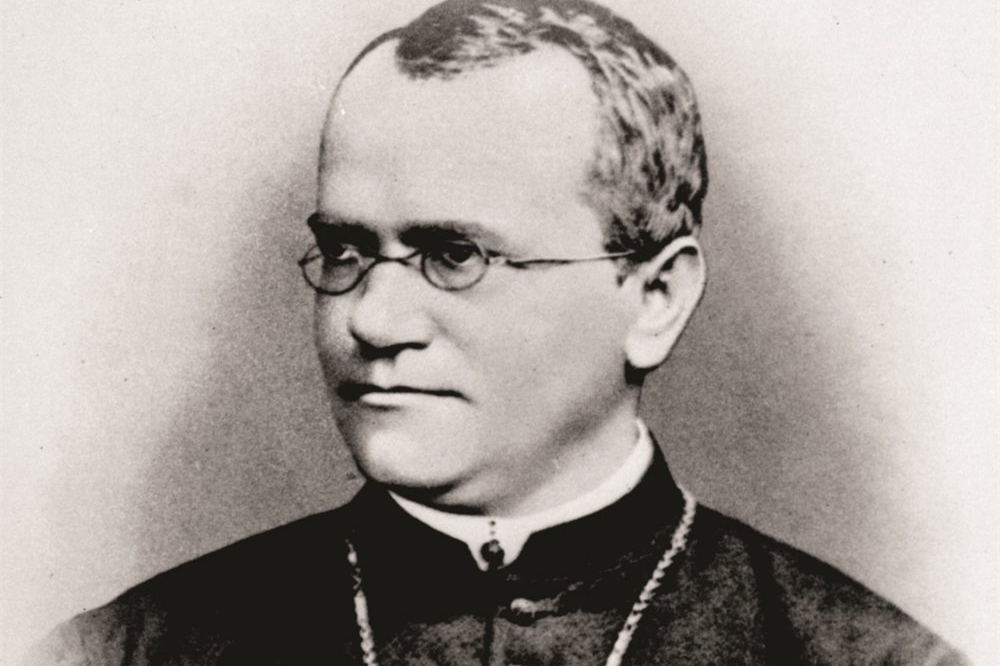
Who Is the Father of Genetics? Gregor Mendel Explained
Gregor Mendel is widely known as the father of genetics. The 19th-century Augustinian friar used carefully controlled experiments with pea plants to reveal predictable patterns in the way certain traits pass from parents to offspring. His findings became a foundation of classical genetics long before scientists understood DNA, chromosomes, or genes in their modern sense.
Mendel’s importance comes not simply from studying heredity, but from showing that inheritance could be investigated experimentally and analyzed mathematically. His work helped transform heredity from a collection of observations into a field governed by testable biological principles.
Who Was Gregor Mendel?
Gregor Johann Mendel was born in 1822 in the Austrian Empire and later joined the Augustinian monastery in Brno, now in the Czech Republic. Alongside his religious duties, he developed strong interests in natural science, mathematics, meteorology, and plant breeding.
Mendel studied physics and natural history at the University of Vienna before returning to Brno. That combination of biological observation and quantitative thinking would shape the experiments for which he became famous.
Beginning in the 1850s, he investigated inheritance using garden peas grown at the monastery. Instead of simply noting that offspring resembled their parents, Mendel controlled which plants reproduced, counted the resulting offspring, compared generations, and looked for consistent numerical relationships.
Why Is Gregor Mendel Called the Father of Genetics?
People had selectively bred plants and animals long before Mendel. They knew that choosing parents with particular characteristics could affect future generations, but the underlying rules of inheritance were poorly understood.
Mendel approached the problem differently. He selected plants with clearly contrasting characteristics, performed controlled crosses, followed those characteristics through successive generations, and recorded large numbers of results.
His experiments indicated that hereditary information did not simply blend together and disappear. Instead, characteristics behaved as though they were influenced by separate inherited factors that could remain hidden in one generation and reappear in another.
Scientists later developed the concepts of genes and alleles to describe hereditary information more precisely. Mendel knew nothing about DNA and did not use today’s genetic vocabulary, but the patterns he identified became central to what is now called Mendelian inheritance.
How Mendel’s Pea Plant Experiments Worked
Mendel conducted his best-known experiments with the garden pea, Pisum sativum. Peas were especially useful because their reproduction could be controlled and particular characteristics could be followed from one generation to the next.
Why Did Mendel Choose Pea Plants?
Pea plants can self-pollinate, allowing particular lines to maintain consistent characteristics across generations. Mendel could also cross-pollinate selected plants by controlling which pollen reached a flower.
He studied clearly distinguishable characteristics such as seed shape, seed color, flower color, pod form, flower position, and plant height. Working with contrasting forms made inheritance patterns easier to recognize.
Before performing many of his experimental crosses, Mendel used plants that reliably produced offspring with the same form of a characteristic. These are commonly described today as true-breeding lines.
What Did Mendel Observe?
When Mendel crossed plants with contrasting forms of a characteristic, the first-generation offspring often displayed one form rather than an intermediate mixture of the two.
The apparently missing form could then return in the next generation. For several characteristics he studied, the visible forms appeared in an approximate 3-to-1 ratio in that generation.
This was an important clue. A characteristic that disappeared from view had not necessarily been lost. The hereditary information associated with it could remain present and be transmitted to later offspring.
What Did Gregor Mendel Discover?
Mendel’s results led to principles that became fundamental to classical genetics. Modern terminology describes these patterns using genes, alleles, gametes, and chromosomes, concepts that were developed or refined after Mendel’s experiments.
Dominant and Recessive Inheritance
For the contrasting pea characteristics Mendel examined, one form could determine the visible appearance of offspring even when hereditary information for the alternative form was also present.
In introductory genetics, these relationships are described using the terms dominant and recessive. A dominant allele can influence the phenotype when only one copy is present, while a recessive phenotype generally requires the relevant recessive allele to be present in both copies of the gene in a simple Mendelian example.
Recessive does not mean weak, harmful, or likely to disappear. Dominance describes a relationship between alleles and their effects on a particular phenotype.
The Law of Segregation
For the pea traits Mendel studied, his results were consistent with each plant carrying two hereditary factors for a characteristic while contributing only one of those factors through each reproductive cell.
Modern genetics explains this pattern through the behavior of chromosomes during meiosis. In a diploid organism, the two alleles of a gene generally separate as gametes form, so an offspring receives one allele from each parent.
This principle became known as the law of segregation.
The Law of Independent Assortment
Mendel also followed more than one characteristic at a time. His results showed that some hereditary factors could be transmitted independently of one another, leading to the principle known as the law of independent assortment.
Modern genetics adds an important qualification. Genes located close together on the same chromosome may be genetically linked and are more likely to be inherited together. Independent assortment therefore does not apply equally to every pair of genes.
Why Mendel’s Discoveries Changed Biology
Mendel demonstrated that inheritance could produce measurable patterns. Instead of treating heredity as an unpredictable blending process, scientists could begin testing hypotheses about how biological information moved from one generation to another.
His work also showed the value of combining carefully designed biological experiments with quantitative analysis. That approach became increasingly important as genetics developed during the 20th century.
Later researchers connected hereditary factors with chromosomes, established the physical basis of genes, identified DNA as genetic material, and eventually developed technologies capable of reading entire genomes. Mendel did not make those later discoveries, but his experiments supplied an essential framework on which much of classical genetics was built.
Why Was Mendel’s Work Not Recognized Immediately?
Mendel presented his plant-hybrid experiments to the Natural Science Society in Brno in February and March 1865. His paper, commonly known in English as Experiments in Plant Hybrids, was published in 1866.
The work did not immediately reshape biology. Mendel continued with other scientific interests and became abbot of his monastery in 1868. He died in 1884, before his inheritance experiments achieved their later fame.
Around 1900, research by botanists Hugo de Vries, Carl Correns, and Erich von Tschermak helped bring Mendel’s results into much wider scientific attention. By then, knowledge of cells and chromosomes had advanced enough for researchers to begin connecting Mendel’s abstract hereditary factors with physical structures inside cells.
Shortly afterward, work associated with Walter Sutton and Theodor Boveri helped establish the chromosome theory of heredity, providing a biological mechanism that could explain important aspects of Mendelian inheritance.
Does Modern Genetics Still Follow Mendel’s Laws?
Mendelian inheritance remains fundamental to genetics, particularly when studying certain traits or conditions strongly influenced by variation in a single gene. However, it describes only part of the way heredity works.
Modern genetics has revealed several different layers of complexity.
Alleles Do Not Always Show Simple Dominance
Some allele combinations produce incomplete dominance, where the heterozygous phenotype differs from either homozygous form. In codominance, the effects associated with two alleles can both be evident.
These patterns modify the simple dominant-recessive model without overturning the basic principle that alleles can segregate during reproduction.
Genes Do Not Always Assort Independently
Genes positioned near one another on the same chromosome can be linked. Because they are physically close, they have a greater probability of being passed to offspring together, although recombination during meiosis can separate them.
Genetic linkage therefore places an important boundary on a simplistic interpretation of independent assortment.
Many Traits Involve Multiple Genes
Numerous characteristics are polygenic, meaning that variation at many locations in the genome contributes to the phenotype. Human height is a familiar example: it cannot be explained by one dominant or recessive gene.
Complex traits may also be influenced by environmental conditions and interactions among biological processes. As a result, their inheritance cannot usually be predicted with a simple Mendelian ratio.
Some Genetic Information Follows Different Routes
Most familiar Mendelian examples concern genes on chromosomes in the cell nucleus. Mitochondria, however, contain their own DNA, producing inheritance patterns that differ from typical nuclear inheritance.
These discoveries expand the picture Mendel began rather than making his work obsolete. His experiments captured particularly clear inheritance patterns that remain useful for understanding fundamental genetic principles.
Was Mendel the Only Founder of Modern Genetics?
The description “father of genetics” recognizes Mendel’s foundational role; it does not mean that one scientist created the entire modern field.
Genetics grew through many later discoveries. Researchers connected heredity with chromosomes, mapped genes, identified DNA as genetic material, determined its molecular structure, investigated how genes are expressed, and developed modern genomics.
Mendel’s distinctive contribution was demonstrating that inherited characteristics could follow regular, testable patterns. Later scientists uncovered the cellular and molecular mechanisms behind those patterns and identified many cases where inheritance is more complicated.
Gregor Mendel’s Lasting Legacy
Mendel’s name remains part of the language of genetics. Scientists and clinicians still use terms such as Mendelian inheritance and Mendelian disorder when discussing certain recognizable patterns of single-gene inheritance.
His experiments also remain useful in education because they demonstrate an essential distinction between probability and certainty. Genetics can predict the expected proportions of offspring carrying particular combinations of alleles without predicting exactly which combination an individual offspring will receive.
The technology available to geneticists has changed enormously since Mendel worked in his monastery garden. Researchers can now sequence genomes, study millions of genetic variants, and investigate interactions among genes, cells, organisms, and environments. Yet the idea that inheritance can be tested through careful experiments remains as important as ever.
Frequently Asked Questions
Did Gregor Mendel discover genes?
Not in the modern molecular sense. Mendel inferred the existence of separate hereditary factors from his breeding experiments. The scientific concept and terminology of genes developed later, as researchers connected patterns of inheritance with chromosomes and eventually DNA.
Did Mendel know about DNA?
No. Mendel’s pea experiments took place decades before scientists established DNA’s central role in heredity. His conclusions came from controlled breeding, observation, counting, and mathematical analysis rather than molecular biology.
Are all human traits Mendelian?
No. Some human traits and genetic conditions can follow relatively clear Mendelian inheritance patterns, but many traits are influenced by multiple genes, gene interactions, environmental factors, or other biological mechanisms.
Why are Mendel’s experiments still taught?
They provide a clear introduction to fundamental ideas such as alleles, segregation, probability, genotype, and phenotype. They also provide a useful starting point for explaining why real-world genetics often becomes more complex.
Conclusion
Gregor Mendel is widely known as the father of genetics because his pea plant experiments revealed that certain inherited characteristics follow predictable patterns. By controlling crosses, counting offspring, and analyzing the results, he demonstrated that hereditary information could behave as distinct factors passed between generations.
Modern genetics has gone far beyond the simple inheritance patterns Mendel observed. Scientists now understand chromosomes, DNA, genetic linkage, polygenic traits, gene regulation, and many other layers of biological complexity. Even so, Mendel’s work remains one of the crucial starting points for understanding how inheritance became an experimental science.
Featured Image Source: jic.ac.uk