Flowers That Start With A: Twenty-Five Beautiful Blooms for Gardens and Bouquets
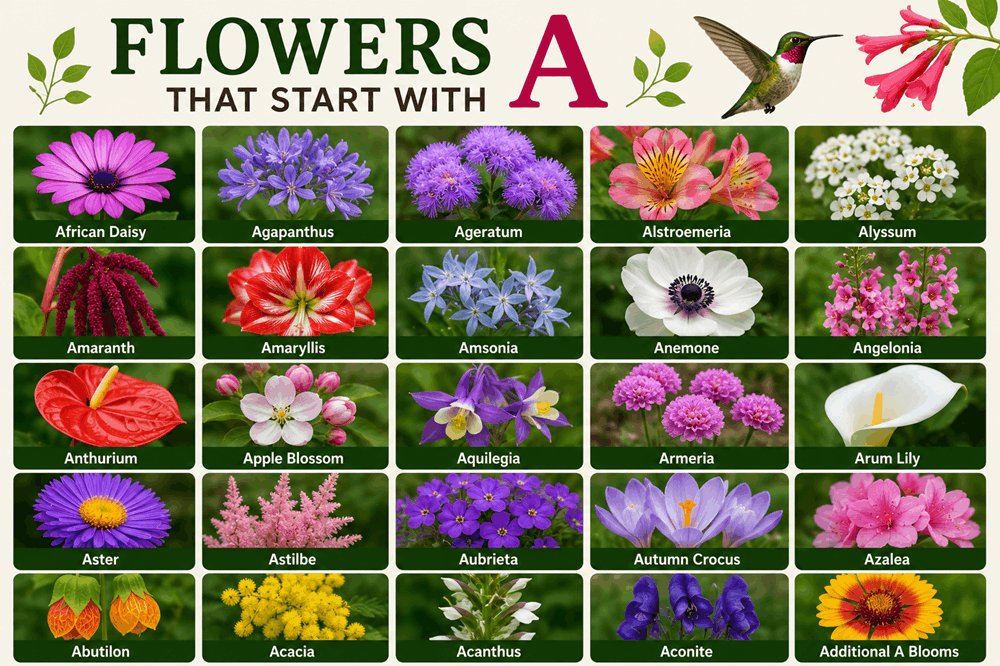
Flowers that start with A include amaryllis, anemones, asters, azaleas, alliums, agapanthus, and many other colorful blooms. Some are compact annuals suited to containers, while others grow as long-lived perennials, flowering shrubs, bulbs, vines, or tropical houseplants. This guide introduces 25 flowers beginning with A, along with their appearance, symbolism, growing habits, and practical garden uses.
1. African Daisy
African daisies produce bright, daisy-shaped flowers in white, yellow, orange, pink, purple, and blue. Many varieties have dark centers that create a strong contrast with the petals.
These sun-loving plants bloom best during mild weather. Some varieties slow their flowering during extreme summer heat and begin blooming again when temperatures become more comfortable.
African daisies work well in containers, borders, and mass plantings. Their cheerful appearance is commonly associated with happiness, optimism, and new beginnings.
2. Agapanthus
Agapanthus produces rounded clusters of trumpet-shaped flowers on tall, sturdy stems. Its blooms are usually blue, violet, lavender, or white.
Also called lily of the Nile, agapanthus grows from thick underground roots and performs best in full sun. It creates a strong architectural effect in borders, large containers, and coastal-style gardens.
The flowers are commonly associated with love, beauty, fertility, and admiration. Agapanthus can be toxic when eaten, so it should be placed carefully in gardens used by pets or young children.
3. Ageratum
Ageratum produces soft clusters of small, fuzzy flowers. Blue and lavender are the most familiar colors, although white, pink, and purple varieties are also available.
This compact annual is commonly used along border edges, in containers, and between taller flowering plants. It prefers bright light and consistent moisture without waterlogged soil.
Ageratum flowers for a long period when faded blooms are removed. Its soft texture makes it useful for balancing flowers with larger or more sharply defined petals.
4. Alstroemeria
Alstroemeria is commonly called the Peruvian lily or lily of the Incas. Its trumpet-shaped flowers often have speckles or streaks on the inner petals.
Colors include white, yellow, orange, coral, pink, red, purple, and multicolored combinations. Alstroemeria is especially popular as a cut flower because the stems can remain attractive for a relatively long time in a vase.
The flower is associated with friendship, loyalty, support, and lasting connection. In the garden, it prefers fertile, well-drained soil and protection from severe winter conditions.
5. Alyssum
Sweet alyssum forms low mounds covered with tiny white, pink, purple, or lavender flowers. The blooms often have a sweet fragrance that attracts bees and other pollinators.
Alyssum is useful for edging pathways, filling gaps between stones, softening container edges, and creating ground-level color. It performs particularly well during cool spring and fall weather.
The plant may slow down during hot summers but often resumes flowering when temperatures drop. Its delicate flowers symbolize gentleness, calm, and emotional balance.
6. Amaranth
Amaranth produces dramatic flower clusters that may stand upright or hang in long tassels. Colors include burgundy, red, purple, green, bronze, and gold.
Some varieties are grown mainly for ornamental flowers, while others are cultivated for edible leaves or nutritious seeds. The tall forms can create a bold background in flower beds and cutting gardens.
Amaranth is associated with immortality, endurance, and unfading love because its flowers retain much of their color when dried.
7. Amaryllis
Amaryllis produces large trumpet-shaped flowers on thick, leafless stems. Red is the classic color, but varieties also bloom in white, pink, salmon, burgundy, green, and striped combinations.
The bulbs are especially popular indoors during winter. With appropriate care, an amaryllis bulb can flower again in later years rather than being discarded after one season.
Amaryllis symbolizes strength, confidence, beauty, and determination. The plant is toxic to cats and dogs when eaten, particularly the bulb.
8. Amsonia
Amsonia is a perennial known for clusters of pale blue, star-shaped flowers. It is sometimes called blue star because of the distinctive shape of each bloom.
The plant develops into a neat mound and often provides attractive yellow foliage in autumn. It works well in native gardens, mixed borders, and naturalistic landscapes.
Amsonia prefers full sun or light shade and becomes reasonably drought tolerant after establishment. Its quiet blue flowers add softness without overwhelming nearby plants.
9. Anemone
Anemones produce open, delicate flowers with prominent centers. Their colors include white, pink, red, blue, purple, and magenta.
The name includes many different plants. Some anemones bloom in spring from tubers, while Japanese anemones flower on tall stems during late summer and fall.
Anemones are often associated with anticipation, protection, loss, and the temporary nature of beauty. They are popular in garden borders and elegant cut-flower arrangements.
10. Angelonia
Angelonia produces upright spikes of small flowers that resemble miniature snapdragons. Common colors include purple, blue, pink, white, and bicolored forms.
Sometimes called summer snapdragon, angelonia tolerates heat better than true snapdragons. It performs well in sunny containers, borders, and warm-season flower beds.
The plant blooms for an extended period with relatively little maintenance. Its upright growth adds height without requiring much garden space.
11. Angel’s Trumpet
Angel’s trumpet produces large, hanging, trumpet-shaped flowers with a strong evening fragrance. The blooms may be white, yellow, peach, orange, or pink.
This tropical shrub or small tree creates a dramatic display in warm climates and can be grown in large containers where winters are cold.
Every part of angel’s trumpet is highly toxic. It should not be planted where children or pets may chew the leaves, flowers, or seeds. Gardeners should wear gloves when pruning and avoid touching their eyes or mouth afterward.
12. Anthurium
Anthurium is a tropical plant with glossy leaves and colorful, heart-shaped structures surrounding a central flower spike. Red is the most familiar color, but pink, white, purple, orange, green, and nearly black varieties are also available.
It is commonly grown indoors in bright, indirect light. Anthuriums prefer humidity, warmth, and a loose potting mix that drains well.
The plant symbolizes hospitality, abundance, and lasting affection. It contains irritating calcium oxalate crystals and should be kept away from pets and children.
13. Apple Blossom
Apple blossoms appear on apple trees during spring, usually before or alongside the first leaves. The buds often begin deep pink and open into pale pink or white flowers.
The blooms attract bees and other pollinating insects needed for fruit production. Many apple varieties require pollen from a compatible second variety to produce a strong crop.
Apple blossoms commonly symbolize fertility, hope, preference, and new beginnings. Their flowering season is brief but visually memorable.
14. Aquilegia
Aquilegia is the botanical name for columbine. Its graceful flowers have backward-pointing nectar spurs and may be red, yellow, blue, purple, pink, white, or multicolored.
Many aquilegias grow well in partial shade, woodland edges, and cool garden beds. Native species can provide nectar for hummingbirds and other pollinators.
Aquilegia often reseeds naturally, creating new color combinations over time. The flower is associated with courage, wisdom, faith, and delicate beauty.
15. Armeria
Armeria, commonly known as sea thrift, produces round clusters of small pink, white, or purple flowers above narrow grassy foliage.
The plant naturally tolerates windy, exposed, and coastal conditions. It works well in rock gardens, gravel beds, edging, and cracks between stones.
Armeria prefers full sun and excellent drainage. Once established, it can tolerate periods of dryness better than many soft-stemmed flowering plants.
16. Arum Lily
Arum lily produces elegant white flowers wrapped around a yellow central spike. It resembles the calla lily but belongs to a different genus.
The plant prefers moist soil and may grow near ponds, streams, and damp garden areas. In suitable climates, it can spread aggressively and become difficult to control.
Arum lily contains calcium oxalate crystals that can cause severe mouth irritation when chewed. It is toxic to people and pets and should be handled carefully.
17. Aster
Asters produce daisy-like flowers with narrow petals surrounding yellow or orange centers. Their colors include purple, blue, pink, white, lavender, and occasionally red.
Many asters bloom in late summer and fall, providing color after numerous summer flowers have faded. They are particularly valuable to bees, butterflies, and other pollinators preparing for winter.
Asters symbolize love, wisdom, patience, and remembrance. Their late flowering season makes them useful for extending the garden’s visual and ecological value.
18. Astilbe
Astilbe produces soft, feathery flower plumes above finely divided foliage. The blooms may be white, cream, pink, red, lavender, or purple.
This perennial performs well in moist, partly shaded areas where many sun-loving flowers struggle. It is useful beneath trees, beside shaded paths, and near water features.
Astilbe does not tolerate prolonged drought well. Consistent soil moisture helps prevent its leaf edges from becoming dry and brown.
19. Aubrieta
Aubrieta forms low carpets of purple, blue, pink, or magenta flowers during spring. Its evergreen or semi-evergreen foliage remains close to the ground.
The plant is often used in rock gardens, on walls, along pathways, and over the edges of raised beds. It creates the strongest display when planted in groups.
Aubrieta prefers full sun and well-drained soil. Trimming it lightly after flowering can help maintain a compact shape.
20. Autumn Crocus
Autumn crocus produces pink, purple, or white cup-shaped flowers during fall, often after its spring foliage has disappeared.
Despite the common name, most autumn crocuses belong to the Colchicum genus rather than the true crocus group. Their unusual timing allows them to bring color to the garden late in the season.
All parts of autumn crocus are highly toxic. The plant should never be confused with edible saffron crocus, and gloves are advisable when handling its bulbs.
21. Azalea
Azaleas are flowering shrubs known for generous spring displays. Their trumpet-shaped flowers may be white, pink, red, orange, yellow, purple, or multicolored.
Evergreen azaleas often remain compact, while native deciduous species can grow into larger shrubs. Most prefer acidic, well-drained soil and protection from harsh afternoon sunlight.
Azaleas symbolize femininity, care, temperance, and family affection. Every part of the plant can be toxic when eaten, so placement requires care around pets and livestock.
22. Abutilon
Abutilon is commonly called flowering maple because some varieties have maple-like leaves. Its hanging bell-shaped flowers may be yellow, orange, red, pink, or white.
The plant grows as a tropical shrub and can bloom for a long period in warm conditions. In colder climates, it is often kept in a container and moved indoors before frost.
Abutilon prefers bright light and consistent moisture, although the soil should never remain waterlogged. Its graceful flowers work well in conservatories, patios, and sunny indoor spaces.
23. Acacia
Acacias produce clusters of tiny yellow or cream flowers that often resemble soft balls or fluffy cylinders. Many species are strongly fragrant.
Depending on the species, acacia may grow as a shrub or tree. Some are adapted to dry climates, while others require more moderate conditions.
Acacia flowers symbolize friendship, renewal, resilience, and hidden love. The flowering branches are used in seasonal arrangements, although their vase life can vary.
24. Acanthus
Acanthus produces tall flower spikes surrounded by decorative bracts. The blooms are generally white, pink, or purple and rise above large, deeply cut leaves.
The plant is also called bear’s breeches. Its dramatic foliage inspired decorative designs used in classical architecture and art.
Acanthus prefers fertile, well-drained soil and can grow in sun or partial shade. Once established, some varieties spread strongly and may be difficult to remove.
25. Aconite
Aconite produces hooded blue, violet, purple, yellow, or white flowers on upright stems. It is also known as monkshood or wolfsbane.
The plant prefers cool, moist conditions and often grows well in partly shaded perennial borders. Its flowers are visually distinctive but require serious caution.
Every part of aconite is highly poisonous. Gardeners should wear gloves, avoid planting it near food crops, and keep it away from children and pets. It should never be used in homemade remedies.
Which A Flowers Are Best for Containers?
African daisies, ageratum, alyssum, amaryllis, angelonia, anthurium, abutilon, and compact asters are all suitable for containers.
The right choice depends on the growing environment. African daisies and angelonia prefer strong sunlight, while anthuriums need bright indirect light. Amaryllis performs well indoors, and abutilon benefits from a large container that can be moved before winter.
Every container should include drainage holes. Water trapped around the roots can damage plants even when they prefer consistent moisture.
Which A Flowers Attract Pollinators?
Asters, apple blossoms, aquilegia, alyssum, amsonia, agapanthus, and African daisies can all attract pollinating insects or birds.
Asters are especially valuable late in the season, while apple blossoms provide spring food for bees. Aquilegia can attract hummingbirds, particularly when the flowers have long nectar spurs.
For a stronger pollinator garden, plant several flowers of the same type together and choose varieties with open centers that allow easy access to pollen and nectar.
Which A Flowers Work Well in Bouquets?
Alstroemeria, amaranth, amaryllis, anemone, agapanthus, asters, astilbe, acacia, and apple blossoms can all be used in floral arrangements.
Alstroemeria is valued for its long vase life, while anemones provide strong contrast and delicate movement. Amaranth adds trailing texture, and astilbe creates soft volume.
Cut stems early in the morning when they are fully hydrated. Place them in clean water promptly and remove all leaves that would sit below the waterline.
The Bottom Line
Flowers that start with A include familiar choices such as amaryllis, anemones, asters, azaleas, alyssum, and agapanthus. The group also contains tropical plants such as anthurium and abutilon, native perennials such as amsonia, and dramatic garden plants such as amaranth and angel’s trumpet.
Some A flowers are ideal for containers, while others need room to develop into shrubs, vines, or large perennial clumps. Several, including aconite, autumn crocus, azalea, angel’s trumpet, and arum lily, are poisonous and require careful placement.
Choose each flower according to its sunlight, soil, moisture, climate, and mature-size requirements. Matching the plant to the right location will produce healthier growth, stronger flowering, and a garden that remains attractive throughout the season.