Flowers That Start With C: Twenty-Five Beautiful Blooms for Every Home Garden
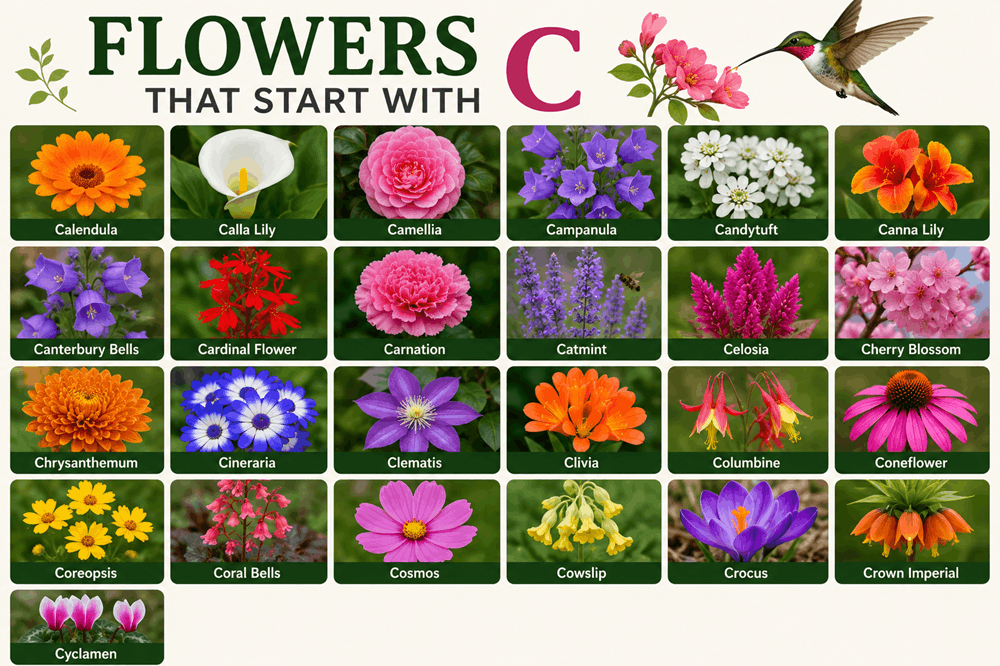
Flowers that start with C include camellias, carnations, chrysanthemums, clematis, columbines, cosmos, crocuses, and many other familiar blooms. Some are compact annuals suited to pots, while others grow as long-lived perennials, flowering vines, shrubs, bulbs, or tropical plants. This guide introduces 25 C flower names, along with their appearance, growing habits, and common meanings.
1. Calendula
Calendula is a cheerful cool-season flower with yellow, orange, cream, or apricot blooms. It is sometimes called pot marigold, although it is not a true marigold.
The flowers resemble small daisies and bloom best during spring, early summer, or fall in mild climates. Calendula grows easily from seed and performs well in garden beds, vegetable gardens, and containers.
Its bright appearance is commonly associated with warmth, joy, healing, and optimism. Removing faded flowers encourages the plant to continue producing new blooms.
2. Calla Lily
Calla lilies have smooth, curved flowers that form around a central spike. White is the traditional color, but modern varieties may be pink, yellow, orange, red, purple, or nearly black.
Despite the common name, calla lilies are not true lilies. They grow from underground rhizomes and prefer moist, well-drained soil with bright light.
Calla lilies often symbolize elegance, purity, devotion, and transformation. All parts of the plant contain irritating calcium oxalate crystals, so they should be kept away from children and pets that chew plants.
3. Camellia
Camellias are evergreen shrubs known for glossy leaves and beautifully layered flowers. Their blooms may be white, pink, red, cream, or variegated.
Depending on the species and variety, camellias can flower from fall through spring. They prefer acidic, well-drained soil and protection from intense afternoon sun in warmer regions.
Camellias are often associated with admiration, affection, faithfulness, and refined beauty. Mature shrubs can live for decades and become impressive focal points in the landscape.
4. Campanula
Campanula is a large group of flowers commonly known as bellflowers. Their blooms are usually shaped like bells, cups, or stars and appear in blue, purple, lavender, pink, or white.
Some campanulas form low mats suitable for rock gardens, while others produce tall stems for cottage gardens and borders. Their needs vary, but most prefer good drainage and moderate moisture.
Bellflowers are commonly connected with gratitude, humility, constancy, and lasting affection.
5. Candytuft
Candytuft produces low mounds covered with clusters of small white, pink, or lavender flowers. Evergreen candytuft is especially popular along pathways, walls, slopes, and rock gardens.
The plant flowers heavily in spring and may produce a lighter second display later in the season. It performs best in full sun and sharply drained soil.
Candytuft works well where a compact plant is needed to soften hard edges without becoming excessively tall.
6. Canna Lily
Canna lilies create a tropical effect with large leaves and bold flowers in red, orange, yellow, pink, cream, or mixed colors. Their foliage may be green, bronze, burgundy, or striped.
Cannas grow from thick underground rhizomes and thrive in warm weather. They prefer rich soil, regular moisture, and plenty of sunlight.
Although they are called lilies, cannas belong to a different plant family. They are often used around patios, pools, fences, and the backs of summer borders.
7. Canterbury Bells
Canterbury bells produce tall stems lined with large bell-shaped flowers. Their colors commonly include blue, purple, pink, and white.
These plants are usually biennial, which means they often grow leaves during the first year and flower during the second. They fit naturally into cottage gardens and traditional mixed borders.
Canterbury bells are associated with gratitude, faith, and constancy. Their upright stems also make attractive additions to cut-flower arrangements.
8. Cardinal Flower
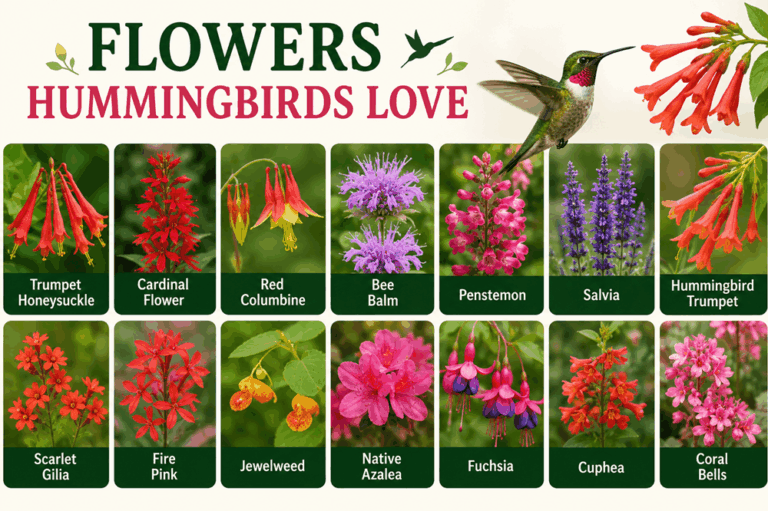
Cardinal flower produces brilliant red tubular blooms on tall upright stems. It is one of the most reliable native flowers for attracting hummingbirds.
The plant prefers consistently moist soil and grows well near ponds, streams, rain gardens, and low areas that do not dry out completely. It can tolerate partial shade and may appreciate protection from intense heat.
Its vivid color gives it a dramatic presence in late-summer gardens.
9. Carnation
Carnations have ruffled petals and a light clove-like fragrance. They are available in white, pink, red, yellow, purple, peach, green, and many multicolored forms.
Some carnations are grown as annual bedding plants, while others survive as short-lived perennials. They prefer bright light and well-drained soil.
Carnation meanings vary by color. Red may represent admiration or love, pink may express gratitude, and white may symbolize remembrance or purity.
10. Catmint
Catmint produces soft gray-green foliage and loose spikes of blue, lavender, purple, pink, or white flowers. It creates a relaxed, cloudlike effect along borders and paths.
The plant is valued for its long flowering period, drought tolerance, and appeal to bees. Many varieties remain neat and compact, while others spread more freely.
Cutting catmint back after its first heavy bloom can encourage fresh foliage and another round of flowers.
11. Celosia
Celosia is a warm-season annual with unusually textured flowers. Depending on the variety, blooms may resemble feathers, flames, coral, or folded velvet.
Common colors include red, orange, yellow, pink, purple, and burgundy. The flowers hold their shape well and are useful in both fresh and dried arrangements.
Celosia thrives in warm, sunny conditions and should not be planted outdoors until frost danger has passed. Its dramatic appearance is often associated with courage, boldness, and lasting affection.
12. Cherry Blossom
Cherry blossoms are the spring flowers of ornamental cherry trees. Their delicate blooms may be white, pale pink, deep pink, or occasionally double-layered.
The trees are grown for their seasonal display rather than fruit production. Their flowering period is often brief, making the spectacle feel especially valuable.
Cherry blossoms commonly symbolize renewal, beauty, hope, and the temporary nature of life. They are best planted where their falling petals can be enjoyed without creating maintenance problems.
13. Chrysanthemum
Chrysanthemums are classic autumn flowers available in a remarkable range of forms. Their blooms may be daisy-shaped, rounded, spider-like, cushion-shaped, or heavily layered.
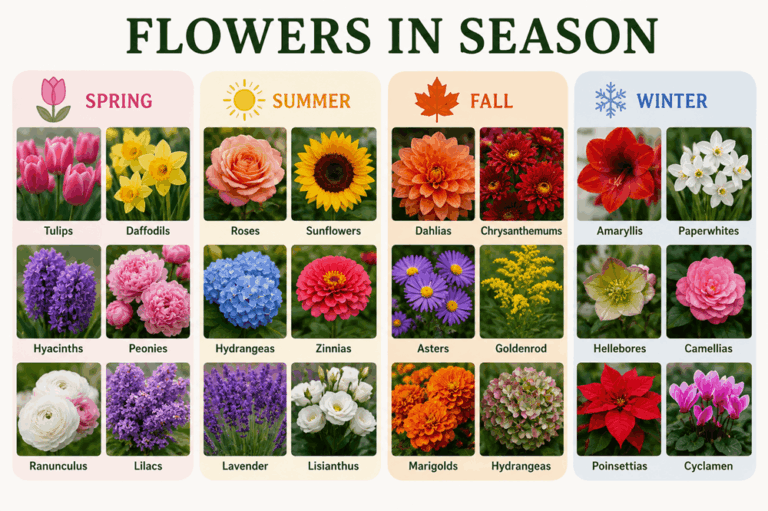
Colors include yellow, orange, bronze, red, pink, purple, white, and green. Garden chrysanthemums prefer full sun, good drainage, and regular pinching early in the season to encourage bushy growth.
Their symbolism differs among cultures. They may represent longevity, joy, respect, remembrance, or grief depending on the color and setting.
14. Cineraria
Cineraria produces clusters of brightly colored daisy-like flowers above broad green leaves. The blooms commonly combine blue, purple, pink, red, or white with contrasting centers.
These plants prefer cool conditions and bright indirect light. They are often sold as temporary indoor flowering plants during winter and early spring.
Cineraria does not usually perform well in hot rooms or intense summer weather. Consistent moisture and cooler temperatures help the flowers remain attractive longer.
15. Clematis
Clematis is a diverse group of flowering vines with blooms that range from small bells to large star-shaped flowers. Colors include purple, blue, pink, red, white, yellow, and multicolored combinations.
Different clematis varieties flower at different times and require different pruning methods. Some bloom on old growth, while others flower mainly on new stems.
Clematis generally prefers bright light around its vines and cooler conditions around its roots. A trellis, arch, fence, or pergola provides the support it needs to climb.
16. Clivia
Clivia is an evergreen plant with dark strap-like leaves and clusters of trumpet-shaped flowers. Orange is the most familiar color, although yellow and cream varieties also exist.
It grows well as a houseplant in bright indirect light and can be planted outdoors in warm, frost-free climates. Clivia prefers to dry slightly between waterings and often flowers best when its roots are somewhat crowded.
The plant should be kept away from pets and children because its bulbs and other parts can be toxic when eaten.
17. Columbine
Columbines produce graceful flowers with backward-pointing nectar spurs. Their colors include red, yellow, blue, purple, pink, white, and combinations of several shades.
Many columbines grow well in partial shade, woodland edges, and cool garden beds. Native species can be particularly valuable to hummingbirds and other pollinators.
Columbine flowers are associated with courage, wisdom, faith, and delicate beauty. They often reseed naturally without becoming difficult to control.
18. Coneflower
Coneflower commonly refers to plants in the Echinacea genus. The best-known type has pink-purple petals surrounding a raised orange-brown central cone.
Modern varieties are also available in white, yellow, orange, red, green, and deeper purple. Coneflowers prefer sunny locations and well-drained soil.
The blooms attract bees and butterflies, while the dried seed heads can feed birds later in the season. Leaving some stems standing through winter also adds structure to the garden.
19. Coreopsis
Coreopsis produces bright daisy-like flowers, usually in yellow, gold, orange, red, pink, or bicolored patterns. It is sometimes called tickseed.
Many varieties bloom for a long period and tolerate heat, drought, and less-than-perfect soil after becoming established. Removing faded flowers can extend the display.
Coreopsis is useful in pollinator gardens, cottage borders, meadow plantings, and low-maintenance landscapes.
20. Coral Bells
Coral bells are grown for both their delicate flowers and colorful foliage. Their leaves may be green, silver, purple, bronze, red, caramel, or nearly black.
Thin flower stems rise above the foliage and carry small bell-shaped blooms in white, pink, coral, or red. The red-flowered varieties may attract hummingbirds.
Coral bells perform well near the front of shaded or partly shaded borders. Good drainage is essential, particularly during winter.
21. Cosmos
Cosmos are airy annual flowers with delicate foliage and daisy-shaped blooms. Common colors include white, pink, crimson, orange, yellow, and chocolate brown.
They grow readily from seed and often flower best in soil that is not overly rich. Excess fertilizer can produce abundant leaves with fewer blooms.
Cosmos attract bees, butterflies, and other beneficial insects. Their open, informal growth makes them especially suitable for cottage gardens and cutting gardens.
22. Cowslip
Cowslip is a spring-flowering primrose with clusters of fragrant yellow flowers held above a low rosette of leaves.
It grows naturally in meadows, grasslands, open woodlands, and hedgerows. In gardens, it prefers moist but well-drained soil and a sunny or partly shaded position.
Cowslips are associated with youth, spring, optimism, and new beginnings. They work particularly well in naturalistic lawns and informal garden areas.
23. Crocus
Crocuses are small cup-shaped flowers that appear close to the ground. Many bloom in late winter or early spring, although some species flower in autumn.
Colors include purple, lavender, yellow, white, cream, and striped combinations. Crocuses grow from underground structures called corms rather than true bulbs.
Planting them in lawns, beneath deciduous trees, or in large groups creates the strongest visual effect. Their early flowers can also provide food for pollinating insects emerging after winter.
24. Crown Imperial
Crown imperial is a tall spring bulb with a ring of hanging bell-shaped flowers beneath a crown of leafy bracts. Blooms are usually orange, yellow, or red.
The plant has a strong odor that some gardeners find unpleasant, but its unusual shape makes it a dramatic focal point. It prefers sunny, well-drained soil and dislikes remaining wet during dormancy.
Plant the bulbs deeply and handle them carefully because they can irritate the skin. Crown imperial is also toxic if eaten.
25. Cyclamen
Cyclamen produces swept-back petals above patterned, heart-shaped leaves. Flower colors include white, pink, red, purple, and bicolored combinations.
Florist cyclamen is commonly grown indoors during cool weather, while hardy cyclamen species can grow outdoors in suitable climates. Both prefer cooler temperatures and careful watering.
Water around the edge of the pot rather than directly into the center of the plant. Cyclamen tubers contain irritating compounds and should be kept away from pets that chew plants.
Which C Flowers Are Best for Containers?
Calendula, calla lilies, cannas, carnations, celosia, cineraria, clivia, coral bells, cosmos, crocuses, and cyclamen can all grow successfully in containers.
The right choice depends on the season and amount of light. Celosia, cannas, and cosmos prefer warm, sunny conditions. Cineraria and cyclamen last longer in cooler locations. Clivia is better suited to bright indirect light than intense outdoor sun.
Always use a container with drainage holes. Even moisture-loving flowers can develop root problems when water remains trapped around the roots.
Which C Flowers Attract Pollinators?
Cardinal flower, catmint, columbine, coneflower, coreopsis, coral bells, cosmos, and some campanulas are especially useful in pollinator gardens.
Cardinal flowers and red columbines are particularly valuable to hummingbirds. Coneflowers, catmint, coreopsis, and cosmos attract bees and butterflies.
Choose open-centered varieties when possible. Flowers with extremely dense layers of petals may prevent insects from reaching pollen and nectar.
Which C Flowers Work Well in Bouquets?
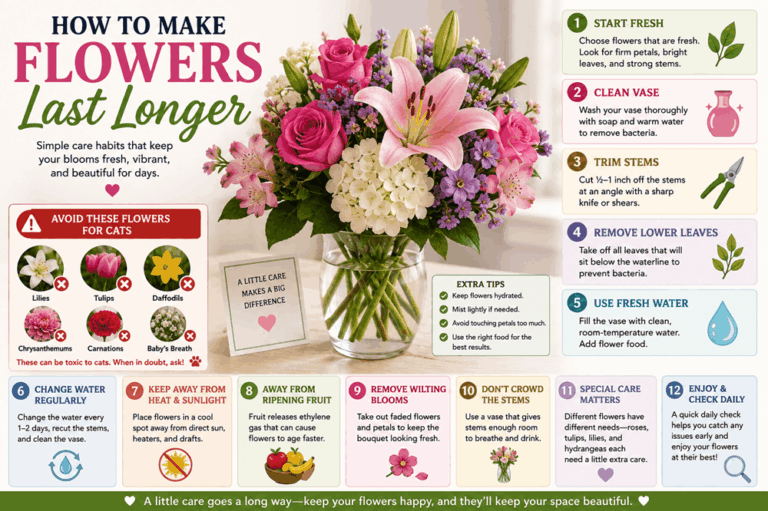
Calla lilies, camellias, campanulas, carnations, celosia, chrysanthemums, clematis, columbines, coneflowers, coreopsis, and cosmos can all be used as cut flowers.
Carnations and chrysanthemums are valued for their long vase life. Calla lilies add smooth structure, while celosia provides unusual texture. Cosmos and columbines bring a lighter, more natural appearance.
Cut flowers early in the morning when stems are well hydrated. Place them into clean water promptly and remove any leaves that would sit below the waterline.
The Bottom Line
Flowers that start with C include familiar garden favorites such as camellias, carnations, chrysanthemums, clematis, columbines, coneflowers, coreopsis, cosmos, and crocuses.
The group also includes tropical plants such as cannas and clivia, cool-season flowers such as calendula and cineraria, woodland plants such as cowslip, and dramatic bulbs such as crown imperial.
When choosing a C flower, consider its mature size, flowering season, climate needs, soil drainage, moisture requirements, and possible toxicity. Matching the plant to the right location will produce healthier growth and a much stronger display than choosing by flower color alone.