What Flowers Do Hummingbirds Like? Best Blooms for a Nectar-Rich Garden All Season
Hummingbirds prefer nectar-rich flowers with tubular shapes, especially blooms in red, orange, and pink. Some of the best choices include trumpet honeysuckle, cardinal flower, columbine, bee balm, penstemon, salvia, and hummingbird trumpet. A successful hummingbird garden should also provide flowers from spring through fall, use plants suited to your region, and avoid pesticides that reduce the insects hummingbirds need for protein.
What Types of Flowers Attract Hummingbirds?
Hummingbirds are especially drawn to long, narrow flowers that hold nectar deep inside the bloom. Their slender bills and extendable tongues allow them to reach nectar that is difficult for many insects to access.
Red flowers are strongly associated with hummingbirds, but color is not the only factor that matters. Hummingbirds also visit orange, pink, purple, blue, yellow, and white flowers when those plants offer enough nectar.
The most useful hummingbird flowers generally share several features:
- Long, tubular, trumpet-shaped, or bell-shaped blooms
- Bright colors that are easy to notice from a distance
- Flowers positioned where a bird can hover beside them
- Multiple blossoms grouped closely together
- A reliable supply of nectar
- A bloom period that complements other plants in the garden
Fragrance is less important. Hummingbirds depend heavily on vision when locating food, so a flower does not need a strong scent to attract them.
1. Trumpet Honeysuckle
Trumpet honeysuckle is one of the most dependable vines for attracting hummingbirds. It produces clusters of narrow, trumpet-shaped flowers in shades of red, coral, orange, and yellow.
The vine can be trained over a trellis, arbor, fence, or pergola, giving hummingbirds an elevated feeding area. Its flowers are easy to reach while hovering, and many varieties bloom for an extended period.
Choose native trumpet honeysuckle rather than invasive Japanese honeysuckle. The native vine supports local wildlife without spreading as aggressively into surrounding natural areas.
2. Cardinal Flower
Cardinal flower produces tall spikes of brilliant red blooms. Its long floral tubes and intense color make it one of the most recognizable hummingbird plants.
This perennial prefers consistently moist soil and performs well near ponds, streams, rain gardens, and low areas that do not dry out completely. It can grow in full sun when moisture is plentiful, but partial shade may be helpful in hotter climates.
Cardinal flower usually blooms during summer and can provide nectar when many spring flowers have already faded.
3. Eastern Red Columbine
Eastern red columbine is a valuable early-season flower. Its red-and-yellow blooms hang downward and contain long nectar spurs that hummingbirds can reach while hovering.
This plant is particularly useful because it often blooms around the time hummingbirds return during spring migration. It grows well along woodland edges, in partly shaded borders, and beneath deciduous trees.
Columbine can reseed naturally when conditions are suitable, gradually creating a loose colony of spring flowers.
4. Bee Balm
Bee balm produces dense clusters of tubular flowers in red, pink, purple, or lavender. Scarlet bee balm is especially attractive to hummingbirds, while other varieties support bees and butterflies as well.
The plant blooms during summer and can spread into generous patches. This is useful because hummingbirds can move quickly between many blossoms without leaving the area.
Bee balm prefers good air circulation. Crowded plants in humid conditions may develop powdery mildew, so allow enough space between stems and choose resistant varieties where possible.
5. Penstemon
Penstemon, commonly called beardtongue, includes many species with tubular flowers. Depending on the variety, the blooms may be red, coral, pink, lavender, purple, blue, or white.
Some penstemons thrive in dry western landscapes, while others prefer meadows, woodland edges, or ordinary garden beds. Choosing a species adapted to your region will improve both flowering and long-term survival.
Red-flowered penstemons are especially noticeable to hummingbirds, but the birds may also visit varieties in cooler colors.
6. Salvia
Salvias produce upright spikes of tubular flowers and are available as annuals, tender perennials, and cold-hardy perennials. Red salvia is a classic choice, but hummingbirds may also visit coral, pink, purple, and blue varieties.
Different salvias bloom at different times, making them useful for extending the nectar season. Some begin flowering in late spring, while others continue into autumn.
Salvias generally perform best in bright light and well-drained soil. Many become more drought tolerant after their roots are established.
7. Hummingbird Trumpet
Hummingbird trumpet, also called California fuchsia, produces vivid red or orange tubular flowers. It is particularly useful in western gardens because many varieties tolerate dry soil and summer heat.
The plant often blooms in late summer or early fall, when earlier nectar flowers are beginning to decline. Its spreading habit works well on slopes, along walls, and in dry borders.
Late-season flowers are especially valuable because migrating hummingbirds need reliable food as they prepare for long-distance travel.
8. Scarlet Gilia
Scarlet gilia produces tall stems lined with narrow red, orange, or pink flowers. It is native to parts of western North America and often grows in mountain meadows, dry open forests, and naturalistic gardens.
The plant’s height makes its flowers easy for hummingbirds to notice. It works best in well-drained soil and areas where its somewhat wild growth habit fits the landscape.
9. Fire Pink
Fire pink is a native perennial with bright red flowers and deeply divided petals. Its narrow floral tube holds nectar that hummingbirds can reach easily.
The plant is well suited to woodland edges, rocky slopes, and partly shaded native gardens. It blooms earlier than many summer perennials, helping bridge the gap between spring columbines and later flowers such as bee balm.
10. Jewelweed
Spotted jewelweed produces hanging orange flowers with curved nectar spurs. Hummingbirds can hover beneath the blooms and reach the nectar with their long bills.
Jewelweed grows naturally in damp, partly shaded areas. It is best suited to informal native plantings, rain gardens, woodland edges, and moist natural spaces.
The plant can spread readily, so it may be too vigorous for a small formal flower bed. Give it room where natural reseeding will not become a problem.
11. Native Azaleas
Native deciduous azaleas produce clusters of funnel-shaped flowers in pink, orange, yellow, white, or red. Their spring bloom can provide important nectar when hummingbirds are arriving or passing through during migration.
Different azalea species have different soil and light requirements. Many prefer acidic, well-drained soil and protection from intense afternoon sun.
Unlike some compact evergreen azaleas sold primarily for ornamental use, native deciduous azaleas can become substantial shrubs. Plan for their mature size before planting.
12. Red Buckeye
Red buckeye is a small tree or large shrub that produces upright clusters of red tubular flowers in spring. Its flowering period often overlaps with hummingbird migration.
Because it develops woody branches, red buckeye provides more than nectar. It also adds shelter, height, and perching places to the garden.
This plant needs more room than an ordinary perennial, so it is best for yards where its mature size can be accommodated without constant pruning.
13. Coral Bells
Coral bells produce slender flower stems covered with small bell-shaped blooms. Red and coral varieties are especially appealing to hummingbirds, although pink and white flowers may also receive visits.
These compact perennials are useful near the front of a border and in partly shaded locations. They can also grow in containers when the soil drains well and does not remain waterlogged.
Some modern coral bells are grown mainly for colorful foliage. When attracting hummingbirds is the priority, choose a variety known for producing abundant flowers rather than only decorative leaves.
14. Cuphea
Cuphea includes plants commonly called cigar flower and bat-faced cuphea. Many varieties produce narrow red, orange, pink, or purple flowers that hummingbirds visit repeatedly.
In warm climates, cuphea may grow as a perennial shrub. In colder regions, it is usually treated as an annual or moved indoors before frost.
Its compact size makes it useful in patio pots, window boxes, and small gardens where there is not enough room for large vines or shrubs.
15. Fuchsia
Fuchsias produce hanging flowers with long tubes and contrasting petals. Their blooms may combine red, pink, purple, coral, white, and orange.
Hanging baskets position the flowers where hummingbirds can feed while hovering beneath them. Fuchsias usually prefer cooler conditions and protection from intense afternoon heat.
Keep the potting mix consistently moist, but do not allow the roots to remain in standing water.
Do Hummingbirds Only Like Red Flowers?
No. Red, orange, and pink flowers are highly visible to hummingbirds, but the birds regularly feed from flowers in many other colors.
Lavender bee balm, blue lobelia, purple salvia, and yellow currant flowers may all attract hummingbirds when they provide accessible nectar.
A garden containing only red flowers may also have long periods when little is blooming. It is more useful to choose plants according to bloom time, nectar value, and local growing conditions, then use color as an additional attraction.
Create a Continuous Blooming Season
A good hummingbird garden should provide flowers for as much of the growing season as possible.
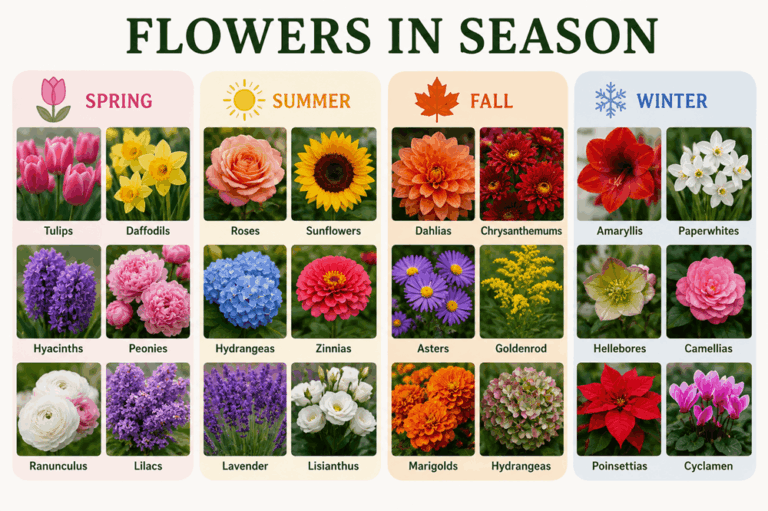
For spring, consider:
- Red columbine
- Native azaleas
- Red buckeye
- Early penstemons
- Flowering currants
For summer, plant:
- Trumpet honeysuckle
- Bee balm
- Cardinal flower
- Salvia
- Cuphea
- Coral bells
For late summer and fall, use:
- Hummingbird trumpet
- Late-blooming salvia
- Asters
- Goldenrod
- Long-flowering native vines
Overlapping bloom times are more reliable than depending on one plant that flowers for only a few weeks.
Plant Flowers in Groups
A single flower may attract a passing hummingbird, but a large patch is easier to see and more efficient to feed from.
Plant three, five, or more of one variety together when space allows. Hummingbirds can then move quickly between blossoms without spending additional energy searching for the next flower.
Groups of flowers also create a stronger visual signal from above, helping birds notice the garden while flying through the area.
Choose Native Plants Whenever Possible
Native plants are adapted to local soil, rainfall, temperatures, and wildlife. They often require less supplemental water after becoming established and are more likely to support the insects hummingbirds eat.
Nectar provides energy, but hummingbirds also consume tiny insects and spiders for protein and other nutrients. A garden filled with locally native plants supports both parts of their diet.
A plant described as native to North America may not be native to your particular region. A local native plant nursery, botanical garden, cooperative extension office, or native plant society can help you select appropriate species.
Avoid Pesticides
Broad-spectrum insecticides can kill pollinators and reduce the small insects hummingbirds need. Even when a chemical does not poison a bird directly, it can make the habitat less useful by removing its food.
When a pest appears, identify it before treating the garden. A few damaged leaves rarely justify spraying every plant.
Begin with less disruptive methods such as hand removal, pruning affected stems, improving airflow, or using barriers. Keep chemicals away from open flowers whenever possible.
Add Water, Perches, and Shelter
Flowers are the foundation of a hummingbird garden, but birds also need places to rest, bathe, and hide.
Hummingbirds may use fine mist, dripping water, shallow moving water, and wet leaves. A standard deep birdbath is often less appealing unless it includes a shallow edge or gentle fountain.
Leave small exposed twigs where birds can perch between feeding visits. Shrubs and small trees also provide shelter and possible nesting locations.
Keep cats indoors or securely contained. A hummingbird hovering near low flowers can become vulnerable to a waiting cat.
The Bottom Line
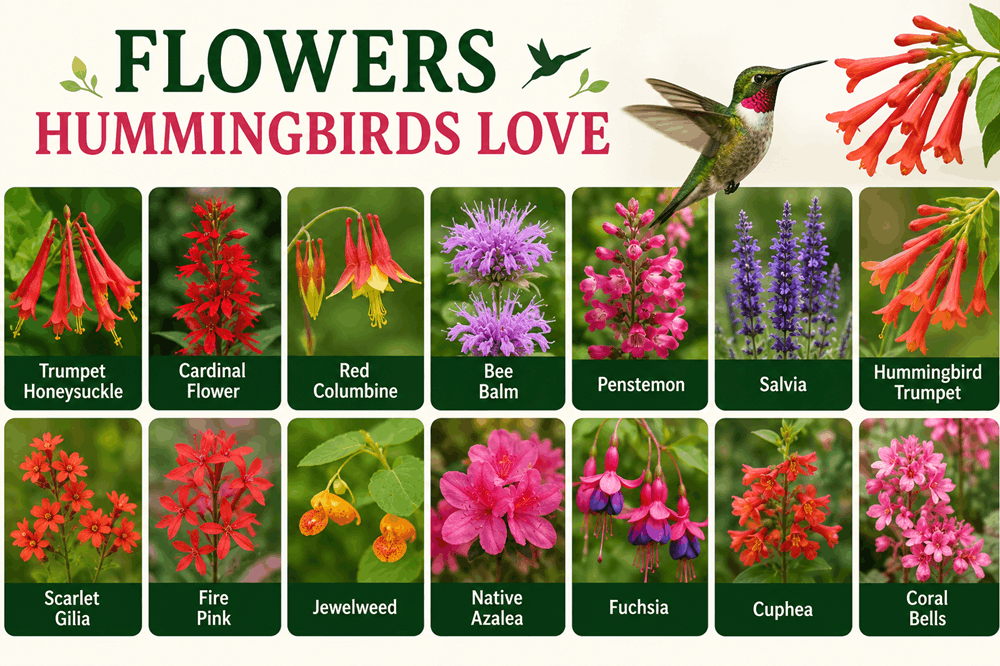
Hummingbirds like flowers that are rich in nectar and easy to feed from while hovering. Strong choices include trumpet honeysuckle, cardinal flower, red columbine, bee balm, penstemon, salvia, hummingbird trumpet, scarlet gilia, fire pink, jewelweed, native azaleas, coral bells, cuphea, and fuchsia.
Red and orange blooms are especially noticeable, but hummingbirds also visit flowers in purple, blue, pink, yellow, and white. Flower shape, nectar supply, and bloom timing matter more than color alone.
The best garden combines locally suitable plants, large flower groups, overlapping bloom periods, shelter, clean water, and minimal pesticide use. Instead of planting one so-called hummingbird flower, create a continuous nectar garden that gives the birds a reason to return from spring through fall.