Cannabis Events: A Guide to Festivals, Conferences, Expos, and Cannabis Cups
Cannabis events now include everything from business conferences and retail trade shows to music festivals, cultivation competitions, research meetings, and policy summits. Although these gatherings share a connection to cannabis, they can differ greatly in purpose, audience, atmosphere, and access.
Choosing the right event begins with understanding its format. Some are designed for licensed professionals and retail buyers, while others welcome adult consumers interested in culture, education, entertainment, or advocacy. Cannabis sales and consumption are not automatically permitted, even when an event takes place in a state with legal adult use.
What Is a Cannabis Event?
A cannabis event is an organized gathering focused on one or more aspects of cannabis, such as commerce, cultivation, product development, science, medicine, public policy, advocacy, or culture.
The term can describe a major convention with hundreds of exhibitors, a regional consumer expo, a judged product competition, a university research conference, or a community workshop. Some events combine several formats, such as a festival that also includes educational sessions and an industry marketplace.
An event’s cannabis theme does not determine what attendees may do on-site. The organizer, venue, state regulators, and local authorities establish whether cannabis may be displayed, sold, possessed, or consumed.
The Main Types of Cannabis Events
Cannabis Festivals and Cultural Celebrations
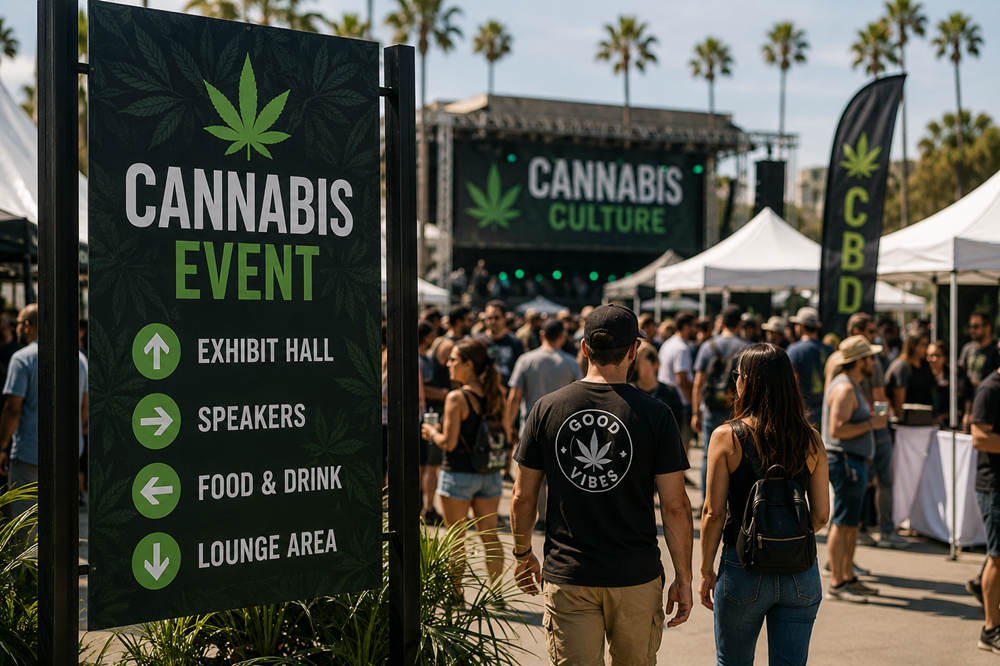
Cannabis festivals create a social experience around music, food, art, entertainment, and community programming. They often explore cannabis as part of contemporary culture rather than focusing only on products or commercial activity.
Festival programs may include concerts, artistic installations, cultivation exhibits, public speakers, food areas, and advocacy organizations. The atmosphere is generally more relaxed and public-facing than that of a professional conference.
Industry Conferences and Trade Shows
Industry conferences serve people working in the regulated cannabis market. Attendees may include cultivators, dispensary operators, manufacturers, laboratory professionals, attorneys, investors, marketers, software providers, and equipment suppliers.
These gatherings usually combine an exhibition floor with sessions about operations, compliance, technology, finance, cultivation, retail, and product development. Their main value lies in professional education, vendor discovery, and business networking.
Consumer Expos and Regional Conventions
Consumer expos introduce adult visitors to cannabis businesses, products, and educational topics. They may include brand exhibits, demonstrations, seminars, local organizations, and conversations with people working in the regional market.
Some regional conventions also attract industry professionals, creating a mixed environment for commerce and public education. Access may vary by ticket type, with certain networking programs or buyer sessions reserved for qualified participants.
Cannabis Cups and Product Competitions
Cannabis cups recognize cultivation skill, product quality, and craftsmanship. Entries may include indoor or sungrown flower, concentrates, pre-rolls, edibles, beverages, topicals, and other regulated products.
Evaluation methods differ among competitions. Judges may consider laboratory data, aroma, appearance, flavor, consistency, production technique, or the overall consumer experience. Some competitions are stand-alone awards programs, while others form part of a larger festival or convention.
Educational, Medical, and Research Events
Educational events examine cannabis through science, healthcare, agriculture, or professional training. They may be organized by universities, medical associations, research institutions, laboratories, cultivation specialists, or public-health groups.
Programs can address cannabinoid science, medical applications, analytical testing, plant genetics, cultivation methods, patient care, and product safety. The level of discussion may range from introductory consumer education to highly technical presentations for researchers and clinicians.
Policy, Advocacy, and Community Events
Policy gatherings explore how cannabis laws affect businesses, patients, consumers, workers, and communities. Speakers may include regulators, lawmakers, attorneys, researchers, advocates, and industry representatives.
Topics can include legalization, licensing, taxation, medical access, expungement, employment policies, social-equity programs, and impaired-driving prevention. Community events may also offer legal education or practical assistance related to changing cannabis laws.
Notable Cannabis Event Series and Examples
The following examples illustrate the range of cannabis event formats. Schedules, venues, ticket requirements, and program features can change, so prospective attendees should confirm current details with each organizer.
MJBizCon
Held in Las Vegas, MJBizCon is a large business-to-business conference for the cannabis industry. Its exhibition floor and conference program cover areas such as cultivation equipment, packaging, retail technology, investment, manufacturing, compliance, and business operations.
It is most relevant to professionals who want to compare commercial services, meet potential partners, and follow changes in the regulated market.
NECANN Conventions
NECANN organizes cannabis conventions in several regional markets. Its events bring together local businesses, entrepreneurs, retailers, brands, investors, advocates, consumers, and educators.
Because each convention is connected to its host region, the exhibitor mix and programming can reflect local laws, market conditions, and community priorities. Some editions also include competitions, workshops, and professional networking.
Hall of Flowers
Hall of Flowers is a business-focused trade show connecting licensed cannabis brands with dispensary retailers and buyers in markets including California and New York.
Its format emphasizes wholesale product discovery and commercial relationships. Participation is more controlled than at a public consumer festival, and retail credentials or industry approval may be required for certain forms of access.
National Cannabis Festival
The National Cannabis Festival in Washington, D.C., has combined music, food, education, culture, community, and activism. Its programming has included concerts, exhibitors, cultivation content, advocacy partners, competitions, and policy discussions.
The event represents the public-facing side of cannabis culture, where entertainment and social activities appear alongside conversations about legalization and reform.
The Emerald Cup
The Emerald Cup is a long-running California cannabis competition and cultural gathering associated with craft production, cultivation, and product judging. Its award categories have included flower, pre-rolls, concentrates, cartridges, and other product formats.
Unlike a conventional business expo, the Emerald Cup has placed particular emphasis on cannabis craftsmanship, community identity, and California’s cultivation heritage.
California State Fair Cannabis Experience
The California State Fair Cannabis Experience places cannabis within a broader agricultural and cultural exhibition. The experience highlights award winners, cannabis businesses, educational displays, agricultural practices, and the role of cannabis in California’s economy.
The 2026 program also includes a home-grow flower competition. Licensed product sales and adult consumption are managed within controlled areas, separate from the family-oriented portions of the fair.
How to Choose a Cannabis Event
Start by identifying what you want to gain from attending. The best event for professional networking will not necessarily be the best choice for live entertainment, consumer education, scientific discussion, or cultivation culture.
Review the event’s stated audience. A business-to-business show may require proof of employment, a professional affiliation, or a cannabis license. A public festival may offer a more accessible experience but fewer opportunities for detailed commercial discussions.
Study the published program before purchasing a ticket. Speaker lists, session descriptions, exhibitor directories, competition categories, and entertainment schedules reveal more about an event than its title alone. An “expo” may be a public exhibition, a trade marketplace, or a combination of both.
Consider whether the program provides enough value for the total cost. Admission may cover only the main exhibition, while workshops, networking receptions, concerts, competitions, or private buyer programs may require separate passes.
What to Check Before Attending
- Date and venue: Confirm the current location and schedule through the organizer’s official information.
- Age limit: Determine whether the entire event is restricted to adults or only certain areas are age-controlled.
- Identification: Check which forms of government-issued identification are accepted.
- Ticket coverage: Review exactly which sessions, exhibits, concerts, lounges, or workshops are included.
- Entry rules: Look for policies concerning bags, photography, recording, outside food, prohibited items, and re-entry.
- Cannabis access: Verify whether personal cannabis is allowed and whether licensed sales or consumption will occur.
- Accessibility: Examine information about entrances, seating, restrooms, mobility accommodations, and accessible parking.
- Transportation: Plan how you will arrive and leave, particularly when the event includes legal consumption areas.
Cannabis Laws and Event Rules
Cannabis laws differ by state and locality, and legalization does not create a general right to sell or consume cannabis at public gatherings. An event must comply with the rules governing its location, venue, licensees, security arrangements, and approved activities.
California provides one example of a regulated temporary-event system. An organizer must hold the appropriate organizer license and obtain authorization for the specific temporary event. Where sales are approved, products must be provided through authorized cannabis businesses and remain within the licensed system.
Consumption, when permitted, is confined to an approved part of the premises. Local authorities and venue operators may impose additional restrictions or refuse cannabis activity altogether.
Attendees remain responsible for following possession, transportation, and public-use laws after leaving the event. Rules that apply within a licensed area do not extend to public streets, vehicles, hotels, airports, or destinations in another state.
How to Attend Cannabis Events Responsibly
Anyone choosing to consume should understand the product format and potency. Inhaled products can produce effects relatively quickly, while edibles may take longer to become noticeable and can remain active for an extended period. Consuming more before the first serving has taken effect can lead to an unexpectedly intense experience.
Combining cannabis with alcohol or other intoxicating substances can make impairment less predictable. Follow event restrictions and avoid mixing products when their combined effects are uncertain.
Large events may involve crowds, heat, loud music, and long periods of walking or standing. Drink water, eat appropriately, take breaks, and seek assistance from event staff or medical personnel if you or a companion begins to feel unwell.
Respect consent and personal boundaries. Never pressure another person to consume cannabis or give someone a product without clearly explaining what it contains. Keep all cannabis secured and away from children and unintended users.
Arrange transportation before consuming. Cannabis can affect reaction time, coordination, decision-making, and perception. Use a sober driver, public transportation, a taxi, a rideshare service, or nearby accommodation rather than driving while impaired.
Cannabis events can offer entertainment, professional connections, education, or a closer look at cultivation and culture. Choosing an event that matches your purpose and reviewing its current rules in advance can make the experience safer, more useful, and more enjoyable.