Best Cannabis for Productivity: What to Look for Beyond Strain Names
Cannabis products described as energizing, uplifting, or creative are often marketed for daytime use. However, feeling interested in a task is not the same as completing it accurately, efficiently, and safely.
No cannabis strain has been scientifically proven to improve productivity. For adults who nevertheless choose to use cannabis during low-risk activities, a regulated product with relatively little THC and clearly labeled cannabinoid content may be more manageable than high-potency flower or concentrates. Even a modest amount can affect performance, so cannabis should not be used before driving, hazardous work, or decisions that could affect other people.
Cannabis laws and workplace policies also vary. Legal use outside working hours does not necessarily permit possession, consumption, or impairment at work.
Can Cannabis Make You More Productive?
Cannabis may change how a task feels. Someone who becomes more relaxed, less self-conscious, or more interested in a repetitive activity may find it easier to begin. A person managing discomfort may also feel more willing to garden, clean, draw, or work on a personal project.
These experiences do not prove that cannabis improves cognitive performance. THC can affect memory, learning, attention, decision-making, coordination, and reaction time. A task may feel absorbing while taking longer or producing more mistakes.
A controlled observational study of programmers illustrates this difference. Participants working while intoxicated completed coding tasks more slowly and produced programs that failed more tests, without creating a wider variety of solutions. The findings apply specifically to the tasks studied, but they show why perceived creativity or concentration should not be confused with measured performance.
The outcome can vary with tolerance, dose, sleep, mood, experience, product chemistry, and the task itself. Cannabis is therefore better viewed as an intoxicating substance with variable effects, not as a reliable productivity aid.
What Matters More Than Indica or Sativa?
Dispensary menus commonly separate products into indica, sativa, and hybrid categories. These labels may summarize how a product is marketed, but they are not dependable predictors of its chemistry or effects.
Research comparing commercial cannabis found that indica and sativa labels did not consistently reflect genetic relatedness. Some associations were connected to aroma compounds, but the categories did not form two clear biological groups.
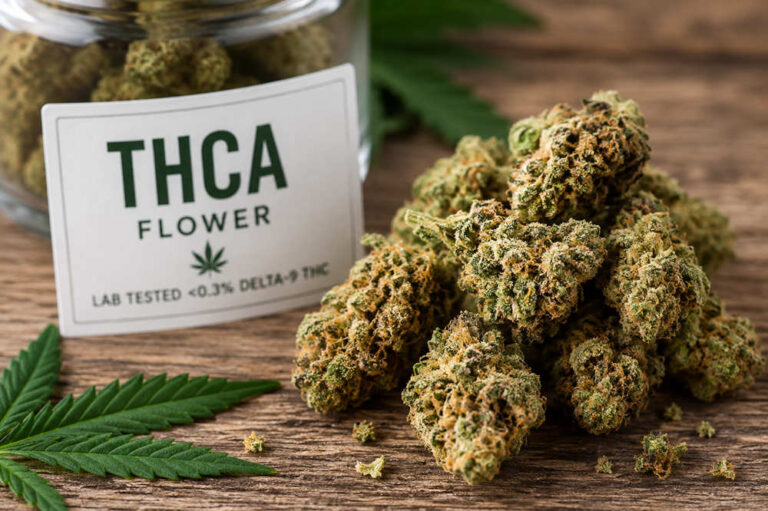
A more useful comparison begins with the measured THC and CBD amounts. When available, the laboratory report, serving size, production date, and terpene profile can provide additional context.
THC Content
THC produces most of the intoxicating effects associated with cannabis. As exposure rises, so can the likelihood of mental fog, anxiety, altered judgment, impaired coordination, and difficulty holding information in short-term memory.
The percentage on a flower label does not represent the exact dose a person will absorb. The amount consumed, inhalation pattern, individual tolerance, and product format also matter. Even so, a lower-THC product generally offers more room to control the experience than a highly potent extract.
Concentrates such as wax, shatter, and some vape oils may contain especially high THC levels. Higher-potency extracts can produce greater impairment and may be particularly difficult for new or occasional consumers to manage.
Balanced THC and CBD Products
Balanced products contain meaningful amounts of both THC and CBD, sometimes in an approximately equal ratio. They provide a different cannabinoid profile from THC-dominant flower, but they should not be assumed to preserve concentration or prevent intoxication.
In a randomized, double-blind study of infrequent cannabis users, adding CBD to 10 milligrams of inhaled THC at commonly available ratios did not significantly reduce THC-related memory impairment, attention problems, or subjective effects. Responses can differ, but CBD is not a dependable antidote to THC impairment.
CBD-Dominant Products
CBD does not produce the conventional cannabis high, which may make CBD-dominant products appealing to people who want to avoid substantial intoxication. That does not make CBD a proven treatment for low motivation, poor concentration, or reduced productivity.
The science, safety, and quality of many consumer CBD products remain unresolved. CBD can also interact with certain medications, so people taking prescriptions should discuss its use with a qualified healthcare professional.
What Terpene Labels Can and Cannot Tell You
Terpenes are aromatic compounds found in cannabis and many other plants. They create scents resembling citrus, pine, flowers, pepper, herbs, or earth.
- Limonene contributes citrus-like aromas.
- Alpha-pinene produces a fresh pine scent.
- Terpinolene may smell floral, herbal, fruity, or woody.
- Beta-caryophyllene contributes peppery and spicy notes.
- Myrcene is often described as earthy, musky, or herbal.
Consumers and cannabis brands frequently associate these compounds with qualities such as alertness, calmness, or physical relaxation. However, aroma descriptions are better established than productivity claims. Human research has not shown that choosing a product because it contains a particular terpene will reliably improve concentration, motivation, or work quality.
Terpene panels can still help distinguish products and identify preferred aromas. They should be treated as descriptive information rather than a forecast of a precise mental effect.
Cultivars Commonly Marketed for Daytime Use
The following cultivars often appear on dispensary menus as uplifting, mentally active, or suitable for daytime activities. They are not standardized formulas. Potency and terpene content can vary between growers and harvests, so the laboratory label is more informative than the name alone.
Durban Poison
Durban Poison is usually marketed as stimulating, fast-moving, and mentally active. It is commonly THC-dominant, so a potent batch may produce restlessness or distraction rather than useful focus.
Jack Herer
Jack Herer is associated with a cerebral experience and herbal, pine, and citrus aromas. Consumers often choose it for brainstorming, music, or other open-ended creative activities.
Sour Diesel
Sour Diesel has a strong fuel-like aroma and a reputation for rapid, energizing effects. Because many products sold under this name are high in THC, it may be uncomfortable for people prone to anxiety or racing thoughts.
Blue Dream
Blue Dream is commonly described as combining mental stimulation with moderate physical relaxation. Its approachable reputation has made it popular for daytime use, although individual batches can differ substantially in strength.
Harlequin
Harlequin is known for products that are often CBD-forward or more balanced than typical recreational flower. The cannabinoid ratio should always be checked because the name does not guarantee a particular amount of CBD or THC.
Which Product Format Is Most Predictable?
The delivery method affects onset, duration, and the ability to adjust the amount. A familiar low-potency product may be easier to manage than an unfamiliar product with delayed or unusually strong effects.
Flower
Inhaled flower generally takes effect quickly, allowing the consumer to notice early effects before deciding whether to use more. The amount absorbed is difficult to measure precisely, and smoking exposes the lungs to combustion products.
Vaporizers
Vaporized cannabis also acts quickly, but oils and cartridges can contain concentrated THC. Their convenience may encourage frequent inhalation, causing the total dose to rise before the consumer fully assesses the effect.
Tinctures
A clearly labeled tincture can provide a measurable amount of THC and CBD per serving. Onset varies depending on the formulation and whether the liquid is held under the tongue or swallowed, so additional servings should not be taken before the first has had time to develop.
Edibles
Edibles are generally the least predictable format for coordinating cannabis effects with a short task or fixed schedule. Effects may be delayed and can continue for several hours.
The slow onset creates a risk of taking another serving too early. Edibles avoid smoke exposure, but their timing makes them poorly suited to situations in which plans, responsibilities, or concentration requirements may change suddenly.
Match Cannabis Use to the Type of Task
The consequences of impairment depend heavily on what the person is doing. Low-risk recreation should not be treated the same as professional, technical, or safety-sensitive work.
Creative Exploration
Open-ended activities such as sketching, improvising music, free writing, or collecting early ideas allow experimentation without requiring every result to be correct. Some consumers find cannabis compatible with this exploratory stage.
Evaluation should happen separately. Ideas, purchases, edits, and final decisions are better reviewed while sober, when weak reasoning and impractical details are easier to recognize.
Routine Household Activities
Familiar activities such as folding laundry, watering plants, or sorting a drawer carry relatively limited consequences. They may suit someone who already understands how a particular product affects them.
Repairs, cooking over high heat, electrical work, ladders, sharp tools, and strong chemicals require more coordination and judgment. They should not be grouped with ordinary low-risk chores.
Exercise and Outdoor Recreation
Walking, stretching, or repetitive exercise may feel more engaging after cannabis use. At the same time, changes in balance, reaction speed, heart rate, or risk perception may increase the chance of injury.
Road cycling, climbing, swimming alone, technical trails, and activities near traffic or deep water are not appropriate settings for intoxication.
Detailed Professional Work
Accounting, coding, legal review, editing, data analysis, and technical planning depend on sustained attention and error detection. Feeling deeply engaged offers little benefit if the work takes longer or requires correction later.
Remaining unimpaired is the more reliable choice whenever small errors could create financial, legal, professional, or privacy consequences.
Driving and Safety-Sensitive Responsibilities
Cannabis should not be used before driving, operating machinery, working at heights, handling weapons, or taking responsibility for another person’s safety.
Cannabis can slow reaction time, impair coordination, affect decision-making, and distort perception. There is no simple THC number or waiting period that guarantees an individual is safe to drive. Driving while impaired by cannabis is dangerous and illegal throughout the United States.
How to Judge Whether Cannabis Is Helping
The most useful test is not whether the experience felt stimulating. It is whether the work was completed well.
- Define the task first. Write down what needs to be completed before consuming cannabis.
- Check the label. Compare THC, CBD, serving size, and testing information rather than relying on promotional terms.
- Do not test an unfamiliar product during work. Learn its effects in a legal, low-pressure environment without deadlines or safety responsibilities.
- Avoid chasing a stronger effect. More intoxication does not produce more productivity.
- Record objective results. Note the time taken, amount completed, errors made, and whether the task required later correction.
- Review the work while sober. This is especially important for writing, design, calculations, purchases, and decisions.
- Change course when performance declines. Repeated delays, mistakes, forgotten steps, or unfinished projects outweigh the feeling of being focused.
Signs Cannabis Is Becoming Counterproductive
A recurring pattern matters more than one unproductive afternoon. Possible warning signs include:
- Starting several activities without completing them
- Repeatedly checking the same instructions or information
- Forgetting conversations, deadlines, or planned steps
- Taking much longer to complete familiar work
- Finding obvious mistakes during sober review
- Becoming anxious or preoccupied with minor details
- Using additional cannabis to recreate a preferred feeling
- Avoiding ordinary tasks unless cannabis is available
- Continuing despite problems at work, home, or school
These signs do not individually establish a diagnosis. However, persistent use that causes meaningful health, behavioral, or social problems may be associated with cannabis use disorder. A healthcare or substance-use professional can help assess the pattern without relying on a single symptom.
The Bottom Line
There is no scientifically established best cannabis for productivity. Cultivar names such as Durban Poison, Jack Herer, Sour Diesel, Blue Dream, and Harlequin may help consumers navigate a menu, but they cannot guarantee a clear-headed or efficient experience.
For adults who legally choose to use cannabis during low-risk activities, the most relevant factors are THC exposure, cannabinoid balance, product format, familiarity, and the demands of the task. Objective results matter more than whether the experience feels creative or energetic.
For driving, hazardous activities, detailed professional work, or decisions affecting other people, remaining unimpaired is the safest and most dependable approach.