Melon Runtz THCa Flower: Genetics, Potency, COAs, and Safety
Melon Runtz THCa flower is generally marketed as a sweet, fruit-forward cannabis product related to the Runtz family. However, the name does not guarantee one genetic line, cannabinoid percentage, terpene profile, or experience.
Understanding a particular batch requires more than reading the strain name. Producer information, a matching certificate of analysis, freshness, storage, and current local laws provide a clearer picture of the flower being sold.
What Is Melon Runtz THCa Flower?
Melon Runtz THCa flower is cannabis flower marketed for its concentration of tetrahydrocannabinolic acid, commonly written as THCA or THCa. THCA is an acidic precursor to delta-9 tetrahydrocannabinol, or THC.
Heat can convert THCA into THC through a process called decarboxylation. This occurs when flower is smoked, vaporized, baked, or heated in another way.
Unheated THCA does not produce the same intoxicating effects as delta-9 THC. Once THCA-rich flower is heated, however, it can produce an intoxicating THC experience. A “THCa flower” label should not be interpreted to mean that the product will remain non-intoxicating during use.
Melon Runtz Genetics and Naming
Melon Runtz does not appear to refer to one universally documented genetic line. Similar names are currently attached to products with different stated parent cultivars.
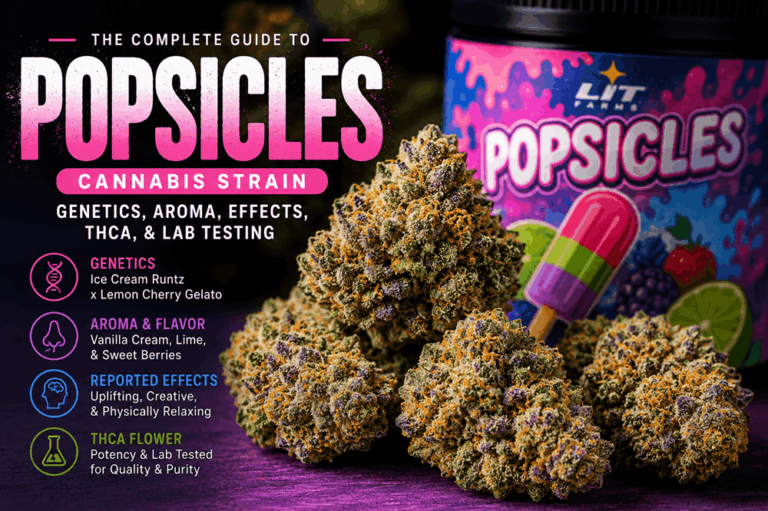
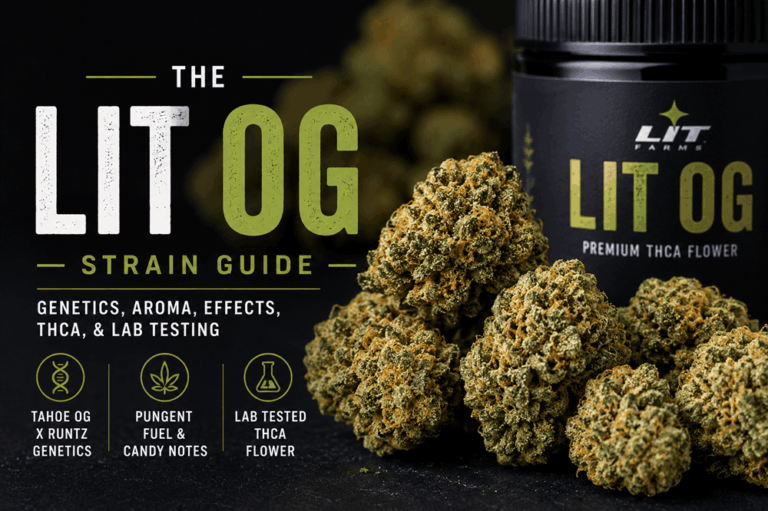
Silent Seeds lists Watermelon Runtz as a cross between Watermelon Zkittlez and Runtz. Separately, Lit Farms describes its Melon Runtz THCa flower as Watermelon Candy crossed with Runtz.
The similar names do not prove that the products share one origin. A producer may shorten a cultivar name, select and rename a phenotype, or use a familiar label for a separate breeding project.
A genetic analysis of commercially available cannabis also found inconsistencies among some samples sold under identical strain names. That finding does not establish that a particular Melon Runtz product is mislabeled, but it shows why the name alone is not reliable proof of genetic identity.
When lineage matters, look for a named breeder, clearly identified parents, and information connecting the finished flower to that breeding line.
Appearance, Aroma, and Flavor
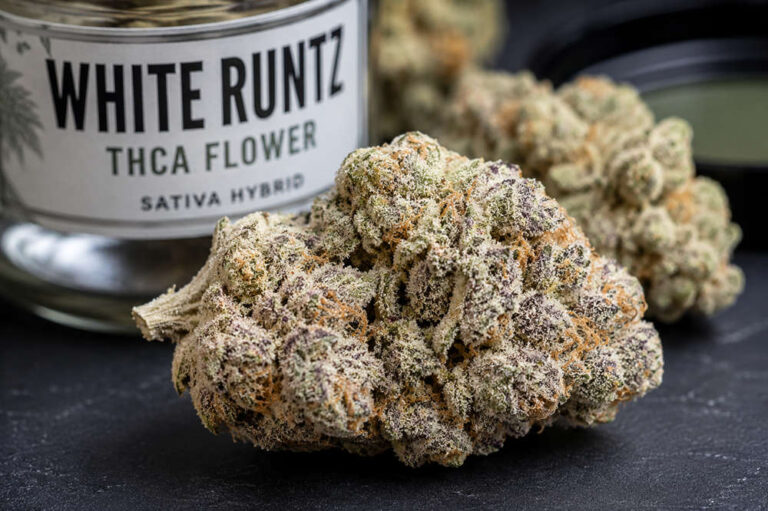
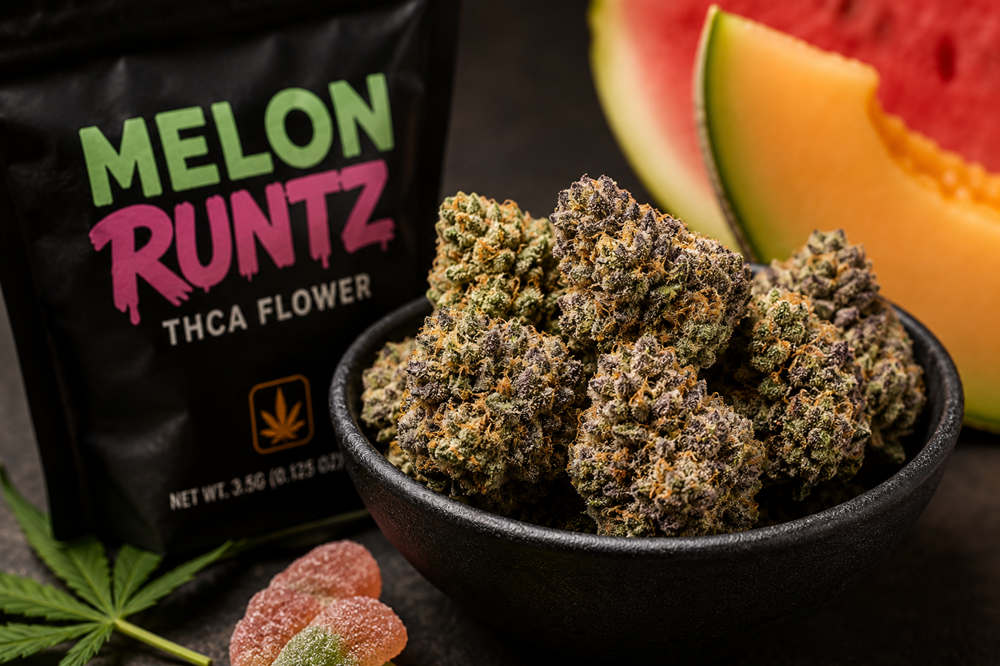
Commercial descriptions often portray Melon Runtz as having dense green flower, visible trichomes, orange pistils, and occasional purple coloration. Aromas are commonly compared with ripe melon, candy, berries, citrus, earth, spice, or fuel.
Those descriptions may fit a particular harvest without applying to every product carrying the name. Flower structure, color, aroma, and flavor can be influenced by plant genetics, phenotype selection, cultivation conditions, harvest timing, drying, curing, age, and storage.
A strain name also cannot confirm the presence of specific terpenes. Claims that Melon Runtz is necessarily rich in limonene, myrcene, caryophyllene, or another compound should be treated cautiously unless a matching batch report includes terpene testing.
What Effects Might Melon Runtz Produce?
Lit Farms describes its version of Melon Runtz as combining an elevated mental experience with physical relaxation. Other commercial descriptions use terms such as euphoric, calming, balanced, or sleepy.
These are seller descriptions and consumer reports rather than controlled findings showing that Melon Runtz produces a predictable response. The experience from heated THCA-rich flower depends on the amount consumed, total THC exposure, personal tolerance, consumption method, setting, and use of alcohol or other substances.
Possible unwanted effects of THC include anxiety, dizziness, dry mouth, increased heart rate, impaired coordination, and changes in attention or perception. Labels such as indica, sativa, and hybrid do not reliably determine which of these effects a particular person will experience.
Claims that Melon Runtz treats pain, anxiety, insomnia, stress, or another condition should not be presented as established facts. Cannabis flower has not received FDA approval for treating a disease or medical condition, although several specific cannabis-derived or cannabis-related prescription drugs have been approved.
How Potent Is Melon Runtz THCa Flower?
Melon Runtz does not have a fixed potency. Cannabinoid levels can differ between producers, phenotypes, harvests, individual samples, and laboratories.
A product page may display a prominent percentage, but the number should be checked against the corresponding batch report. It is also important to identify whether the advertised figure represents THCA, delta-9 THC, calculated total THC, or total cannabinoids. These measurements are related but are not interchangeable.
Understanding Total THC
Because THCA can convert into THC when heated, laboratories and regulators may calculate total potential THC with the following formula:
Total THC = delta-9 THC + (THCA × 0.877)
The conversion factor accounts for the difference in molecular weight after THCA loses carbon dioxide during decarboxylation.
For example, flower containing 20% THCA and 0.2% delta-9 THC would have a calculated total THC concentration of:
0.2 + (20 × 0.877) = 17.74% total THC
This is an estimate of the flower’s potential THC. It does not predict exactly how much THC will enter a person’s bloodstream because conversion, combustion, inhalation, and absorption are not completely efficient.
How to Evaluate a Melon Runtz COA
A certificate of analysis, or COA, reports laboratory findings for a submitted sample. Its value depends on whether the report can be connected to the flower in the package.
Match the Report to the Product
Compare the COA with the package or product listing. Look for:
- The product or sample name
- The producer or submitting company
- A batch, lot, or harvest number
- The sample receipt and testing dates
- The laboratory’s name and location
A generic report without a matching identifier provides limited evidence about a current package. An older COA may describe a previous harvest with a different chemical profile.
Determine the Purpose of the Report
Check whether the document is identified as a regulatory compliance certificate, a quality-control result, or a research and development report.
An R&D report may contain useful measurements for the submitted sample, but it should not automatically be treated as proof that the finished product passed a state cannabis or hemp compliance program. Read any qualifications, disclaimers, and testing-scope statements included on the document.
Review the Cannabinoid Panel
The potency section may report THCA, delta-9 THC, CBD, CBDA, CBG, and other cannabinoids. Results can appear as percentages, milligrams per gram, or both. One percent by weight is equal to approximately 10 milligrams per gram.
“ND” usually means that a substance was not detected above the method’s stated detection limit. It does not necessarily mean that absolutely none was present.
A detailed report may also show the limit of detection, limit of quantitation, and measurement uncertainty. These values provide context for small measurements and results near a regulatory threshold.
Check the Contaminant-Testing Scope
A potency-only COA does not establish that the sample was tested for common contaminants. Depending on the jurisdiction and laboratory package, broader testing may cover:
- Pesticide residues
- Heavy metals
- Yeast and mold
- Pathogenic microorganisms
- Mycotoxins
- Moisture content
- Water activity
- Foreign material
A passing result applies only to the analytes, methods, and limits listed on that report. State testing requirements differ, and no single panel covers every possible hazard.
Sampling, calibration, sample preparation, moisture correction, and analytical methods can also affect reported results. The NIST Cannabis Laboratory Quality Assurance Program was developed to help testing laboratories assess and improve measurement comparability and competence.
Quality Indicators Beyond the THCa Percentage
A higher THCA result does not automatically mean that flower is fresher, safer, better cured, or more flavorful. Potency should be considered alongside the flower’s condition and the transparency of its testing information.
- A clean aroma: Musty, ammonia-like, or unusually chemical odors may indicate a storage or quality problem.
- Appropriate moisture: Flower should not feel wet, spongy, or so dry that it immediately turns to powder.
- No visible contamination: Avoid flower with fuzzy growth, webbing, unexpected powder, insects, or suspicious discoloration.
- Protective packaging: Heat, light, air, and excess moisture can change flower during storage.
- Clear batch information: The package should provide an identifier that can be matched to available testing.
- Realistic claims: Guaranteed effects, universal terpene profiles, and unsupported health promises are warning signs.
Dense flower and visible trichomes may add visual appeal, but appearance alone cannot confirm potency, genetic identity, freshness, or contaminant status.
Safety and Responsible Adult Use
Heated THCA-rich flower can be strongly intoxicating. An unfamiliar batch should be approached cautiously rather than judged by the strain name, flower size, or advertised category.
- Begin with a small amount when potency or tolerance is uncertain.
- Allow time to assess the effects before consuming more.
- Do not drive, operate machinery, or perform hazardous work after using cannabis.
- Avoid combining cannabis with alcohol or other impairing substances.
- Keep flower, accessories, and waste away from children and pets.
Cannabis can slow reaction time and impair coordination, perception, and decision-making. Combining cannabis with alcohol may produce greater impairment than using either substance alone.
Smoking cannabis can harm lung tissue and expose the lungs to toxins, irritants, and combustion products. Using a bong, pipe, joint, or another smoking device does not remove all smoke-related risk, while the long-term relationship with some respiratory diseases remains under study.
Public-health guidance recommends avoiding cannabis during pregnancy and breastfeeding. Anyone with questions about cannabis use in these circumstances should speak with a qualified healthcare professional.
People taking prescription medications or managing a physical or mental health condition should discuss cannabis use with a clinician familiar with their circumstances. Possible interactions and individual risks cannot be determined from a strain description.
Is Melon Runtz THCa Flower Legal?
Legal information reviewed July 22, 2026. Federal, state, and local rules may change.
The legality of Melon Runtz THCa flower cannot be determined solely from its name, measured delta-9 THC percentage, or a seller’s “Farm Bill compliant” statement.
Federal Rules Before November 12, 2026
Under the federal hemp definition currently in effect, hemp is generally distinguished from marijuana by a concentration of no more than 0.3% delta-9 THC on a dry-weight basis. This wording contributed to a market for finished flower containing little measured delta-9 THC but substantially more THCA.
Licensed hemp production is already subject to a different testing calculation. Under USDA hemp-production testing rules, crops are evaluated using total THC, calculated as delta-9 THC plus THCA multiplied by 0.877 and reported on a dry-weight basis.
Preharvest crop compliance and the legality of a finished retail product are related but separate questions. State laws may independently regulate total THC, smokable hemp, possession, age limits, packaging, licensed sales, and shipping.
Federal Changes Scheduled for November 12, 2026
Public Law 119-37 was enacted on November 12, 2025. Section 781 is scheduled to take effect 365 days later, on November 12, 2026, unless Congress changes the law before then.
The amended definition limits hemp to no more than 0.3% total tetrahydrocannabinols, expressly including THCA, on a dry-weight basis. Flower marketed for a high THCA concentration would ordinarily exceed that threshold.
The law also excludes final hemp-derived cannabinoid products containing more than 0.4 milligrams combined per container of total tetrahydrocannabinols, including THCA, and certain other cannabinoids determined to have or marketed as having similar effects.
The practical application of these provisions may be affected by later legislation, agency guidance, enforcement decisions, and court interpretations. The effective date and legal status should therefore be checked again before November 12, 2026.
State and Local Laws Still Matter
A product that qualifies as hemp under a federal definition is not automatically lawful in every state. Some states use total-THC standards, restrict smokable hemp, limit online shipments, require licensed cannabis sales, or prohibit particular hemp-derived cannabinoid products.
Check the rules for every location where the flower will be purchased, delivered, possessed, and used. This section provides general educational information rather than legal advice.
The Bottom Line
Melon Runtz THCa flower is best evaluated as a batch-specific cannabis product rather than a cultivar with guaranteed genetics, potency, flavor, or effects.
A matching COA, clear producer information, contaminant-testing scope, freshness, and responsible handling provide more useful evidence than a strain name or prominent THCA percentage. Because heating converts THCA into intoxicating THC, the flower should be approached with the same care as other potentially high-THC cannabis products.